
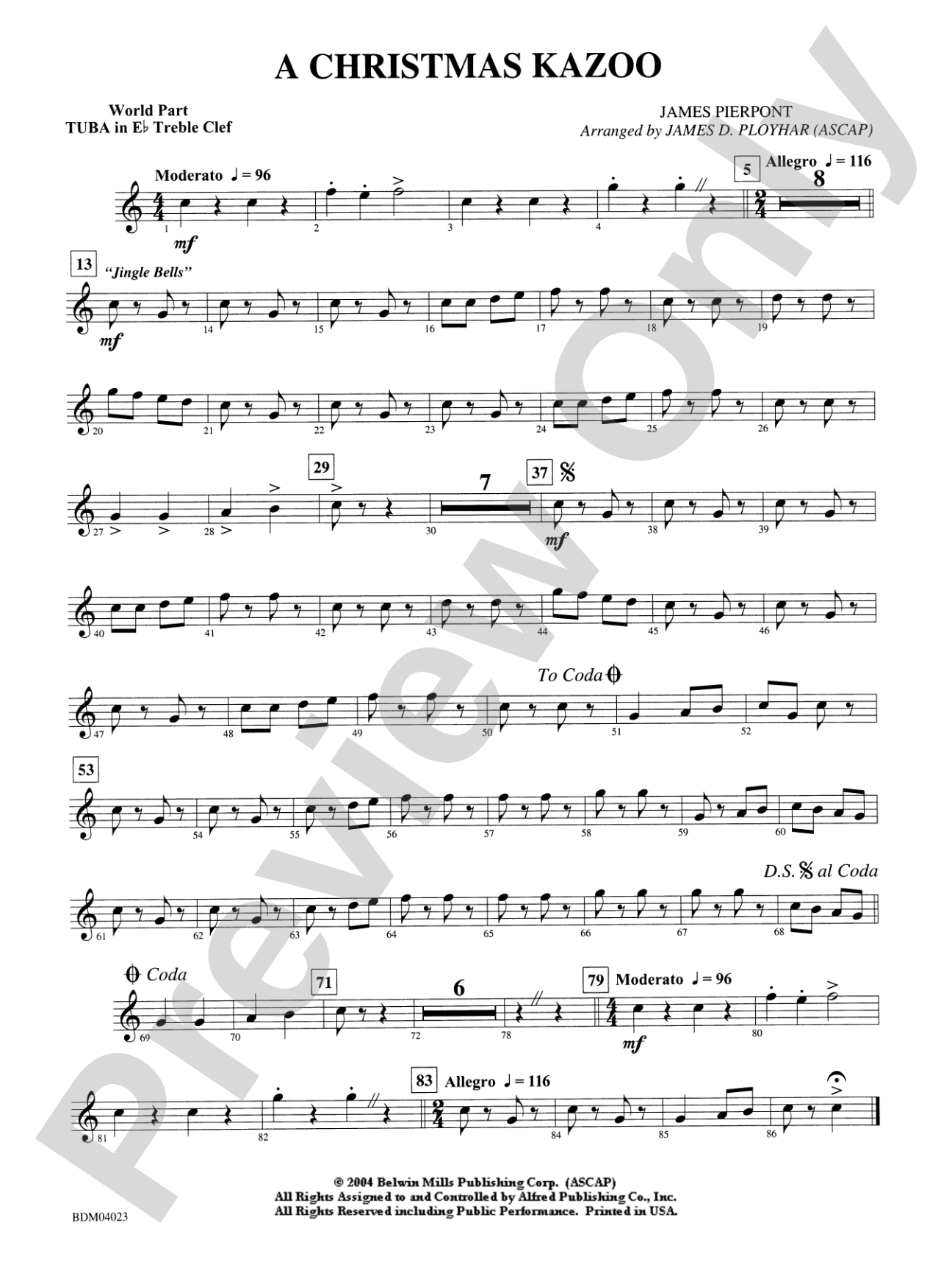

A Christmas Kazoo: WP E-flat Tuba T.C.
By James Pierpont / arr. James D. Ployhar
Grade: 1 (Very Easy)
Item: 00-PC-0002194_TBETC
$3.00
Pickup currently not available
Description
The all-time-favorite "Jingle Bells" is explored with -- you guessed it -- kazoos! Found at dime stores worldwide, the kazoo provides a new perspective to this Holiday treasure. Interrupted briefly with "Up on the Housetop" at the conclusion, the work includes a variety of holiday flavors. Have your students play the kazoo part or ask the audience to join in. (1:57)


Don't just read it, hear it, play along with it, and watch your students grow with it. In MakeMusic Cloud, A Christmas Kazoo: WP E-flat Tuba T.C. comes alive with professional accompaniment, adjustable tempo, and built-in practice tools that turn solo practice into real progress.
Open in the Player
Jump straight in and assign it today.
Start Your Free Trial
Open this title and explore the full library in minutes.
Sample Audio
1
Audio File
--:--
0:00
0:00
Sample Video
No sample videos found.
Additional Details
Series:
Belwin Beginning Band
Publisher:
Alfred Music
Page Count:
96
SKU:
00-PC-0002194_TBETC
More about this title
About the Composer: James Pierpont
James Pierpont (1822-1893) composed one of America's most enduring holiday melodies when he wrote "Jingle Bells" in 1857. Originally titled "The One Horse Open Sleigh," the song became a staple of winter celebrations and has been recorded thousands of times across every musical genre. Pierpont's gift for writing simple, memorable melodies made his work accessible to musicians of all levels, a quality that continues to serve music education well over a century later.
Why we love this
This arrangement captures the joy of a beloved melody while adding genuine novelty through the kazoo texture. The brief inclusion of "Up on the Housetop" prevents the piece from feeling one-dimensional, and Ployhar's Grade 1 scoring keeps the focus on melody and rhythmic clarity without overcomplicating the band's part. The option to invite audience participation transforms a performance into a communal moment, making this both musically sound and educationally valuable for younger ensembles.
What to expect
Pure holiday brightness meets playful zaniness. The familiar "Jingle Bells" melody takes on a charmingly off-kilter personality through the kazoo texture, while the band provides straightforward harmonic support that lets younger players contribute meaningfully. There's genuine delight in the simplicity and a sense of permission to enjoy the season without pretense.
Who it's for
Grade 1 concert bands and beginning ensembles looking for accessible holiday repertoire with built-in engagement value. Directors seeking pieces that work equally well in student-centered learning contexts or family-friendly concerts will find this arrangement practical and rewarding to teach.
How to get the most out of it
- Decide in advance whether kazoos will be played by assigned band members or offered to the audience, and communicate this choice clearly at rehearsal so students understand the arrangement and can respond appropriately during performance.
- Balance the kazoo melody against the band so it reads as a featured color rather than getting buried in the tutti sound; use dynamics and texture shifts in the accompaniment to let the kazoo line shine.
- Maintain steady tempo throughout the "Jingle Bells" section before the transition into "Up on the Housetop"; the shift between pieces should feel intentional, not rushed.
- Rehearse the ending clean and with confidence so the audience understands when to stop singing or playing along; a clear final cutoff gives the performance polish despite its fun, informal character.
How to use it
Program this as a concert closer or second-to-last piece on a winter concert where you want the audience to leave smiling. It pairs well alongside other Grade 1 holiday selections and works equally effectively as a standalone winter assembly performance. The built-in audience participation option makes it especially valuable for pops concerts or community events where interaction strengthens the connection between ensemble and listeners.
Skills your students will build
- Reading and playing a melodic line with clear rhythmic values in a ensemble context
- Sustaining harmonic support while a featured melodic voice takes prominence
- Maintaining tempo and ensemble cohesion through sectional transitions
- Responding to dynamic and textural changes that shape the character of a familiar melody