A Child Is Born To Save Us (ed. Peter Aston) Sheet Music Preview

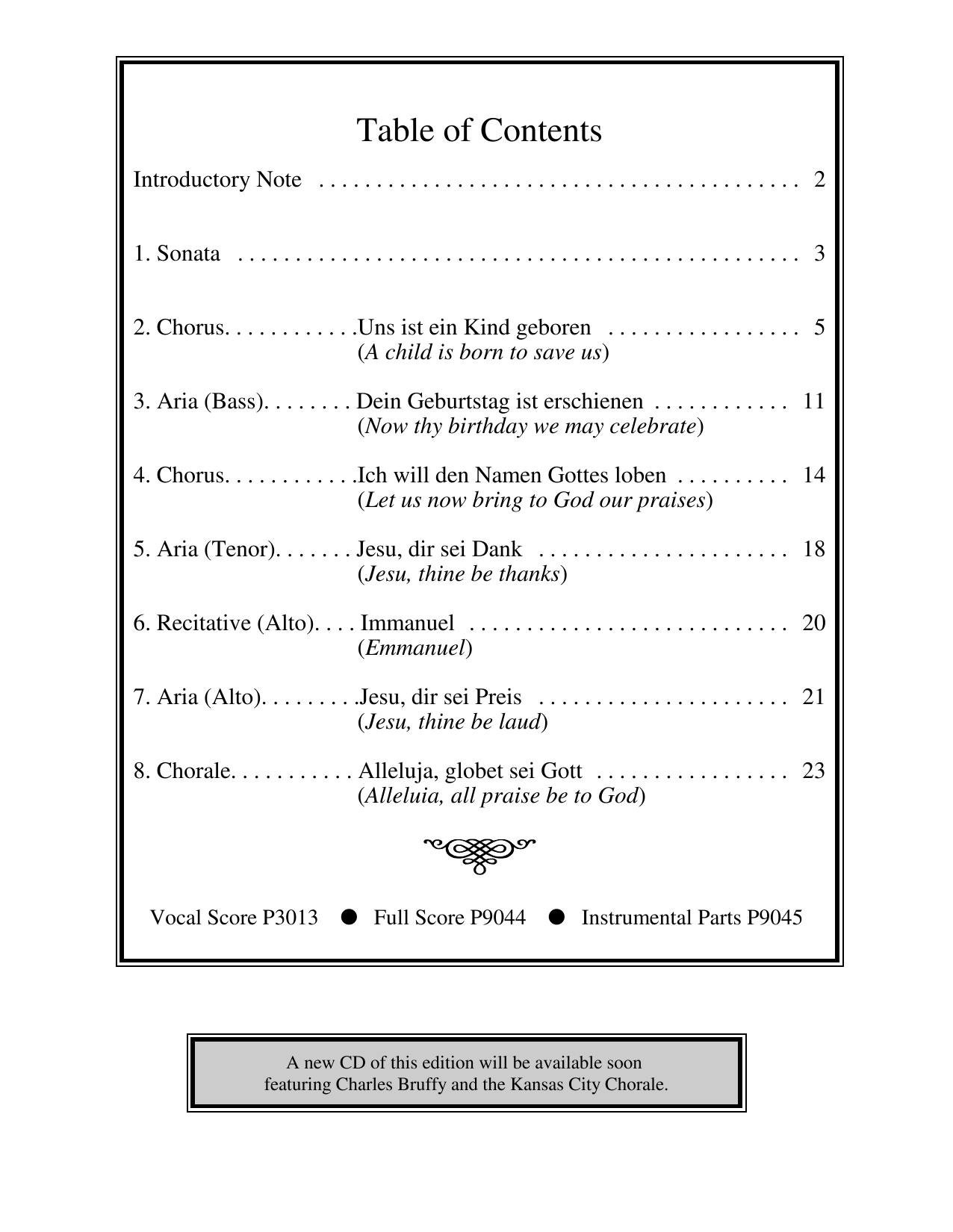
A Child Is Born To Save Us (ed. Peter Aston): SATB Choral Octavo

By Johann Sebastian Bach / Edited by Peter Aston

Item: 35-DS01541643

Digital Download
$7.99
Description

A Child Is Born To Save Us (ed. Peter Aston): SATB Choral Octavo isn't in MakeMusic Cloud just yet...but it could be. Let us know you'd like to see it, and you'll help shape what comes next. In the meantime, start a free trial and dive into thousands of interactive titles your students can play along with today.

Sample Audio
No sample audio found.
Sample Video
Additional Details
Publisher: Hal Leonard
Page Count: 29
SKU: 35-DS01541643

More about this title

About the Composer: Johann Sebastian Bach

Johann Sebastian Bach (1685-1750) stands as the foundational figure in Western music pedagogy. His contrapuntal mastery and harmonic innovation shaped everything that followed, and his sacred works remain essential teaching material for understanding voice leading, fugal construction, and the marriage of text to music. For choral directors, Bach's output offers inexhaustible models of how to achieve musical sophistication while serving liturgical and devotional purposes.

Bach's sacred cantatas and chorale harmonizations were composed for specific ecclesiastical occasions, yet they transcend their original contexts through sheer musical architecture. His approach to choral writing balances individual voice independence with unified harmonic expression, making his works both challenging and deeply rewarding for singers committed to authentic phrasing and textual clarity.

Why we love this

Peter Aston's edition brings clarity and singability to a Bach chorale that doesn't demand the extensive rehearsal time of longer sacred works. The text painting is subtle but consistent with Bach's aesthetic, and the harmonic language teaches your singers something genuine about Baroque practice without overwhelming them. A Christmas program needs moments of stillness and introspection alongside triumphant works; this fills that need authentically.

What to expect

The piece carries the warmth of a beloved chorale while maintaining formal elegance. Each voice contributes equally to a harmonically rich texture that sounds both intimate and ceremonial, creating the feeling of communal devotion rather than performance spectacle.

Who it's for

Choirs with intermediate to advanced musicianship who want to perform Bach without requiring months of preparation. Directors seeking a meaningful Christmas work that acknowledges the theological depth of the season without excessive length will find this a valuable addition to their libraries.

How to get the most out of it

  • Shape each phrase as a complete harmonic and textual unit. Bach's bar lines don't always align with musical breathing points, so identify where the sense completes and allow singers to reset there.
  • Balance the soprano line as the primary melodic voice while ensuring inner parts have enough projection to articulate their independent lines. This isn't unison singing; the counterpoint must be audible.
  • Approach the harmonic rhythm with flexibility in tempo and weight. Faster harmonic changes deserve slightly more forward motion; sustained chords need space to bloom without losing momentum.
  • Attend to text underlay with precision. Bach's syllable placement serves both singability and intelligibility; rushing through syllables muddies both the words and the musical phrase.

How to use it

Schedule this as a quieting moment mid-concert, perhaps following a jubilant Christmas anthem or preceding it to establish emotional ground. It also serves well as an introit or processional during a holiday service, where its length and reflective character complement other liturgical elements.

Skills your students will build

  • Baroque voice leading and harmonic function
  • Independent line singing within four-part texture
  • Text painting and phrase shaping in chorale style
  • Ensemble balance and blend across multiple harmonic lines
  • Reading and interpreting figured bass implications in harmonization

You May Also Like