
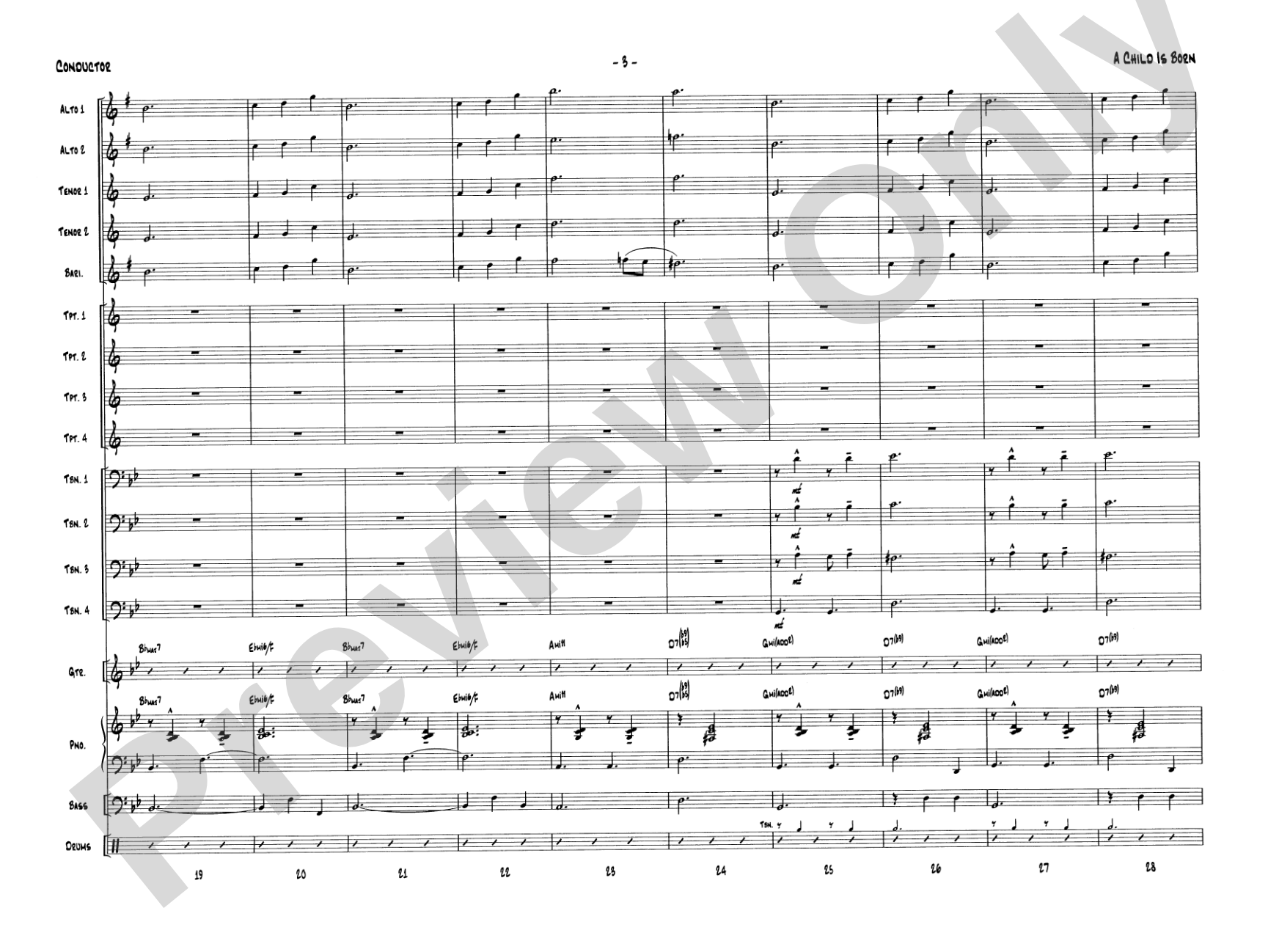
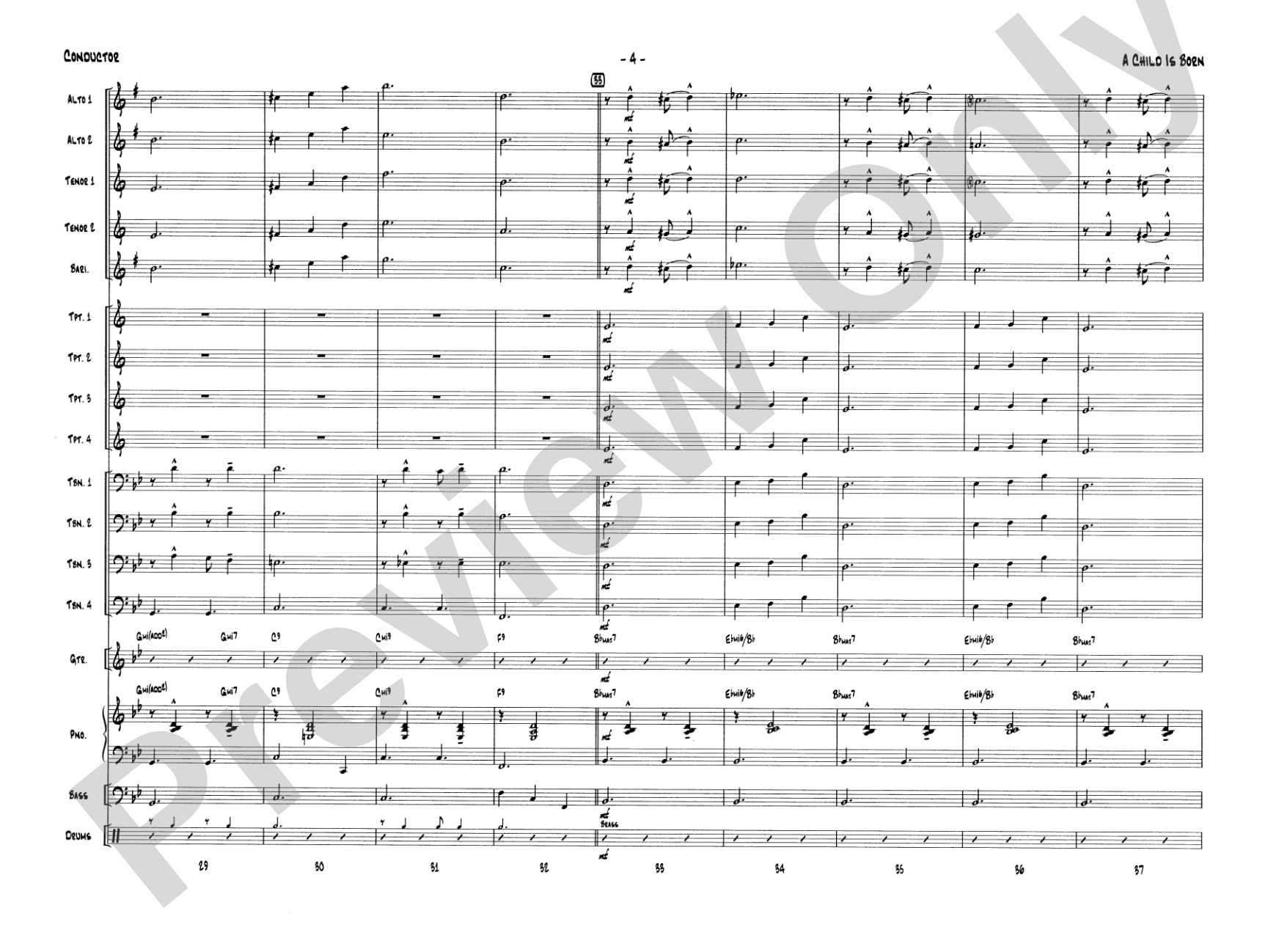
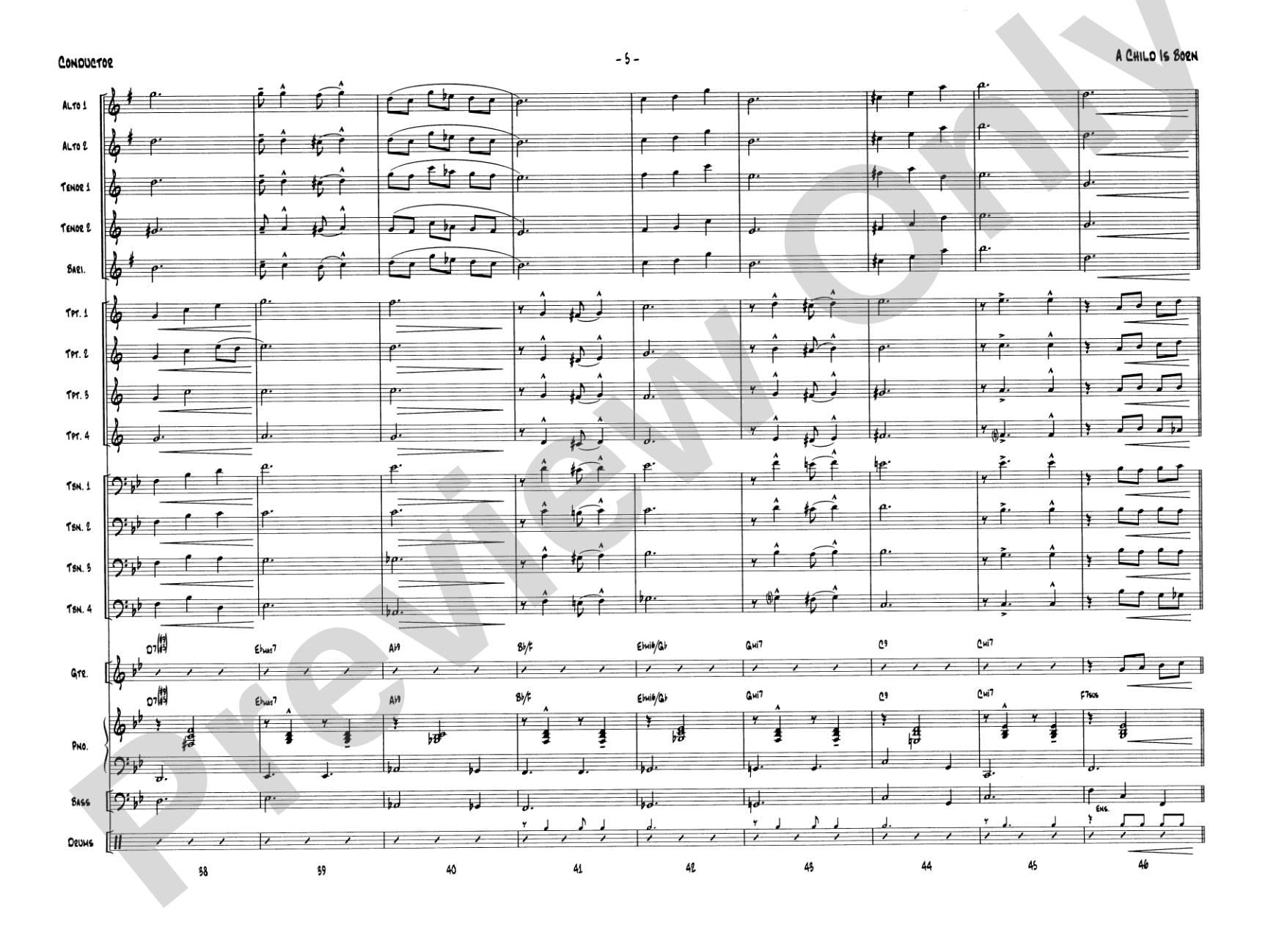
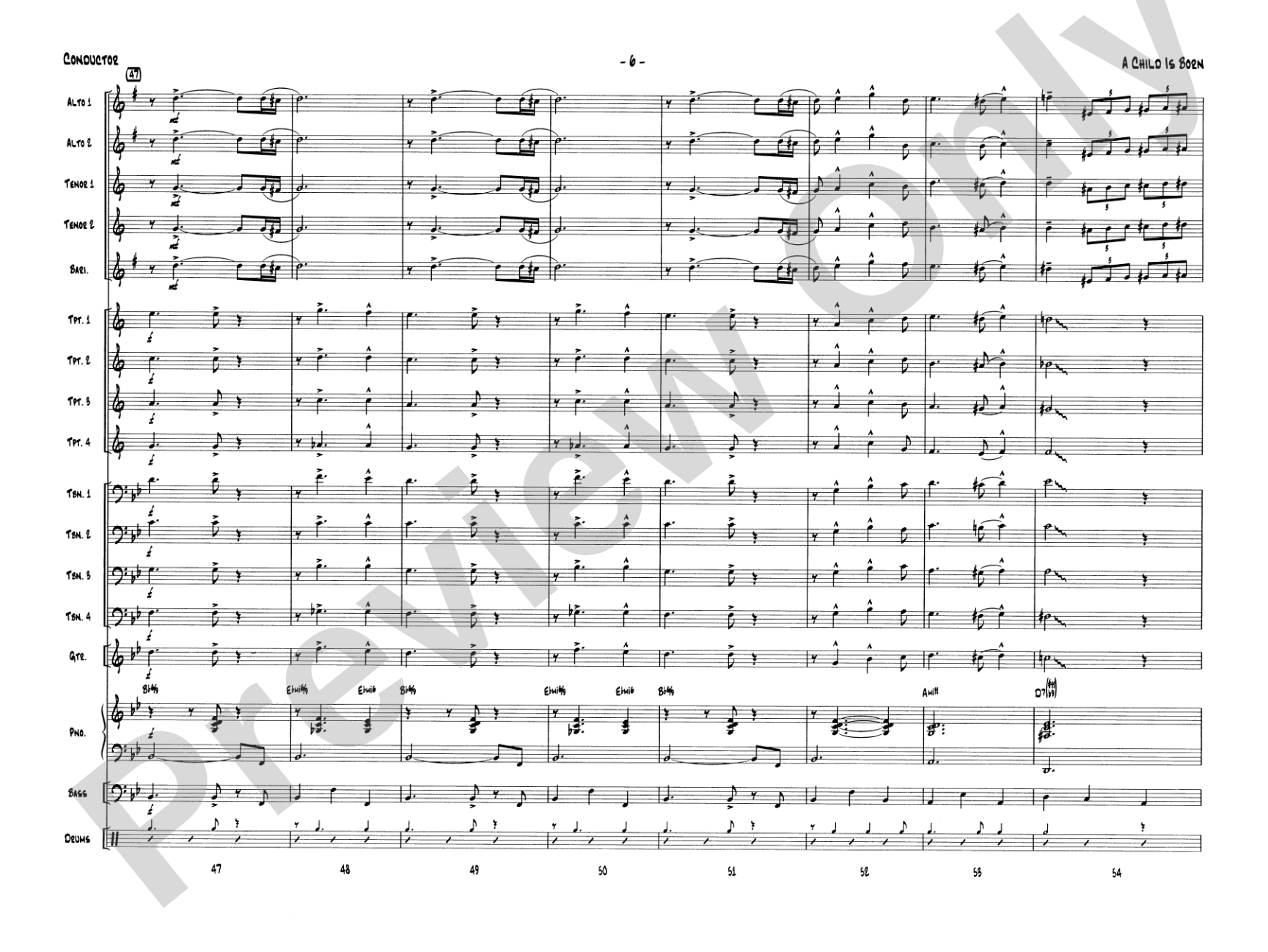
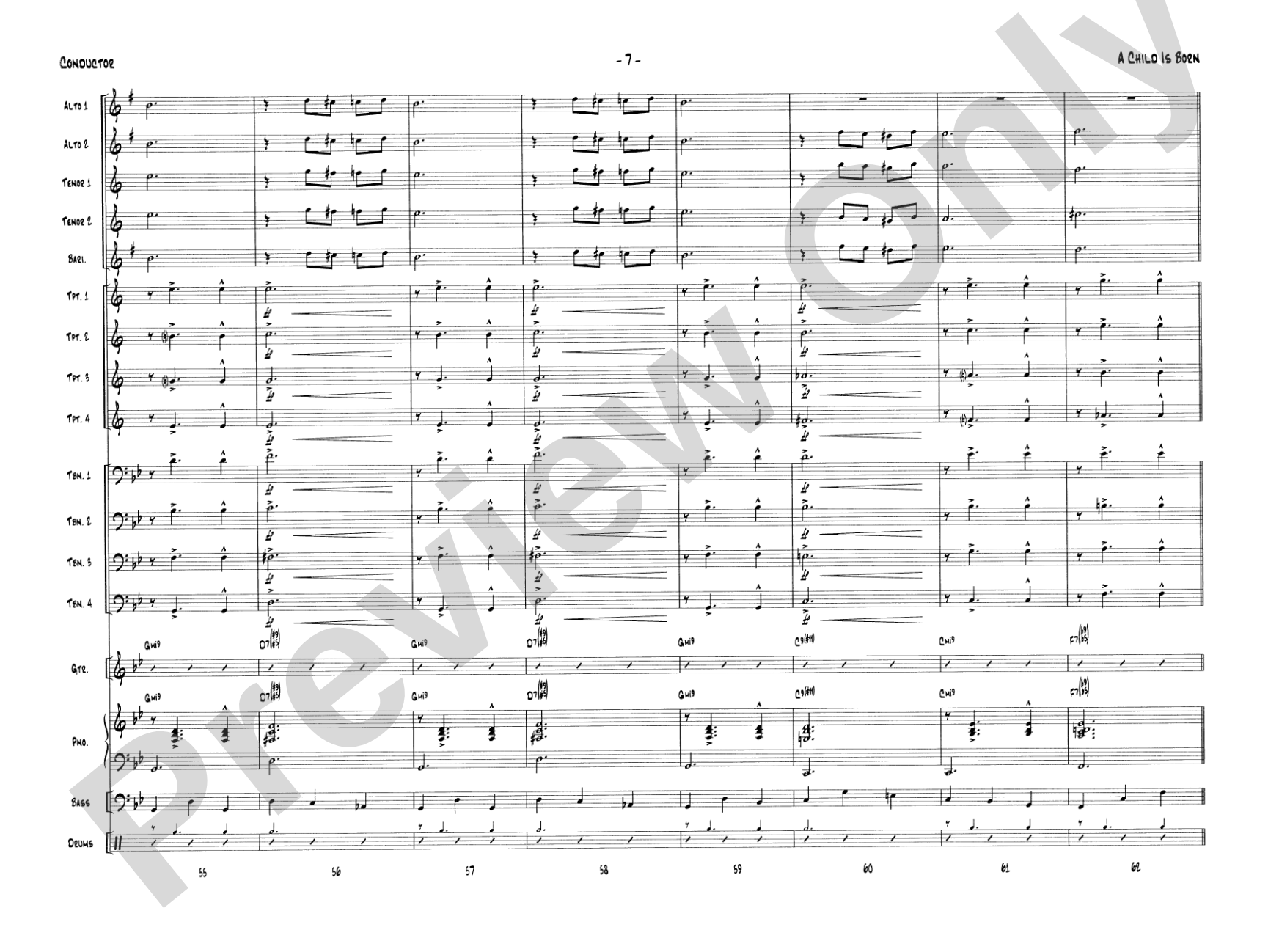
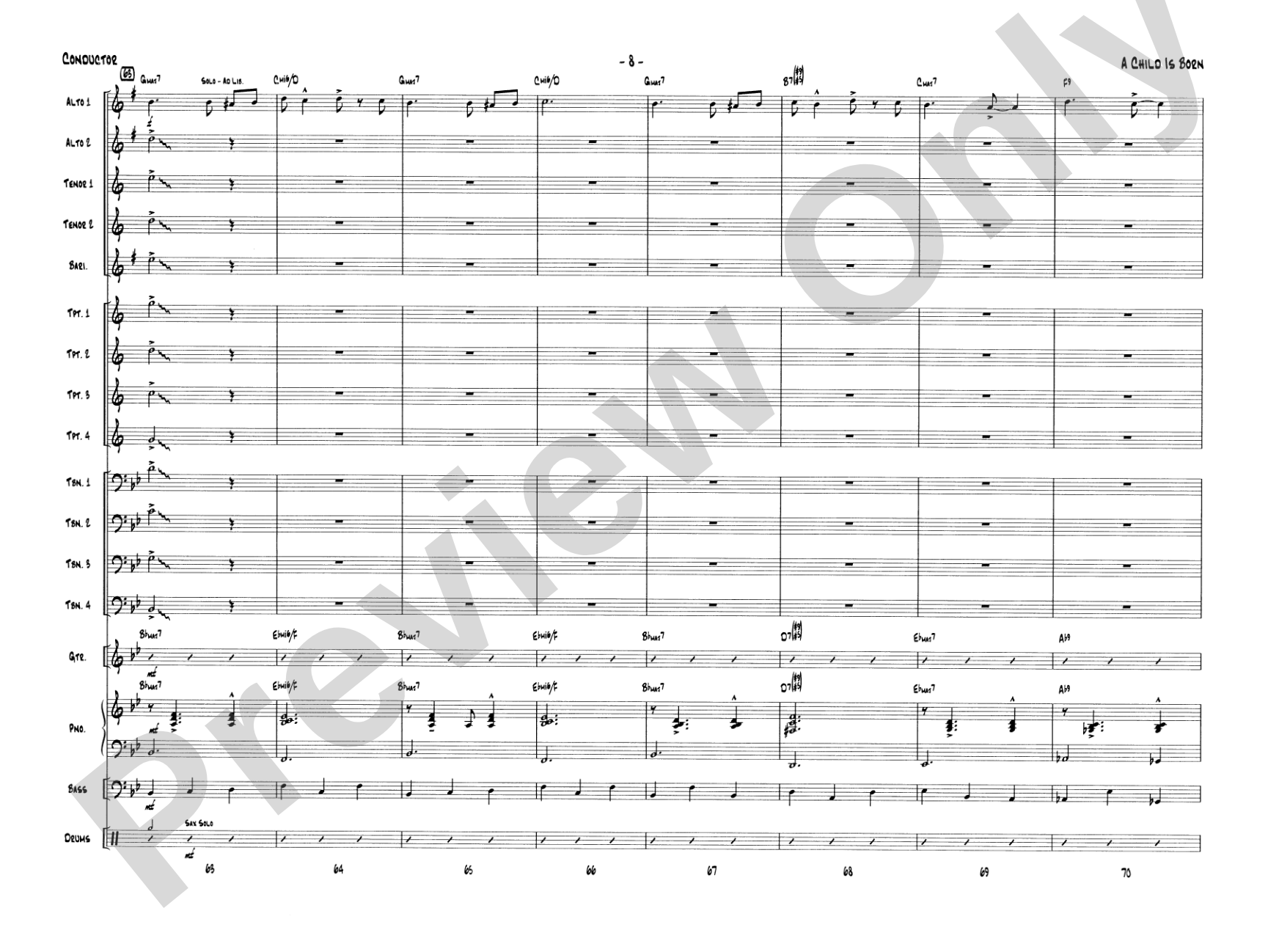
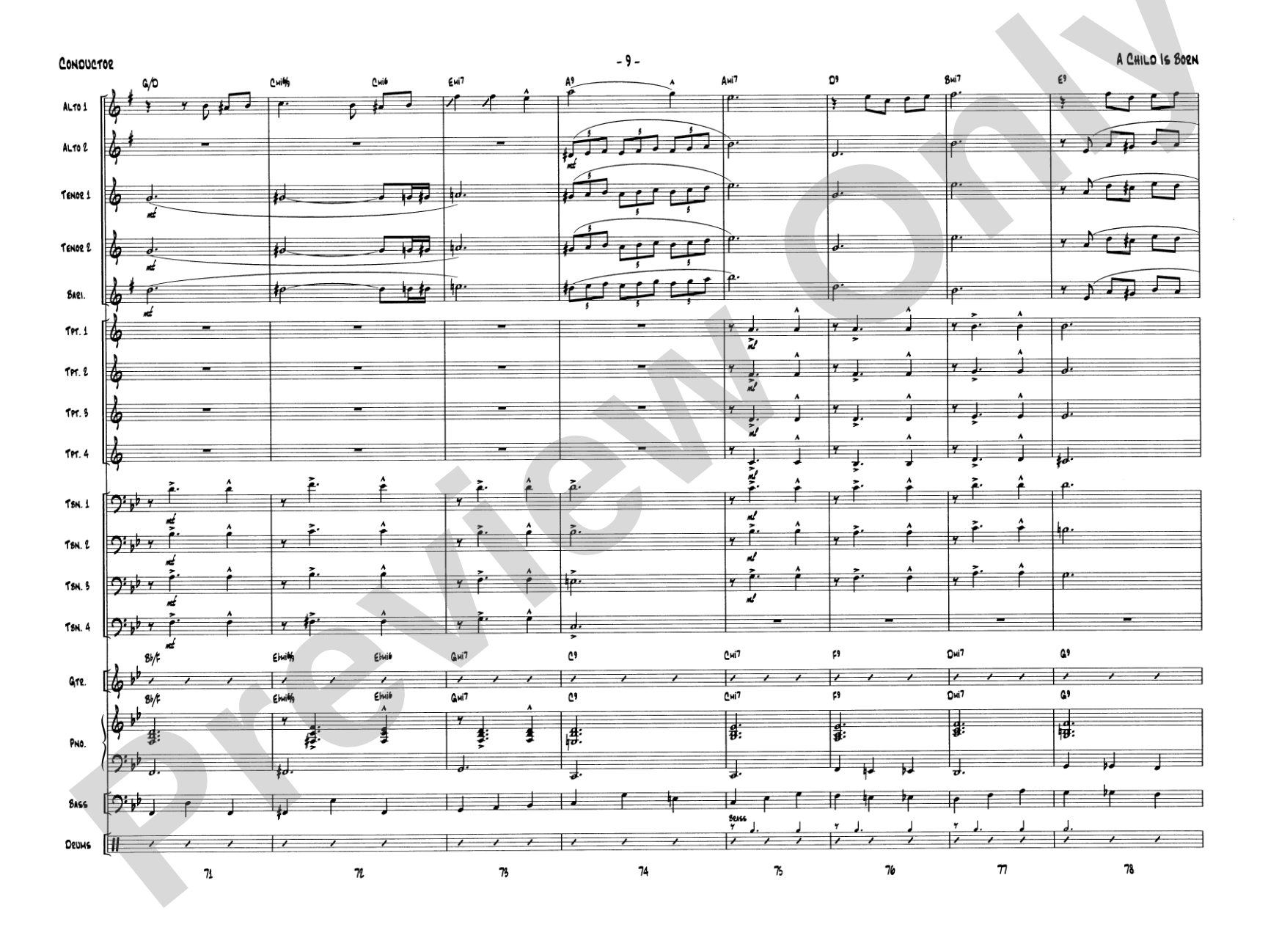
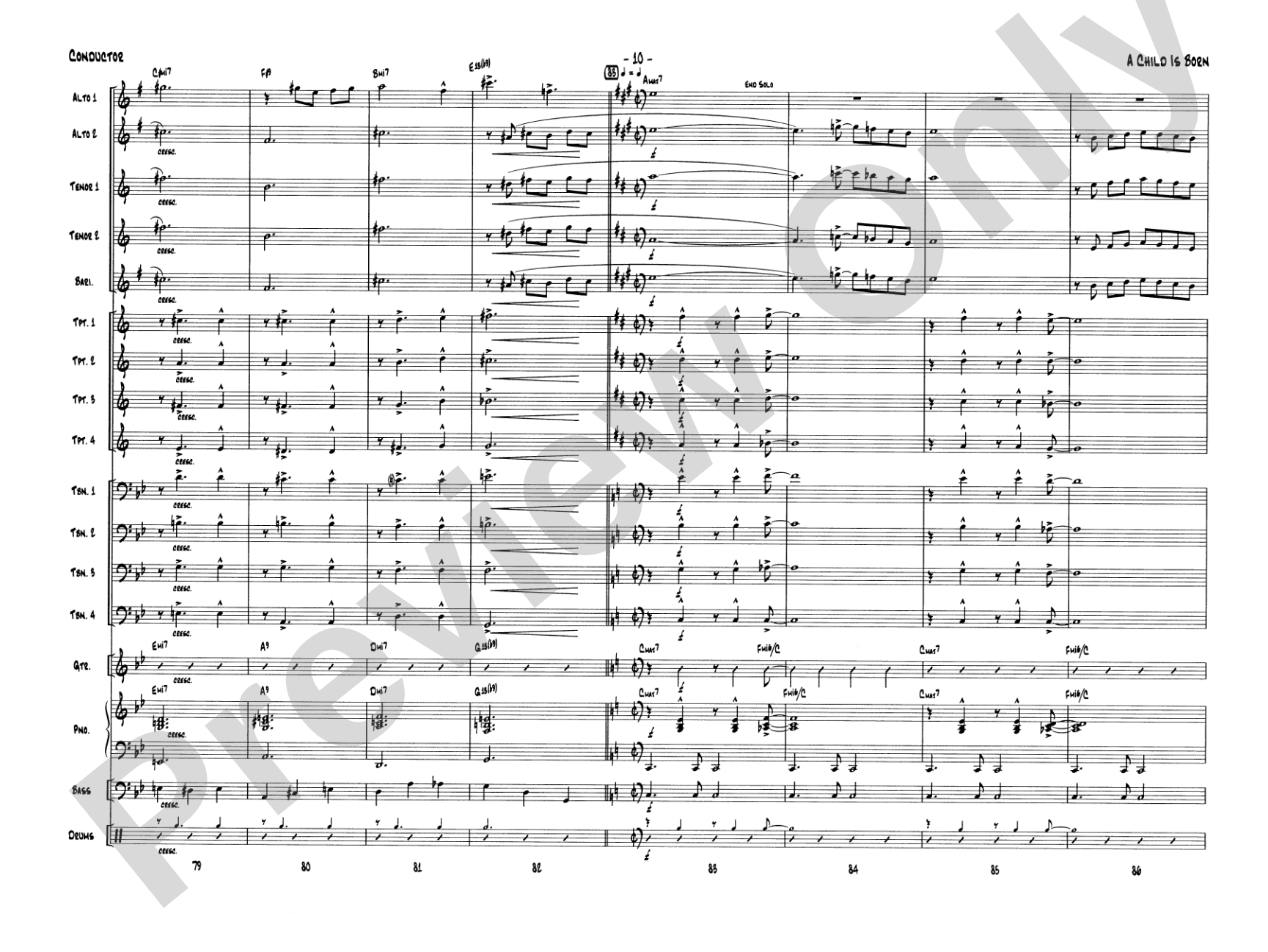
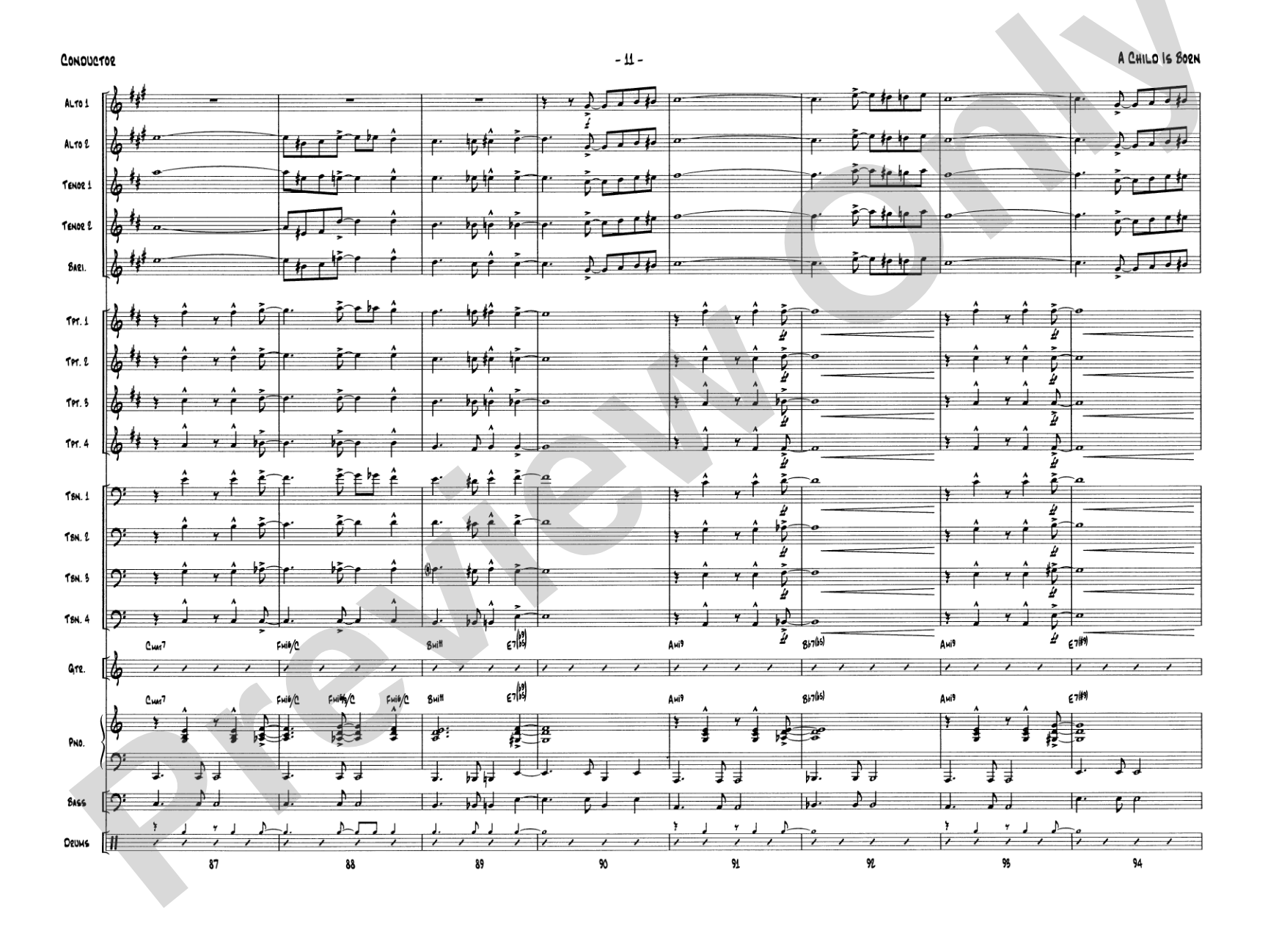
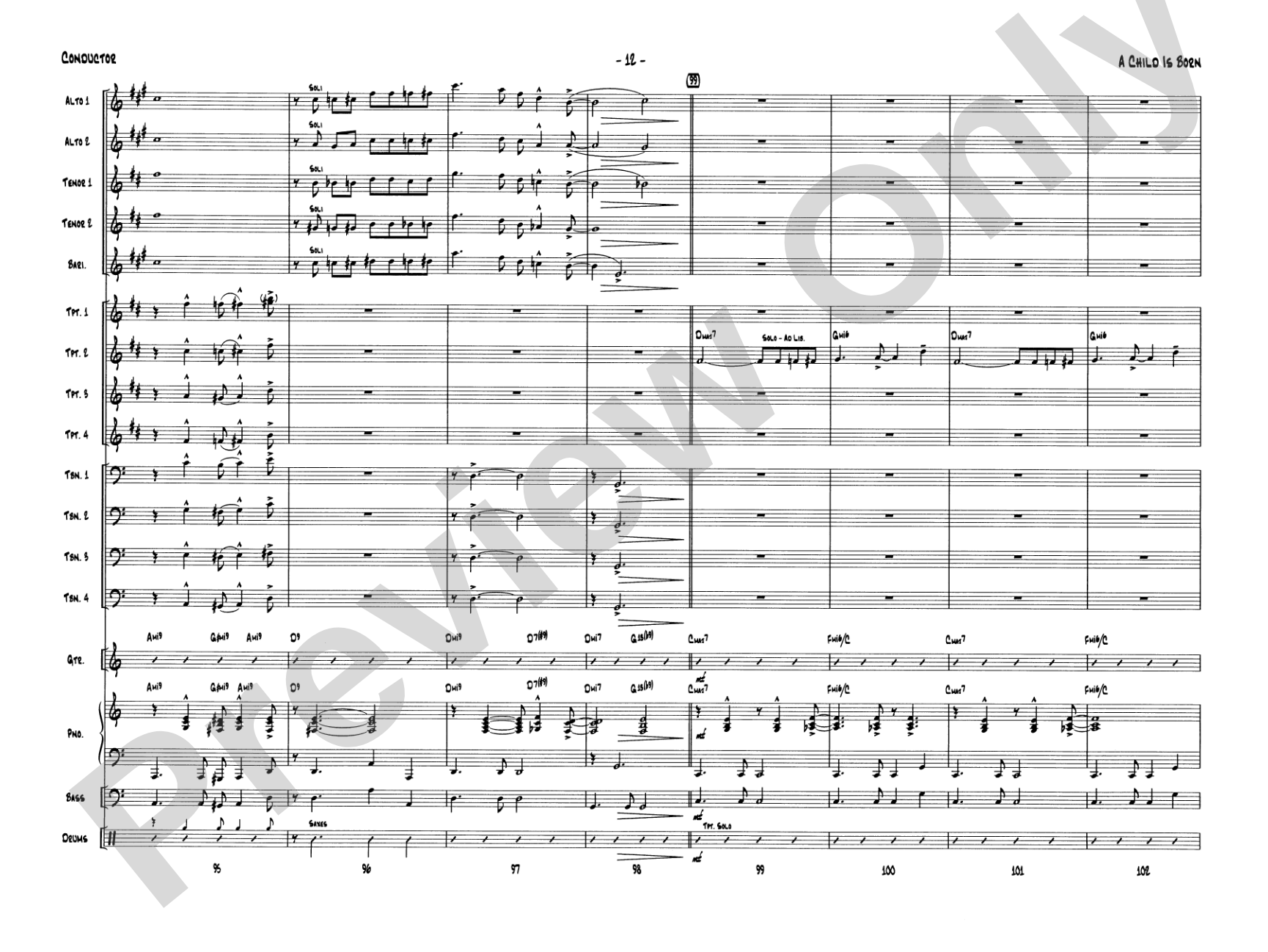
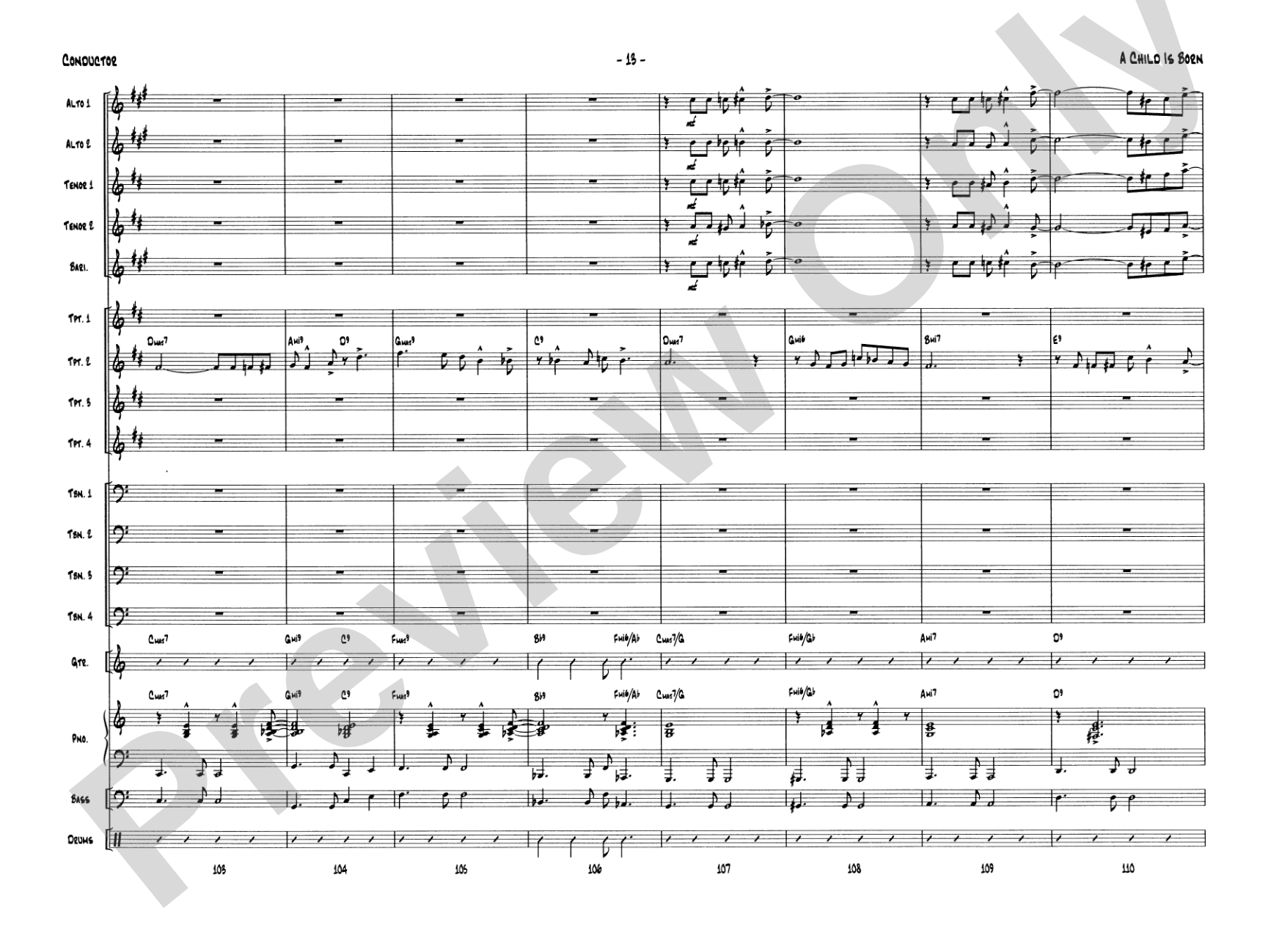
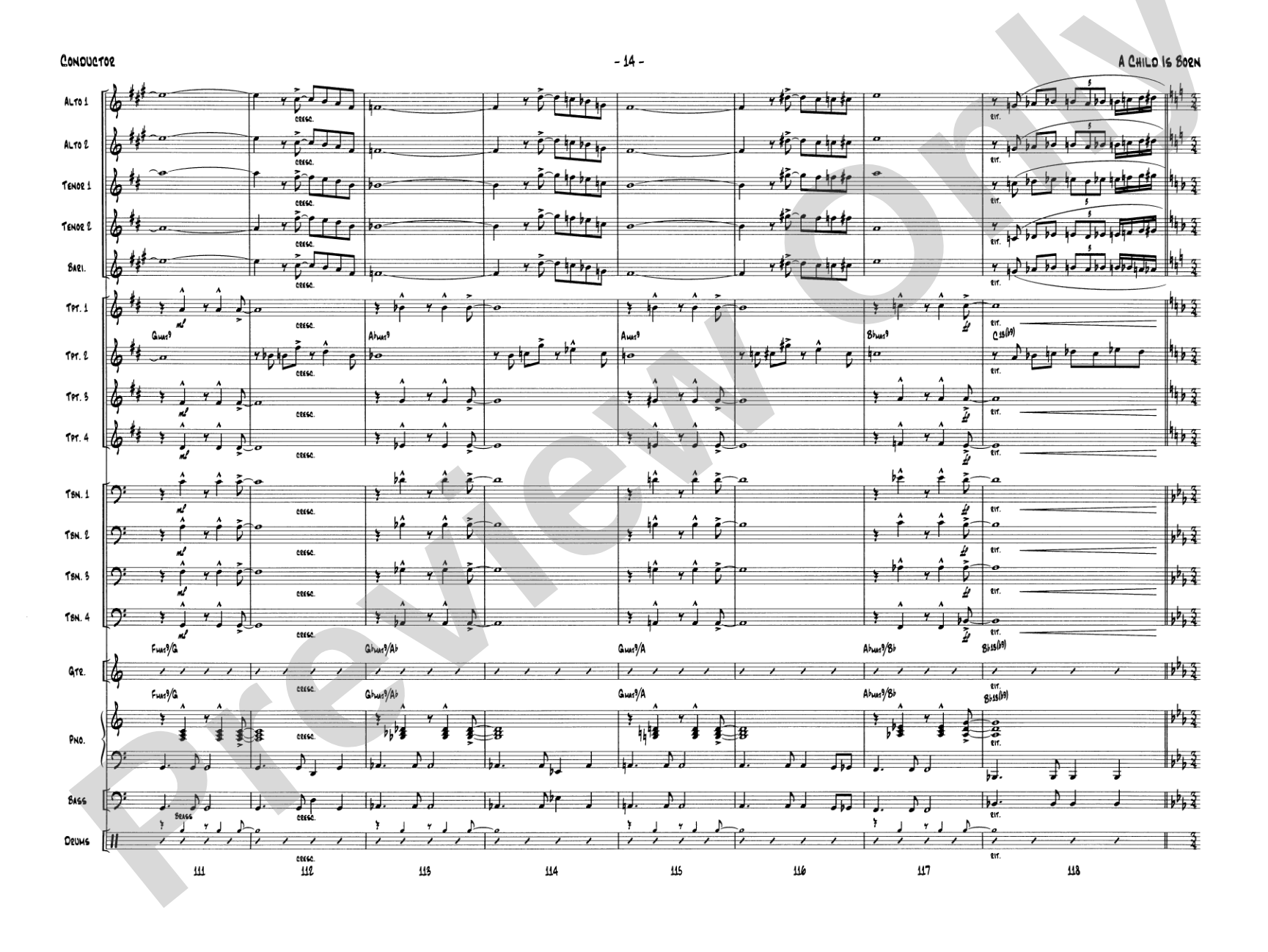
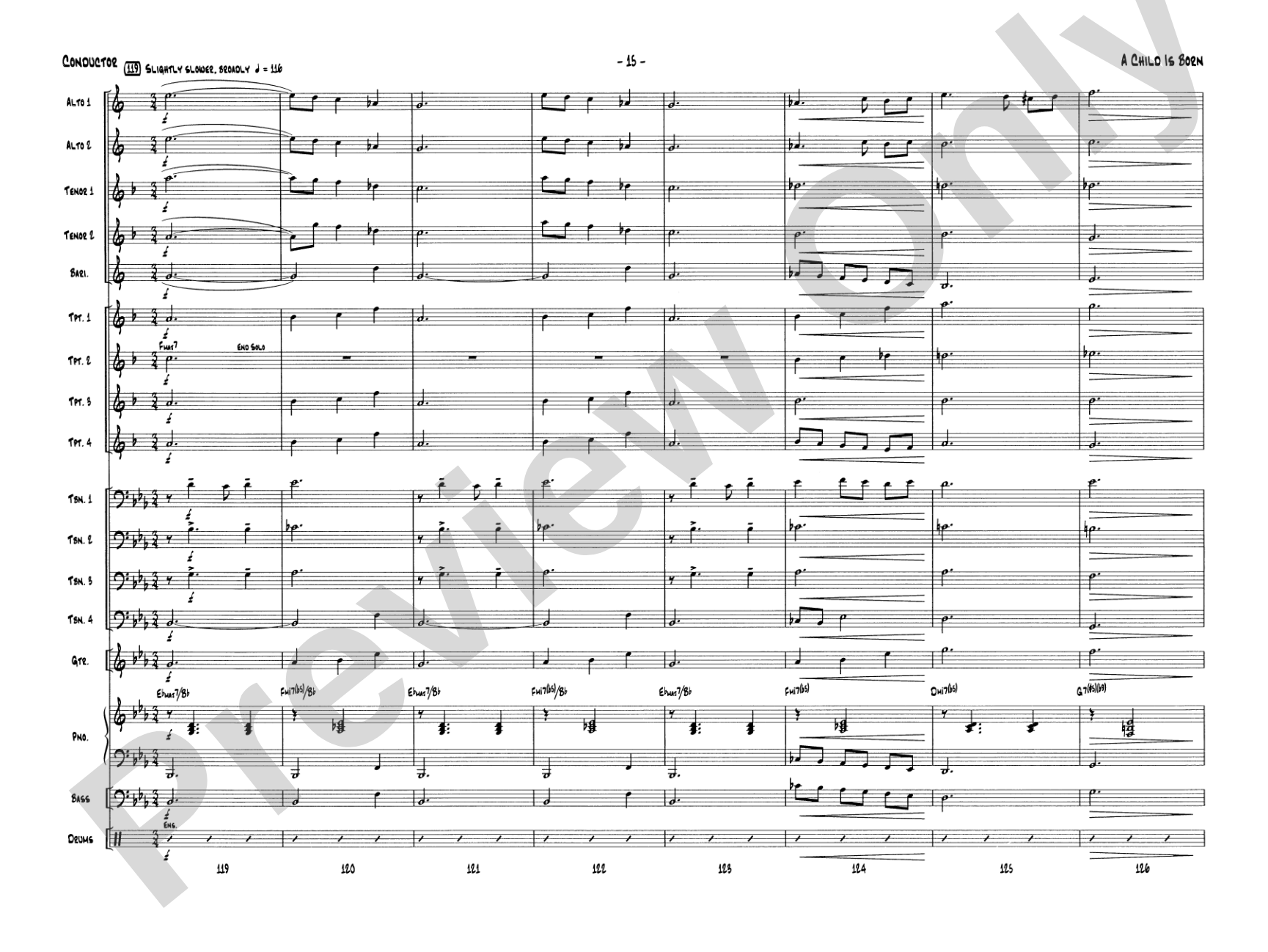
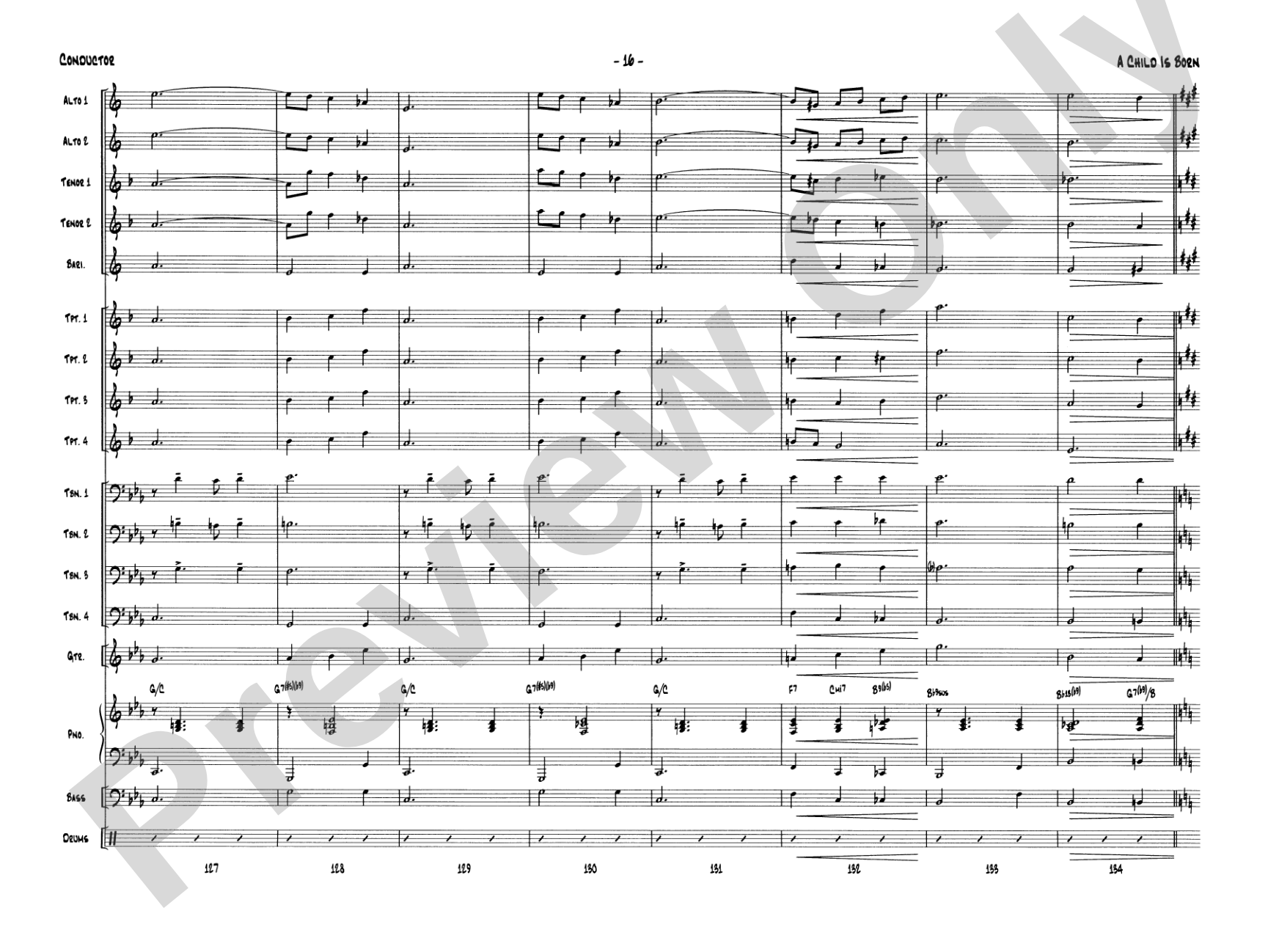
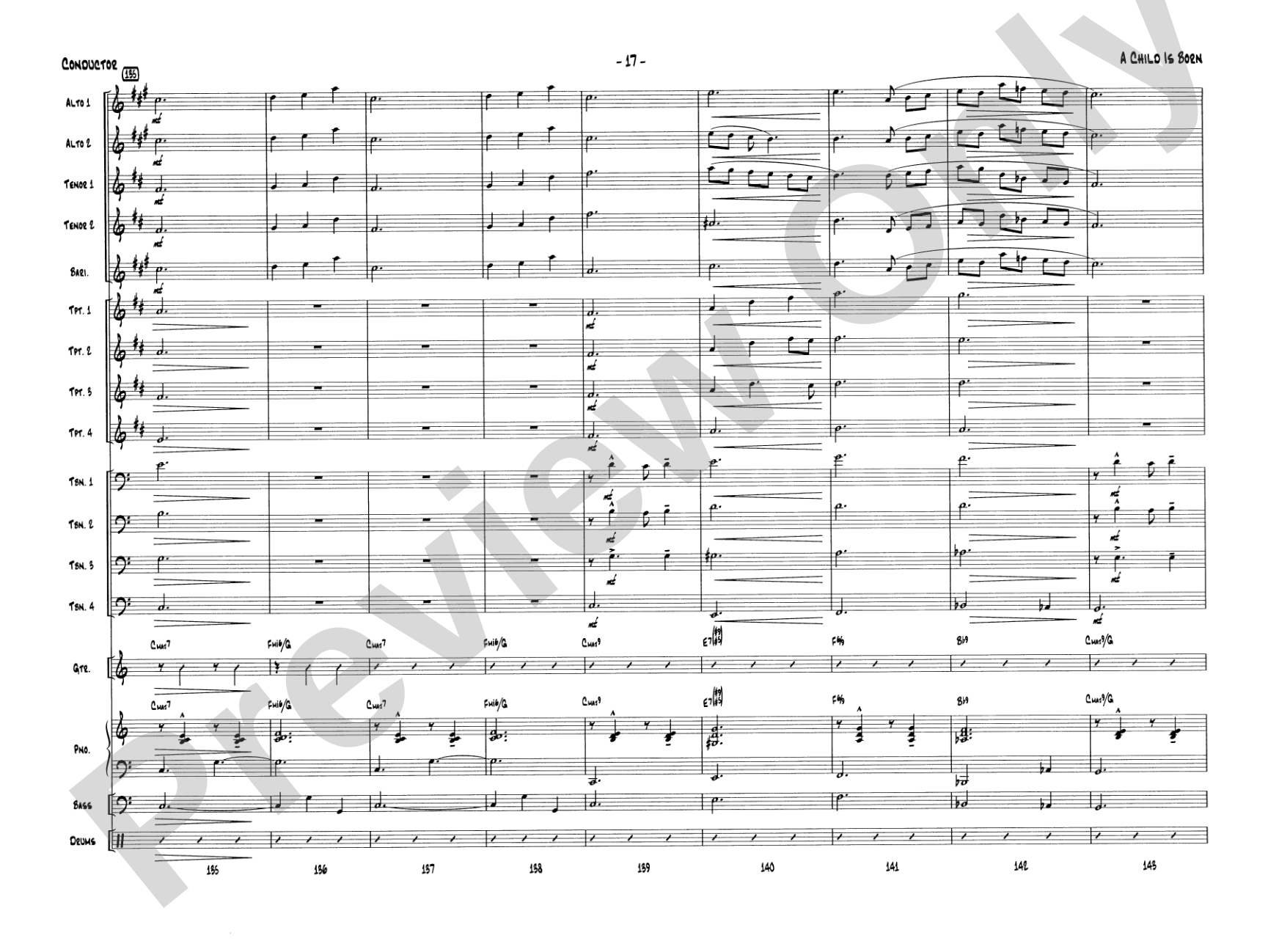
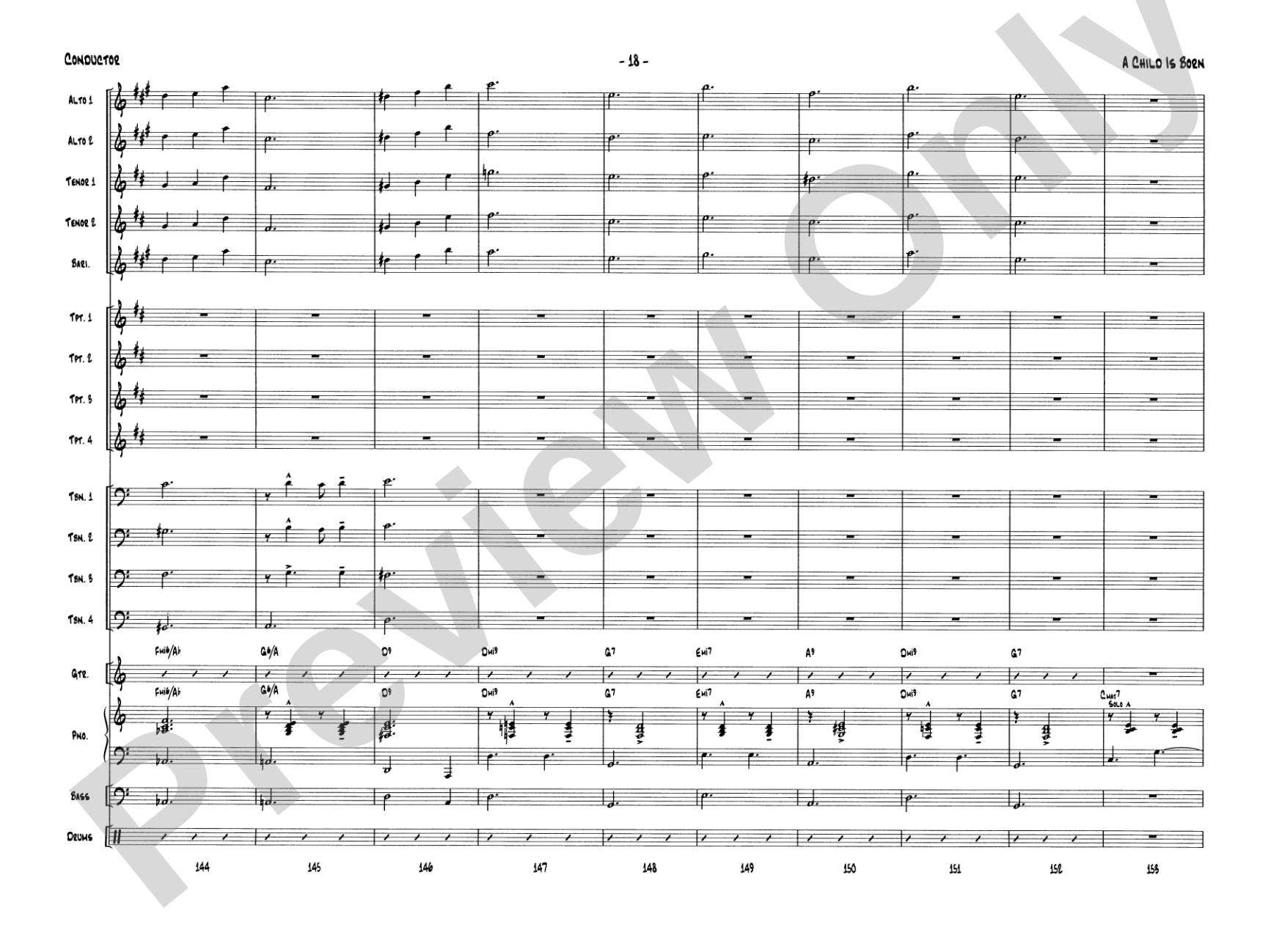
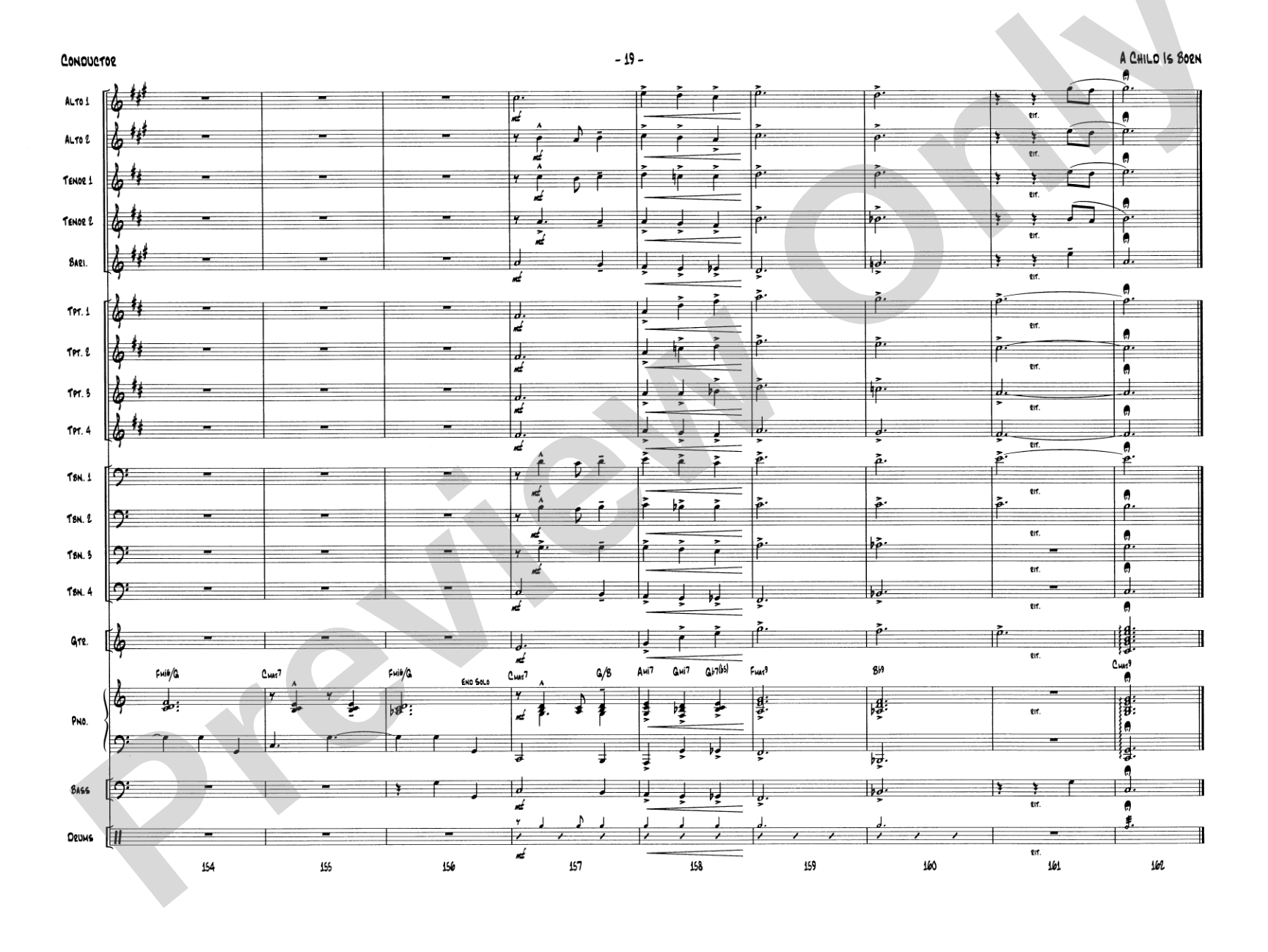




A Child Is Born: Score
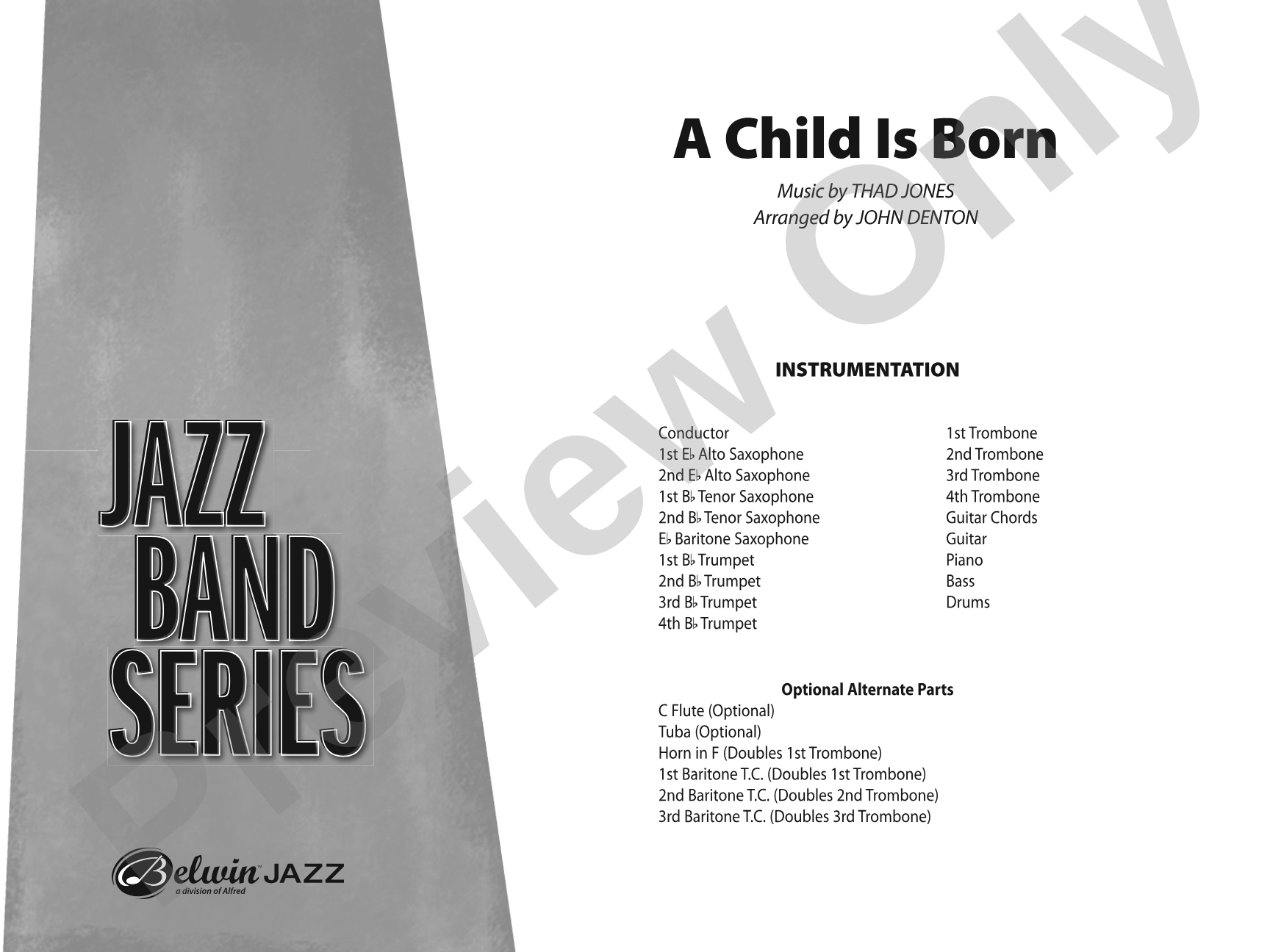
Music by Thad Jones / arr. John Denton
Grade: 3 (Medium)
Item: 00-PR-0005297
$8.00
Pickup currently not available
Description
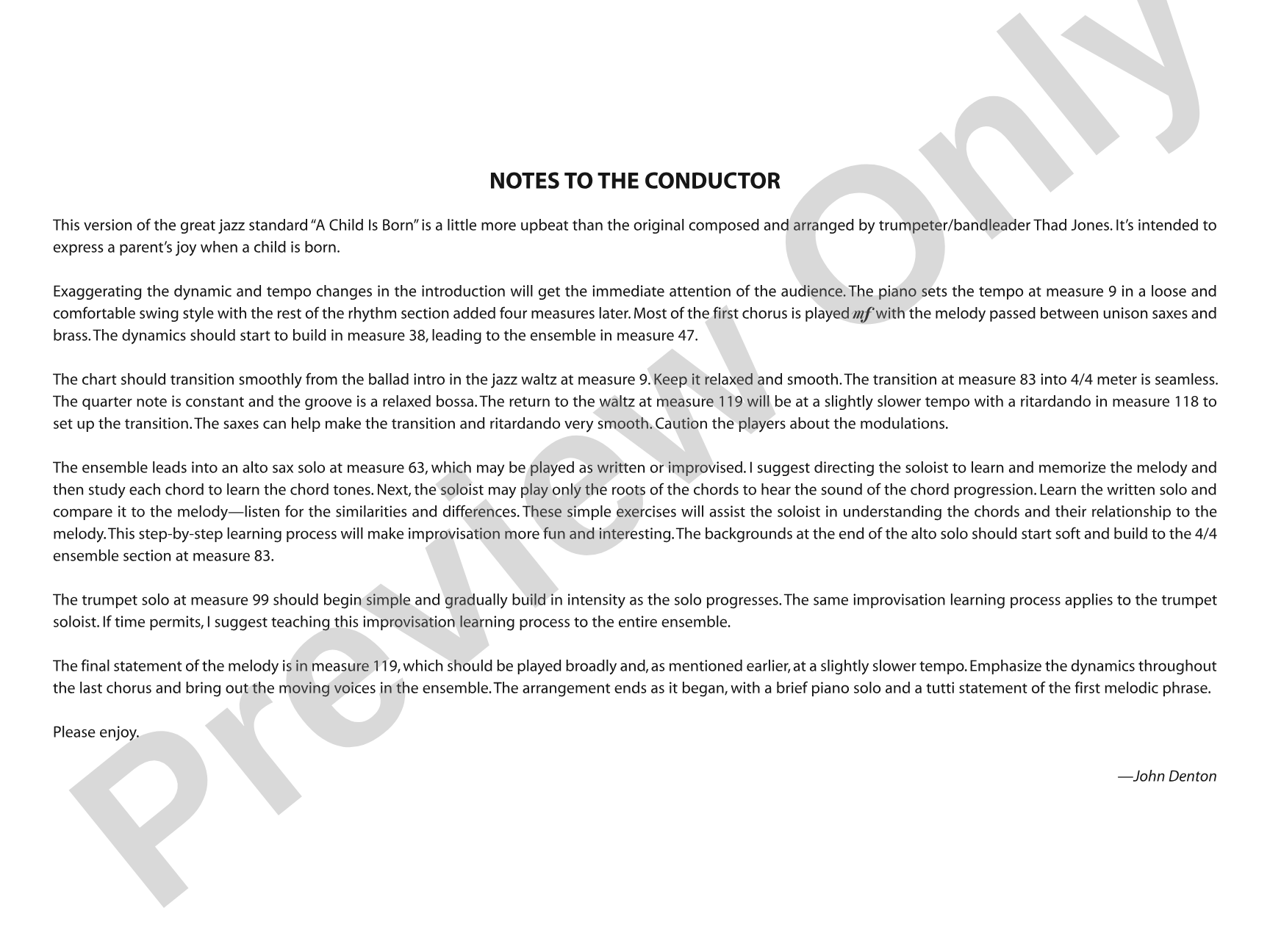
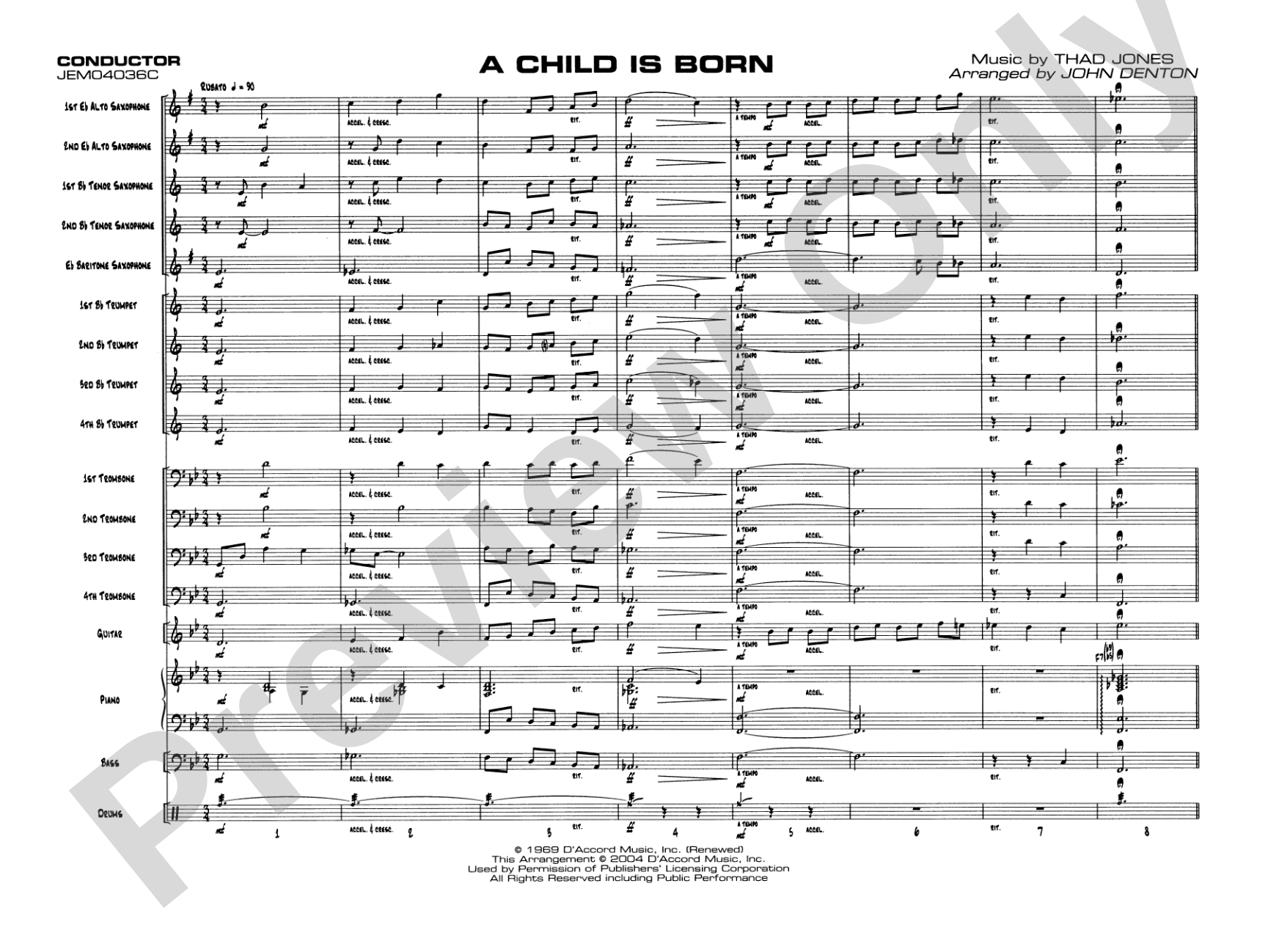
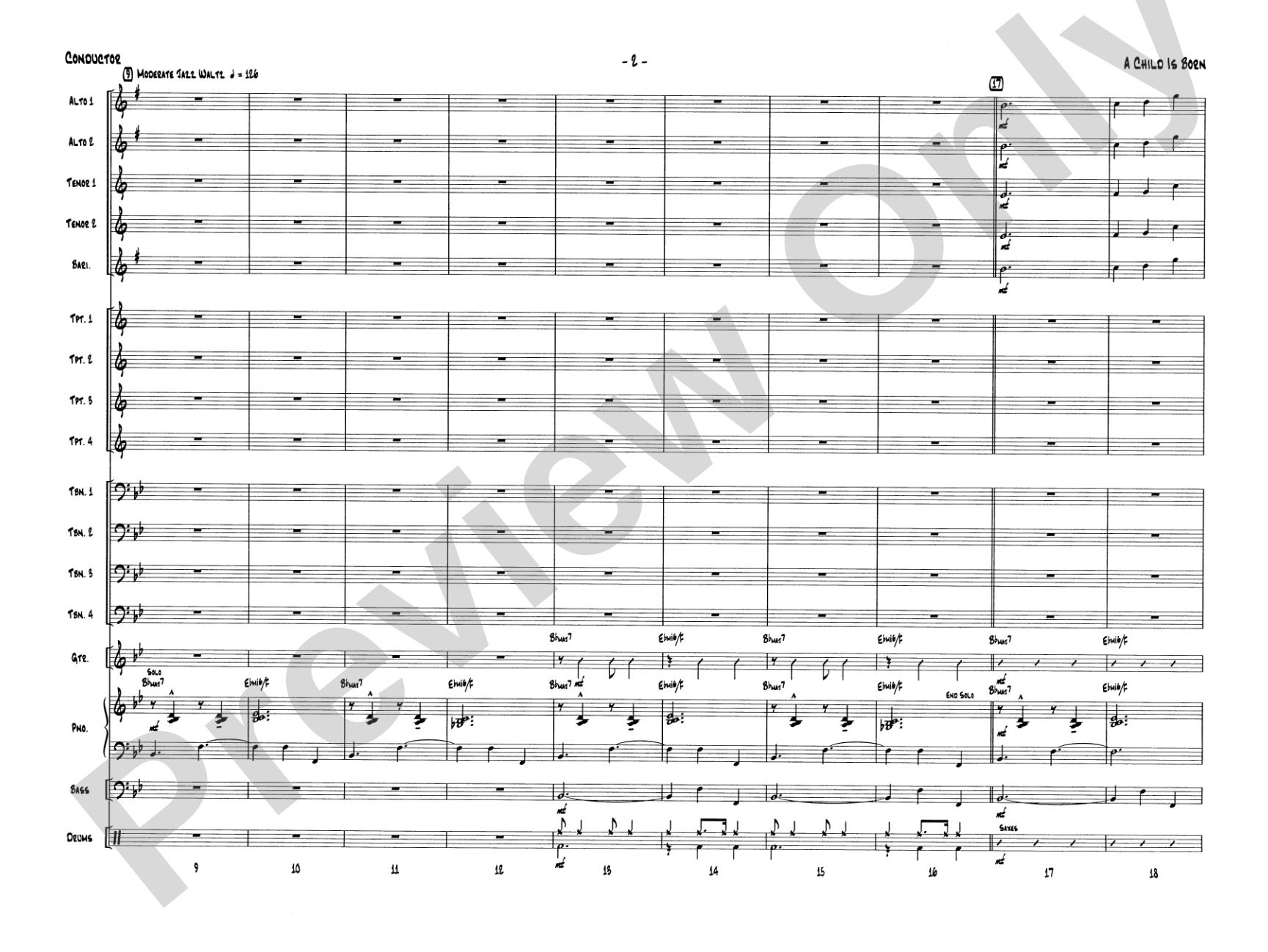
This wonderful jazz standard by Thad Jones is now updated by John Denton. It moves smoothly through a few styles as a ballad, a moderate jazz waltz, and a bossa in four all the while keeping the beauty and integrity of the original chart. There are written or ad lib solos for 1st alto sax and 2nd trumpet. Gorgeous chord voicings, tasty contrapuntal lines, and a perfect melody make a very musical chart from top to bottom. (4:40)


Don't just read it, hear it, play along with it, and watch your students grow with it. In MakeMusic Cloud, A Child Is Born: Score comes alive with professional accompaniment, adjustable tempo, and built-in practice tools that turn solo practice into real progress.
Open in the Player
Jump straight in and assign it today.
Start Your Free Trial
Open this title and explore the full library in minutes.
Sample Audio
1
Audio File
--:--
0:00
0:00
Sample Video
Additional Details
Series:
Jazz Band Series
Publisher:
Alfred Music
Page Count:
94
SKU:
00-PR-0005297
More about this title
About the Composer: Thad Jones
Thad Jones (1923-1986) was a cornet and trumpet player whose compositional voice defined the sound of mid-century big band jazz. His work with Count Basie's orchestra and later as co-leader of the Vanguard Jazz Orchestra established him as a master of orchestration, balancing intricate section writing with space for individual voices. Jones brought a composer's sophistication to jazz ensemble writing, creating charts that challenged players while remaining deeply lyrical.
Why we love this
John Denton's revision of this standard respects the original's melodic and harmonic elegance while giving it fresh orchestration. The arc across three distinct jazz styles keeps ensemble interest high, and the balance between written solo moments and improvisation gives soloists room to shine without overshadowing the ensemble's gorgeous voice leading. This is a chart that sounds composed, not like a vehicle for soloists to take over.
What to expect
A tour through three moods without feeling scattered. The piece opens with ballad warmth and intimacy, moves into the lilt and play of a jazz waltz, then settles into the groove and sophistication of bossa feel. Throughout, there's an underlying elegance; this never descends into novelty or excessive noodling.
Who it's for
Jazz ensemble directors at the high school or community college level who want material that honors the jazz standard tradition while offering contemporary arranging sophistication. Ensembles with solid fundamentals in section balance and jazz articulation will find this rewarding to develop further.
How to get the most out of it
- Shape the ballad section with attention to the harmonic rhythm; resist rushing through the chord changes, which are central to the piece's emotional weight.
- Let the waltz feel natural and unhurried. This tempo shift should breathe rather than feel like a metronome change.
- Balance the written solo passages with the ensemble's voicings. The alto and trumpet solos should speak clearly, but the backgrounds underneath them are doing important musical work.
- Use the rhythm section's touch in the bossa section to establish groove without overplaying. The bass line and piano comping should establish feel first, then the horns can settle in.
How to use it
This works as a strong first or second half opening for a jazz concert, offering enough stylistic variety to hold audience attention while remaining accessible. It also makes an excellent closer for a holiday concert, given its title and the musical maturity it brings to a seasonal program without feeling forced or overly sentimental.
Skills your students will build
- Executing smooth tempo transitions between connected sections
- Voicing chords with awareness of individual line integrity and blend
- Playing written eighth-note lines with jazz feel and articulation
- Balancing ensemble sonority while featured soloists are improvising
- Reading and interpreting jazz chord symbols and comping notation
- Navigating rhythmic feel changes (straight ballad, waltz, and bossa)