A Charlie Brown Christmas Sheet Music Preview

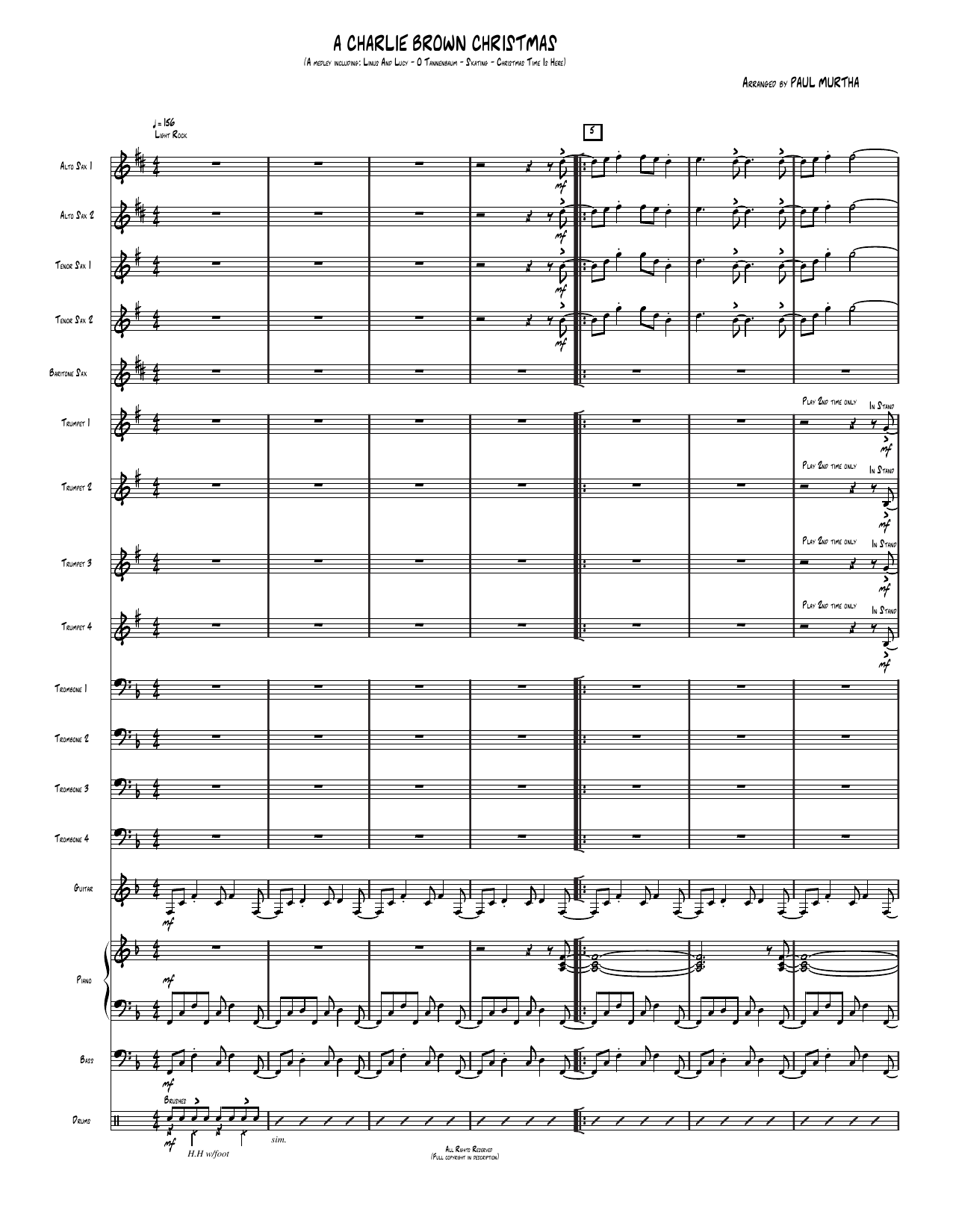
A Charlie Brown Christmas: Jazz Ensemble Conductor Score & Parts

By Vince Guaraldi / Arranged by Paul Murtha

Grade: 3

Item: 35-PK00426491

Digital Download
$50.00

Buy Extra Parts (Digital PDF Download)

Product Price Quantity
A Charlie Brown Christmas - Full Score $50.00

Parts Added to Cart!

Description
A Charlie Brown Christmas

A Charlie Brown Christmas: Jazz Ensemble Conductor Score & Parts isn't in MakeMusic Cloud just yet...but it could be. Let us know you'd like to see it, and you'll help shape what comes next. In the meantime, start a free trial and dive into thousands of interactive titles your students can play along with today.

Sample Audio
No sample audio found.
Sample Video
Additional Details
Publisher: Hal Leonard
SKU: 35-PK00426491

More about this title

About the Composer: Vince Guaraldi

Vince Guaraldi (1928-1976) was a pianist and composer whose jazz sensibility transformed television scoring. He won three Grammy Awards and composed the iconic music for the Peanuts animated specials, beginning with A Charlie Brown Christmas in 1965. His ability to write sophisticated yet accessible jazz arrangements made him a bridge between the concert hall and popular culture, proving that underscore could be as musically substantial as the drama it accompanies.

Guaraldi's harmonic language drew from cool jazz and West Coast swing, influenced by artists like Bill Evans. His work demonstrates how jazz vocabulary can serve narrative purposes without sacrificing musical integrity. For educators, his scores offer students a masterclass in economy of expression and the power of memorable melodic writing within a jazz context.

Why we love this

Paul Murtha's arrangement captures the warmth and humor of Guaraldi's original orchestrations while tailoring them specifically for jazz ensemble scoring. The chart respects the source material's melodic integrity while remaining accessible to Grade 3 players, making it genuinely playable without sacrificing that distinctive Guaraldi sensibility. Programming this gives your ensemble an authentic entry point into jazz standards with built-in cultural recognition.

What to expect

Tender and reflective, with moments of gentle humor. The harmonies settle warmly into you, evoking the special-ness of the Peanuts universe: a world where imperfect things matter deeply. There's an understated sophistication here, a jazz tradition expressed through simple, human-scaled melodies.

Who it's for

Jazz ensembles working at the Grade 3 level who want holiday programming with genuine musical substance. This arrangement suits groups balancing pedagogical growth with audience appeal, especially programs aiming to present jazz as art music rather than novelty.

How to get the most out of it

  • Balance the melody across sections rather than isolating it in the lead trumpet. This music invites transparency, so let ensemble voicings carry equal weight to soloists.
  • Lean into the space between phrases. Guaraldi's writing often breathes, and rushing through rests undermines the gentle, contemplative quality that defines these themes.
  • Shape the changes with subtle dynamic shifts rather than rigid sectional dynamics. The harmonies shift frequently, and highlighting those chord movements makes the jazz language clearer to listeners.
  • Allow the rhythm section room to lay the pocket without driving hard. This score works best with a relaxed, almost understated groove that lets melodies float on top.

How to use it

Position this as a centerpiece in holiday concerts, or pair it with other Guaraldi pieces if your ensemble has the instrumentation. Because it's recognizable but jazz-forward, it works beautifully alongside classical holiday standards, creating programming contrast without tonal whiplash. Consider performing it early in your concert season to establish that your jazz program takes composition seriously.

Skills your students will build

  • Comping behind head melodies in jazz voice-leading
  • Balancing ensemble blend when sharing melodic material
  • Reading contemporary jazz notation and chord symbol interpretation
  • Phrasing and articulation within the cool jazz aesthetic
  • Accompanying changes while maintaining rhythmic pocket

You May Also Like