
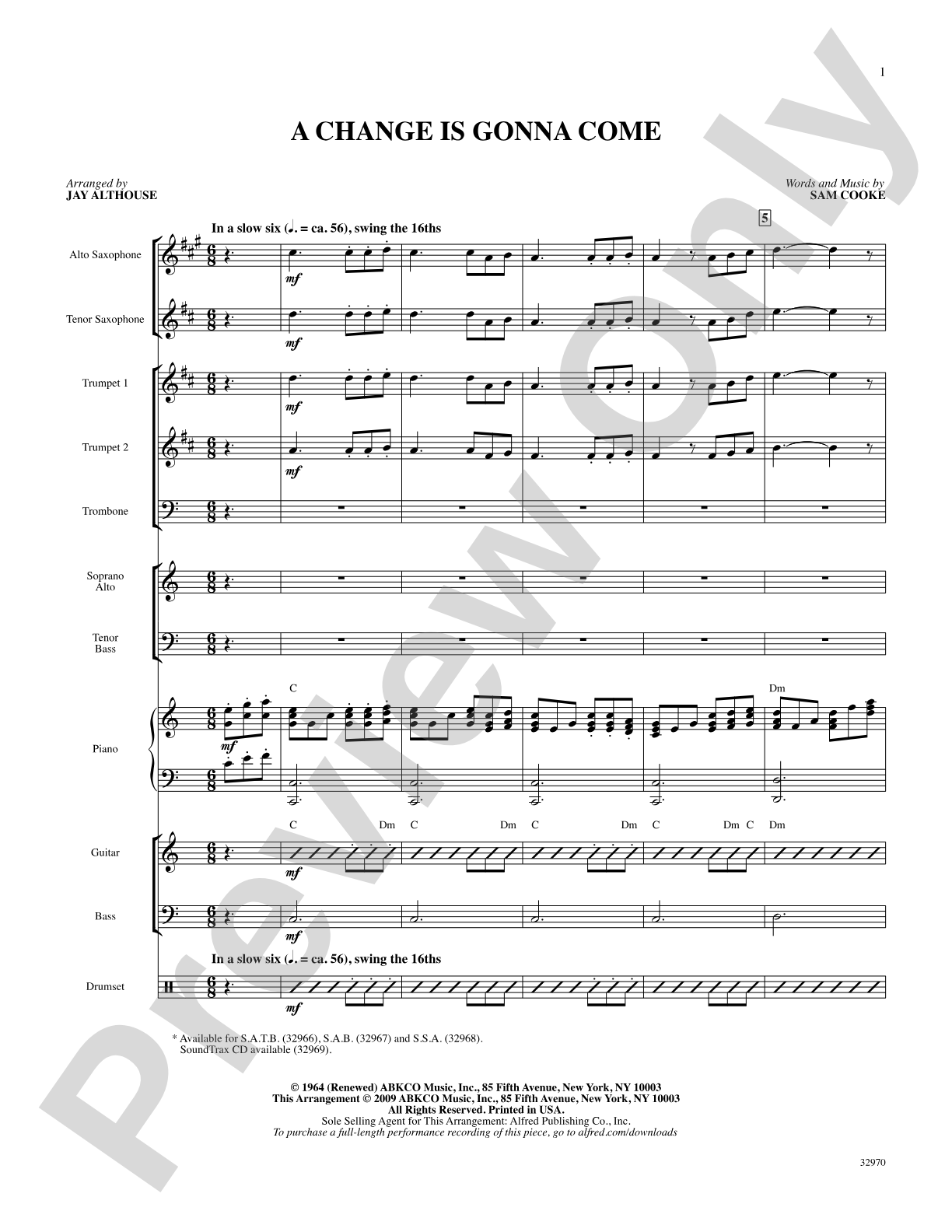
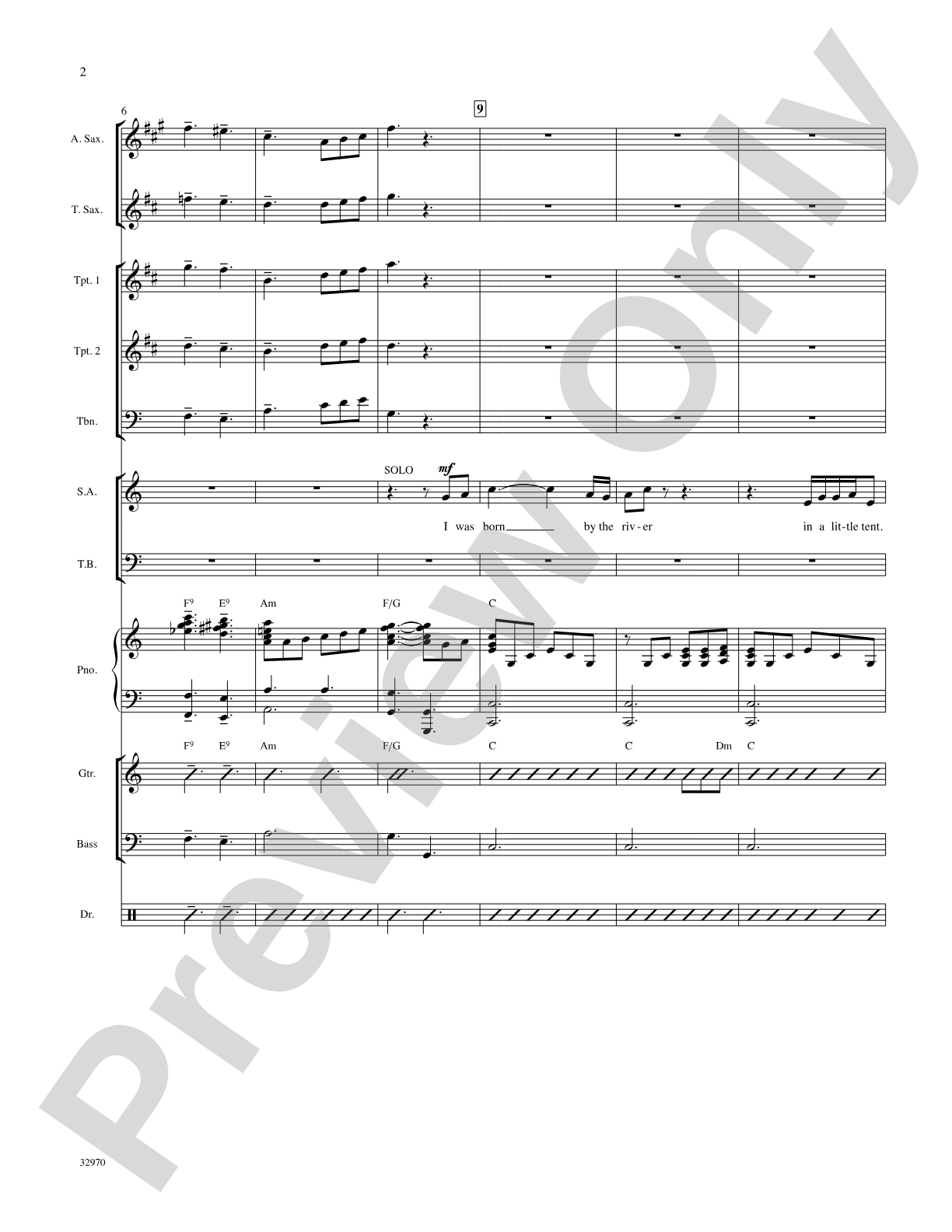
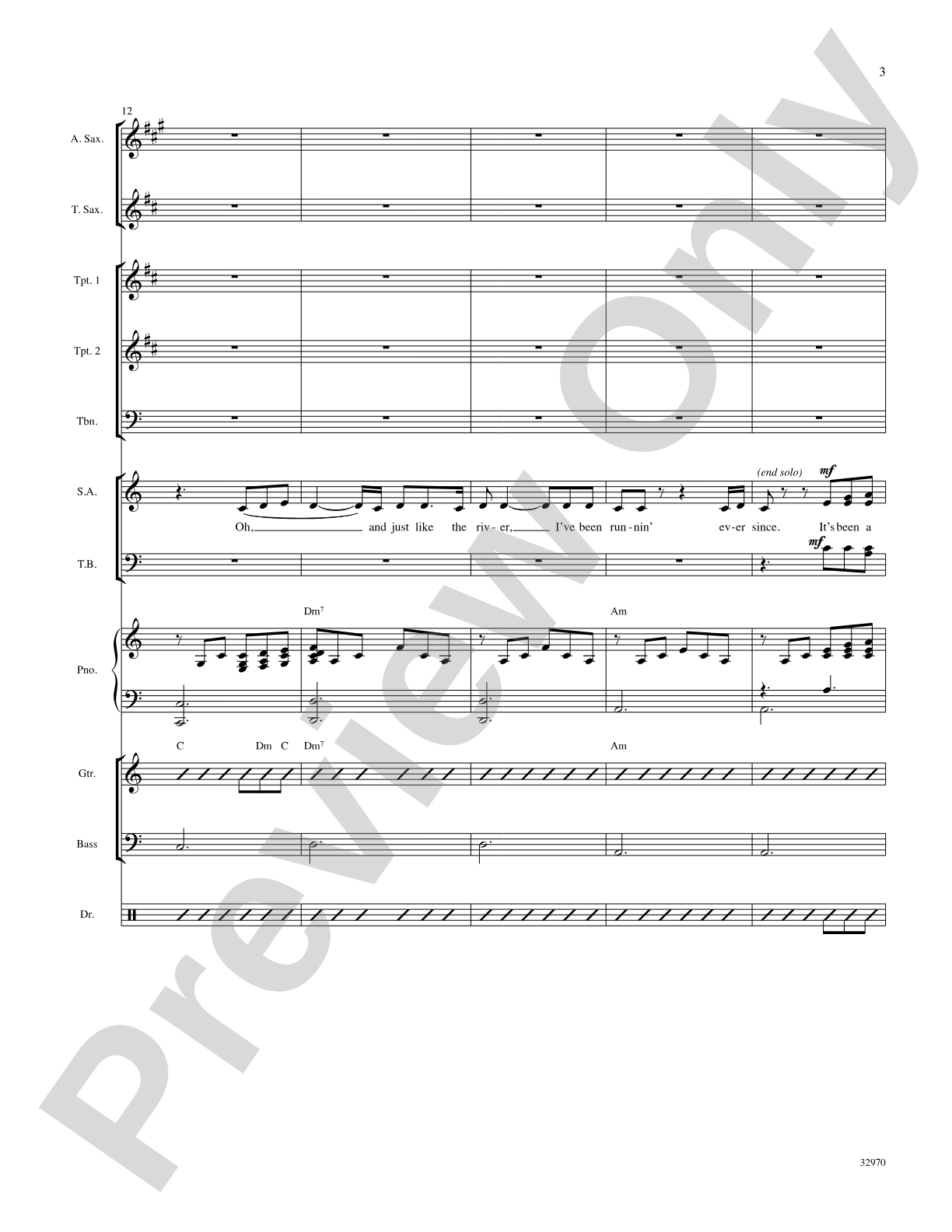
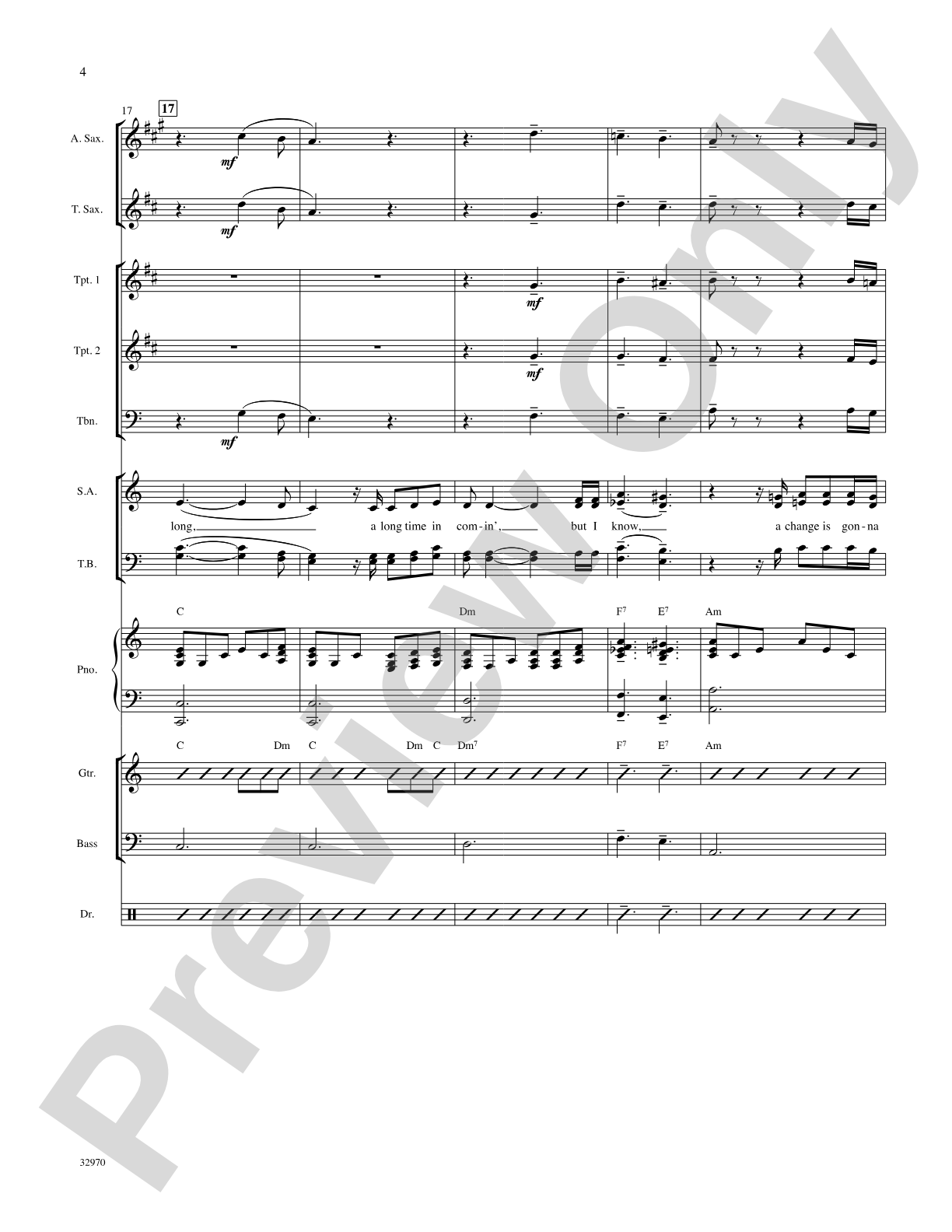
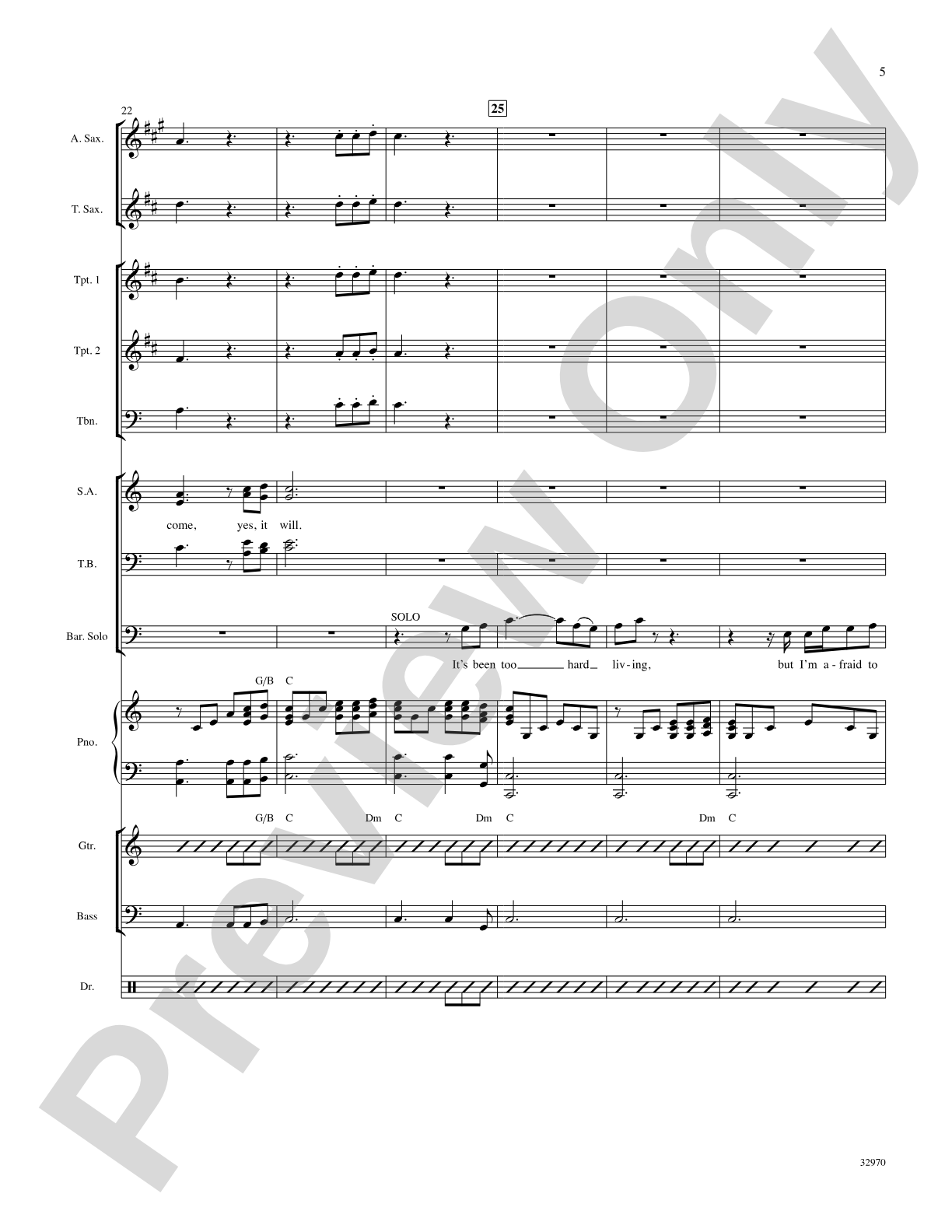
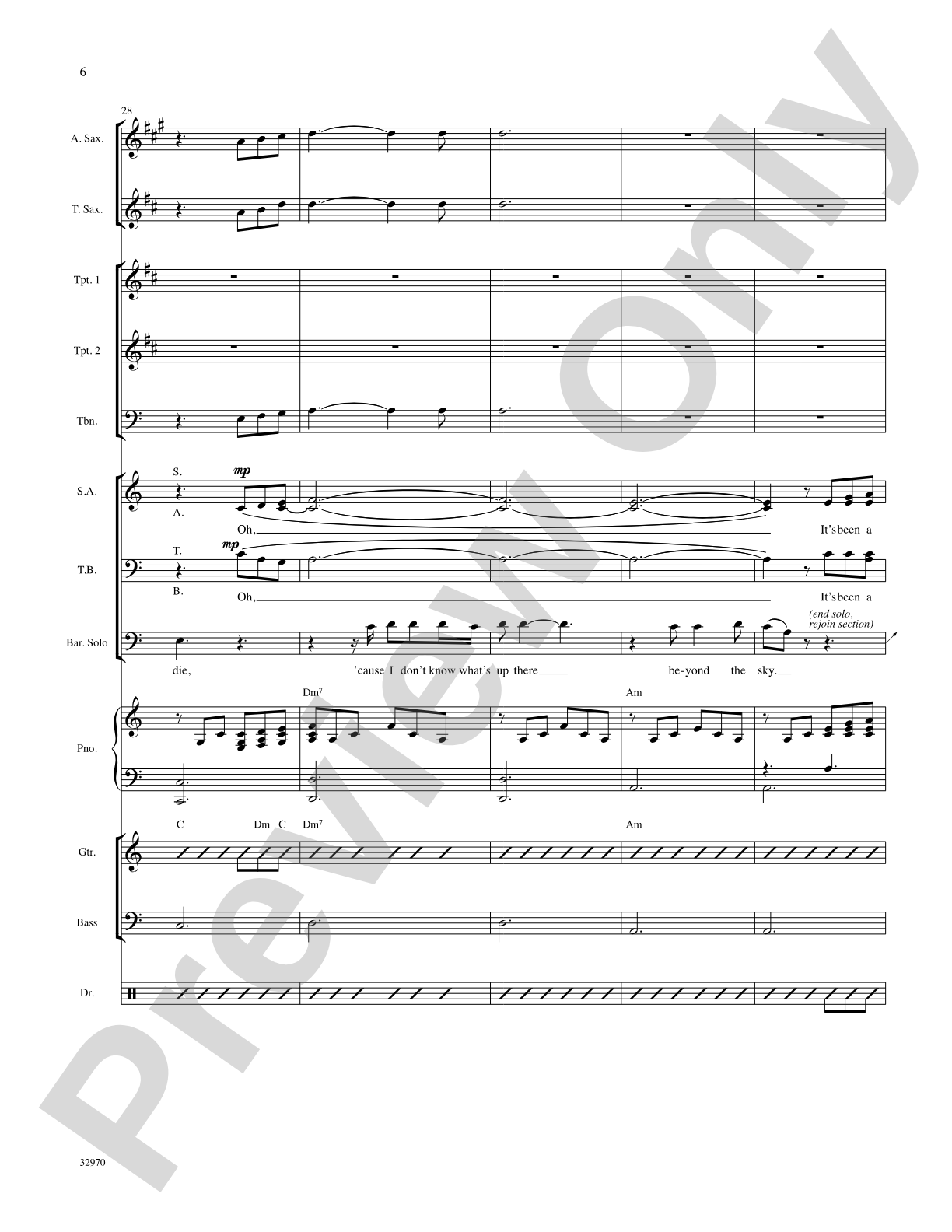
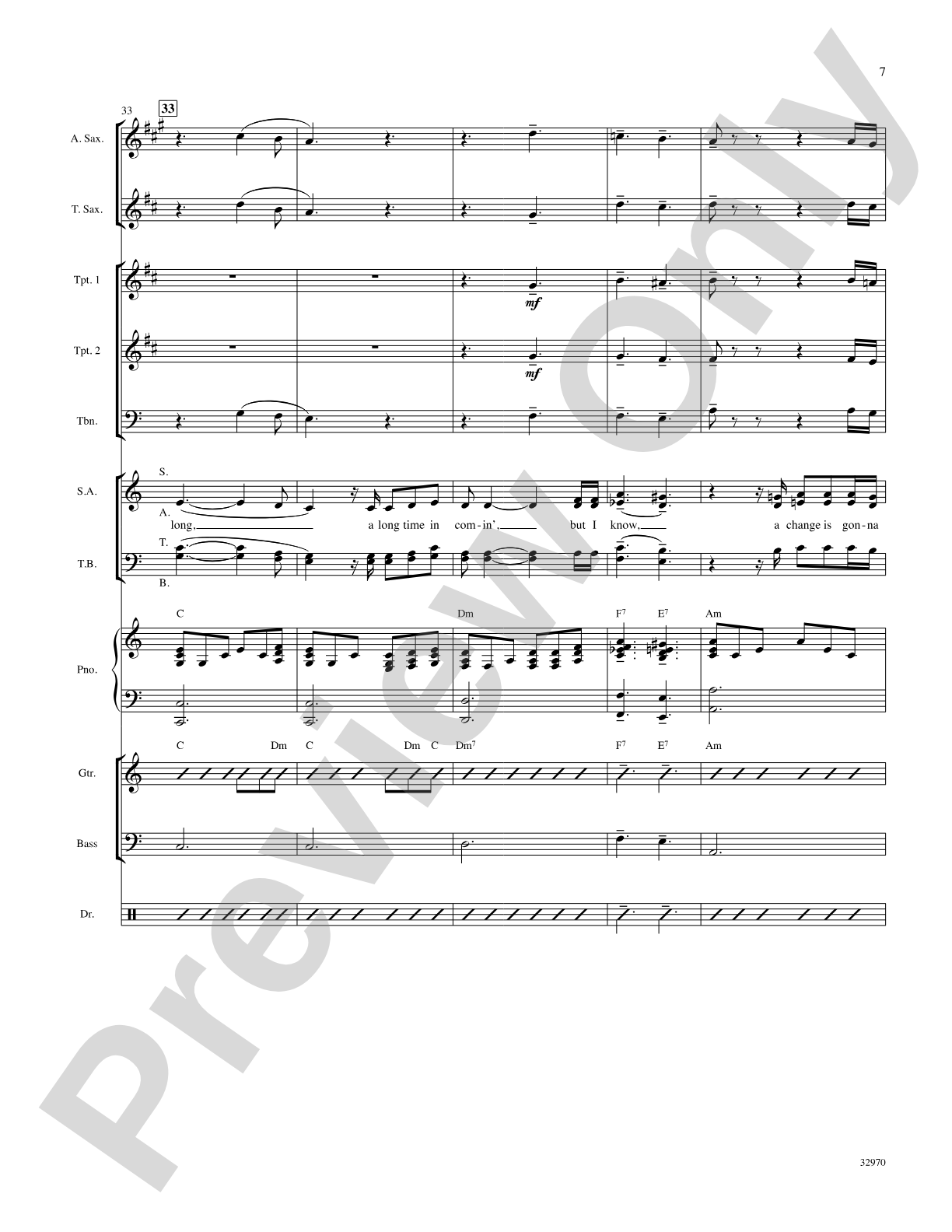
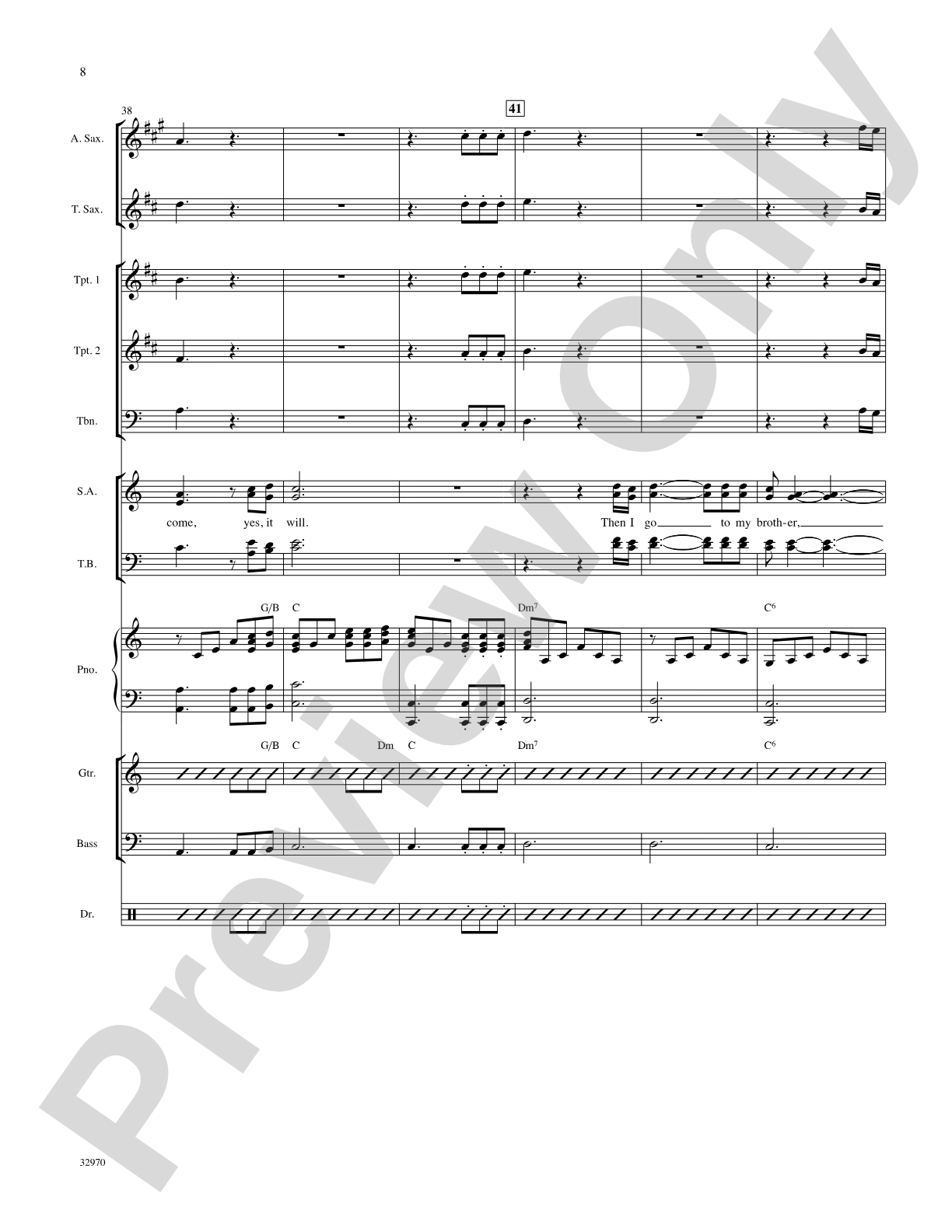
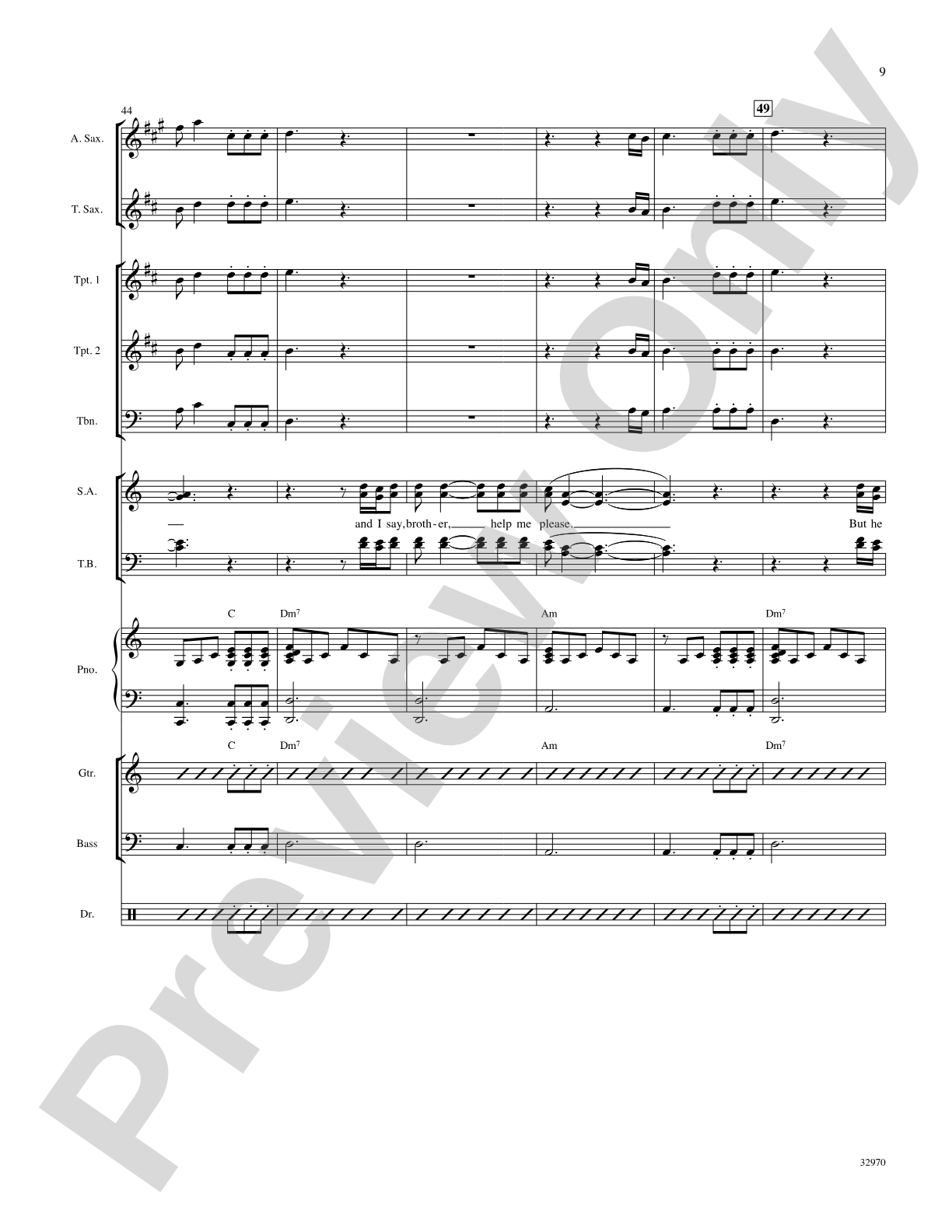
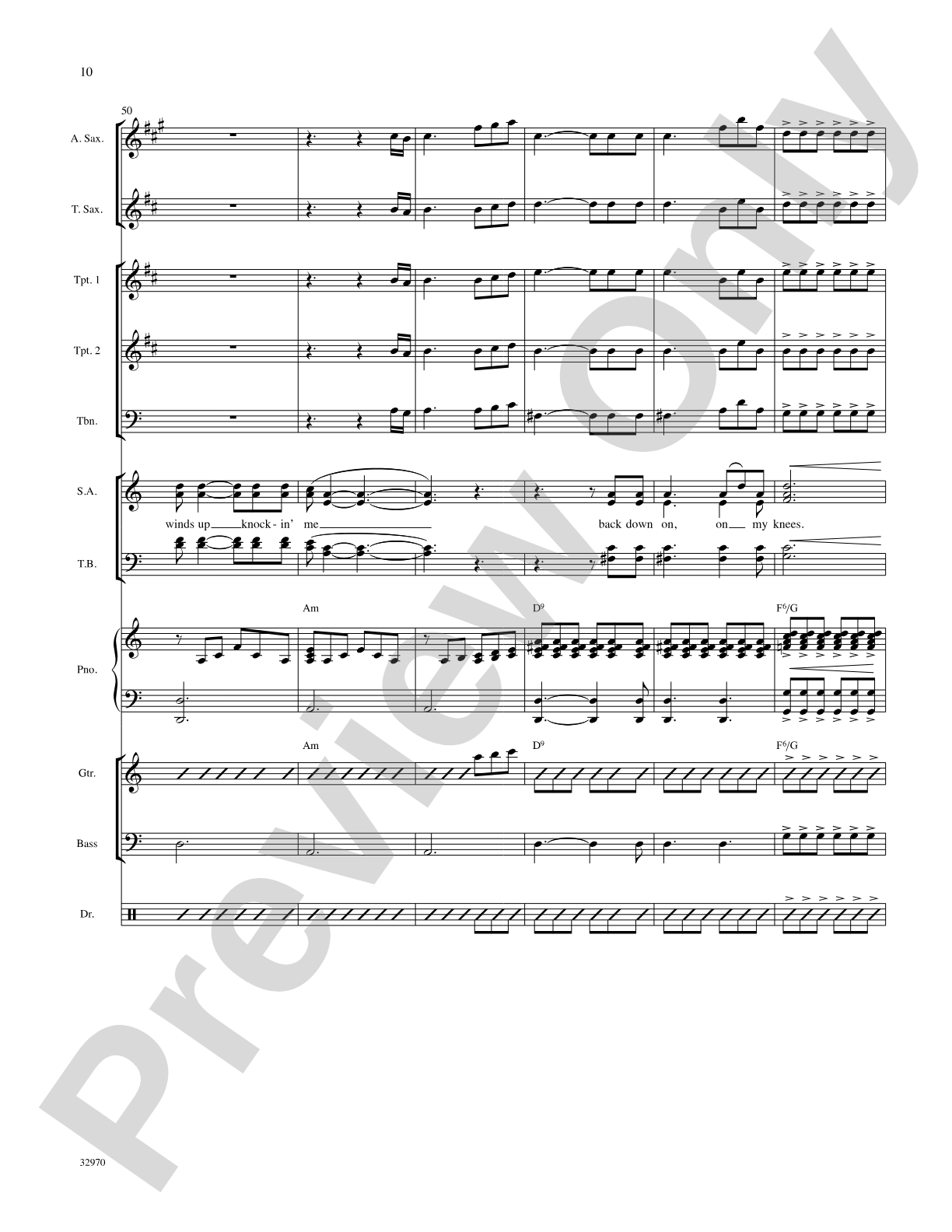
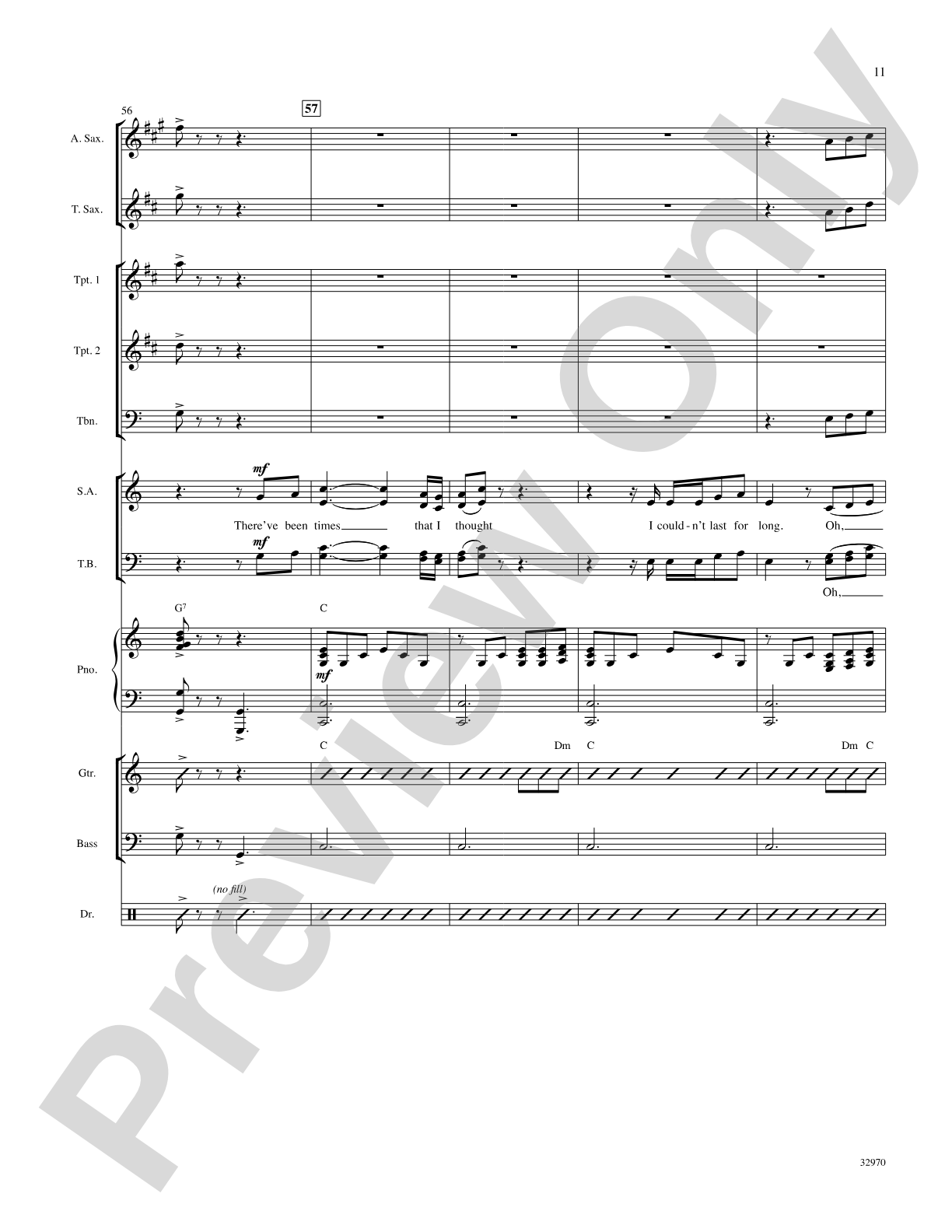
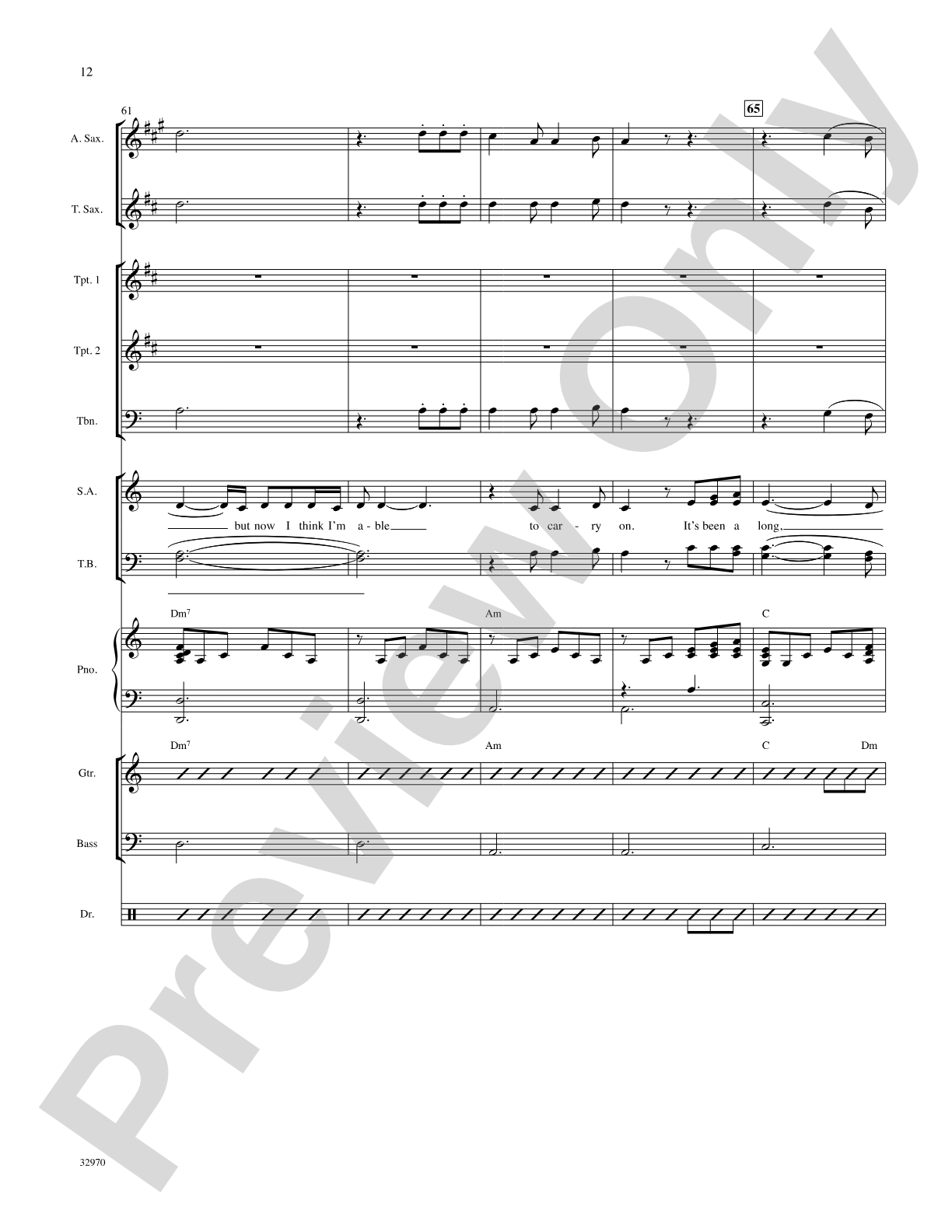
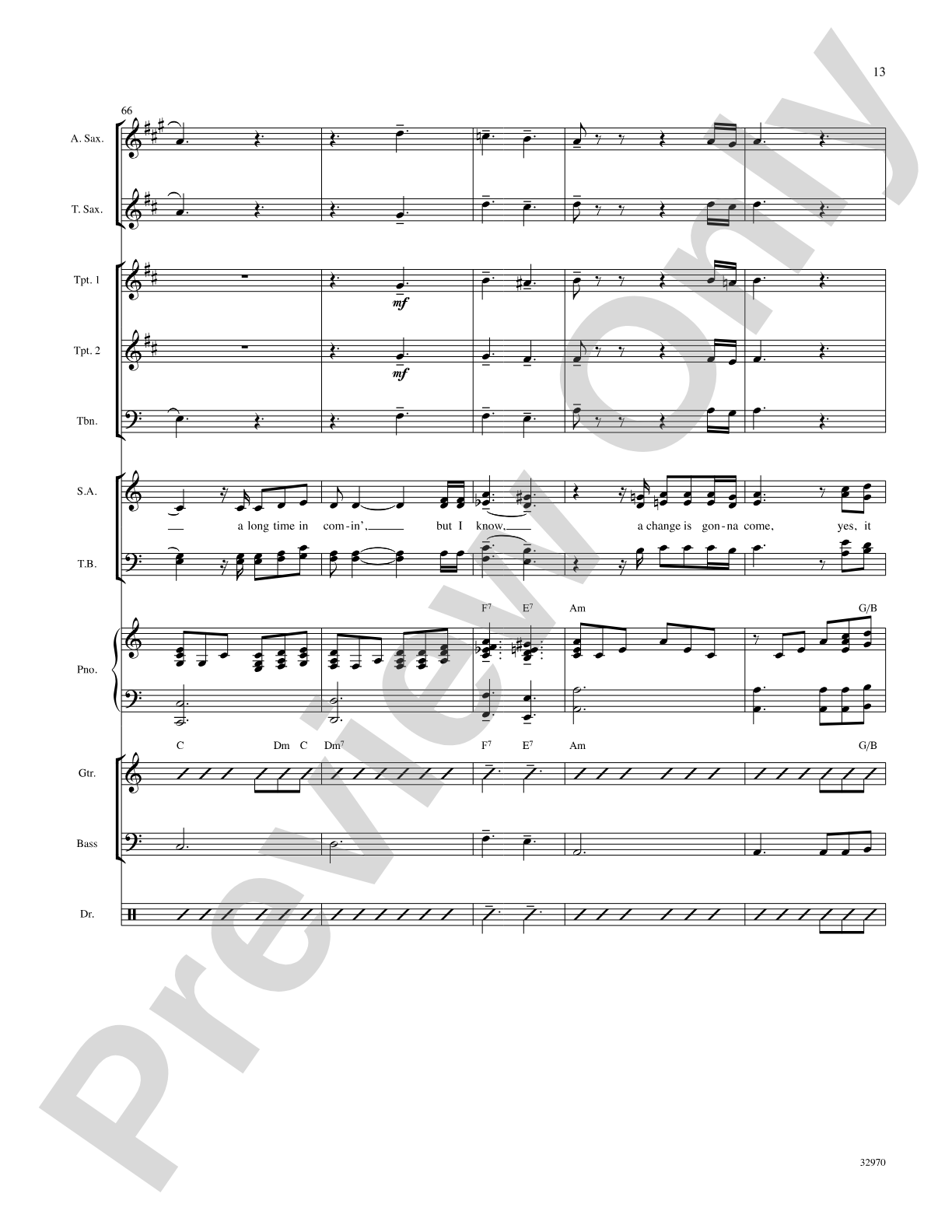
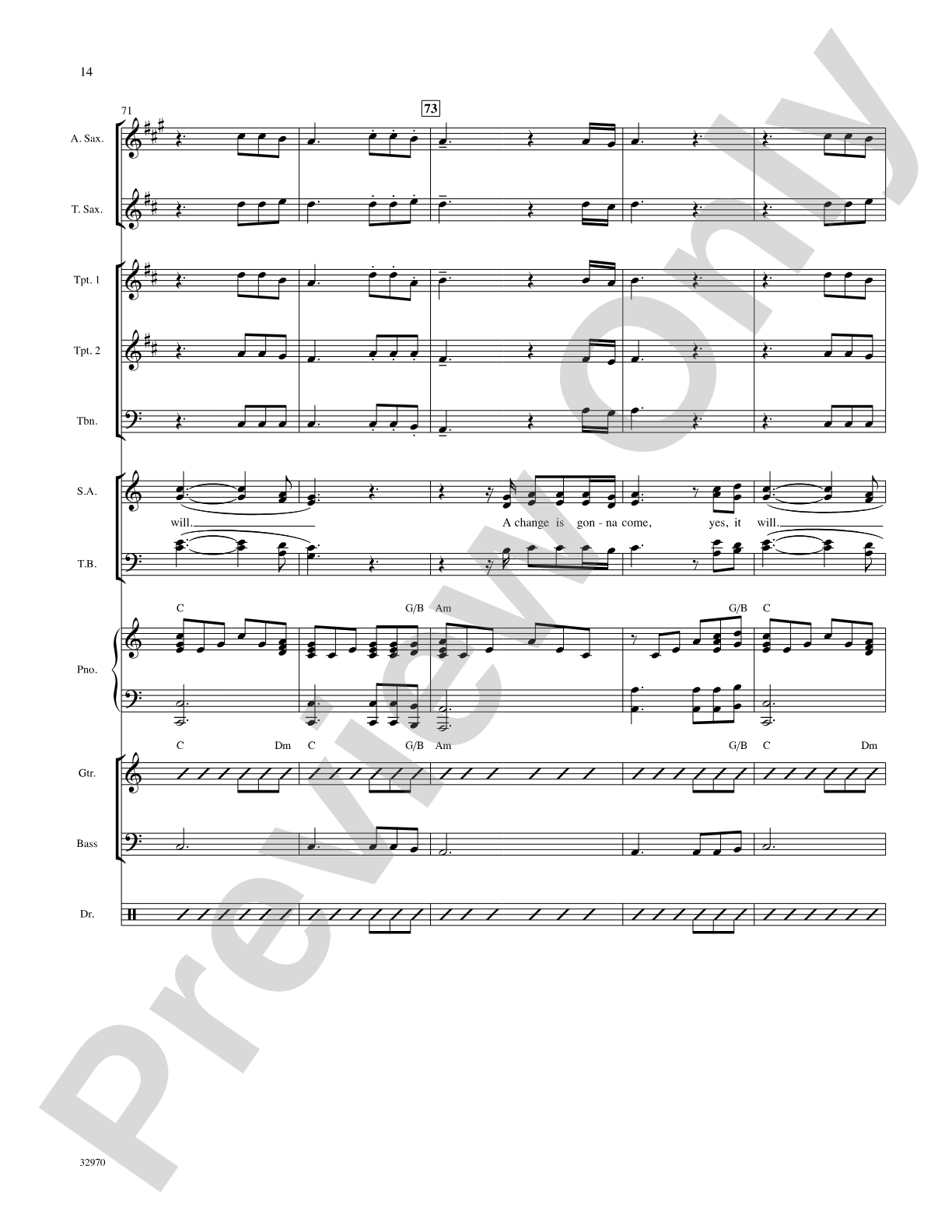
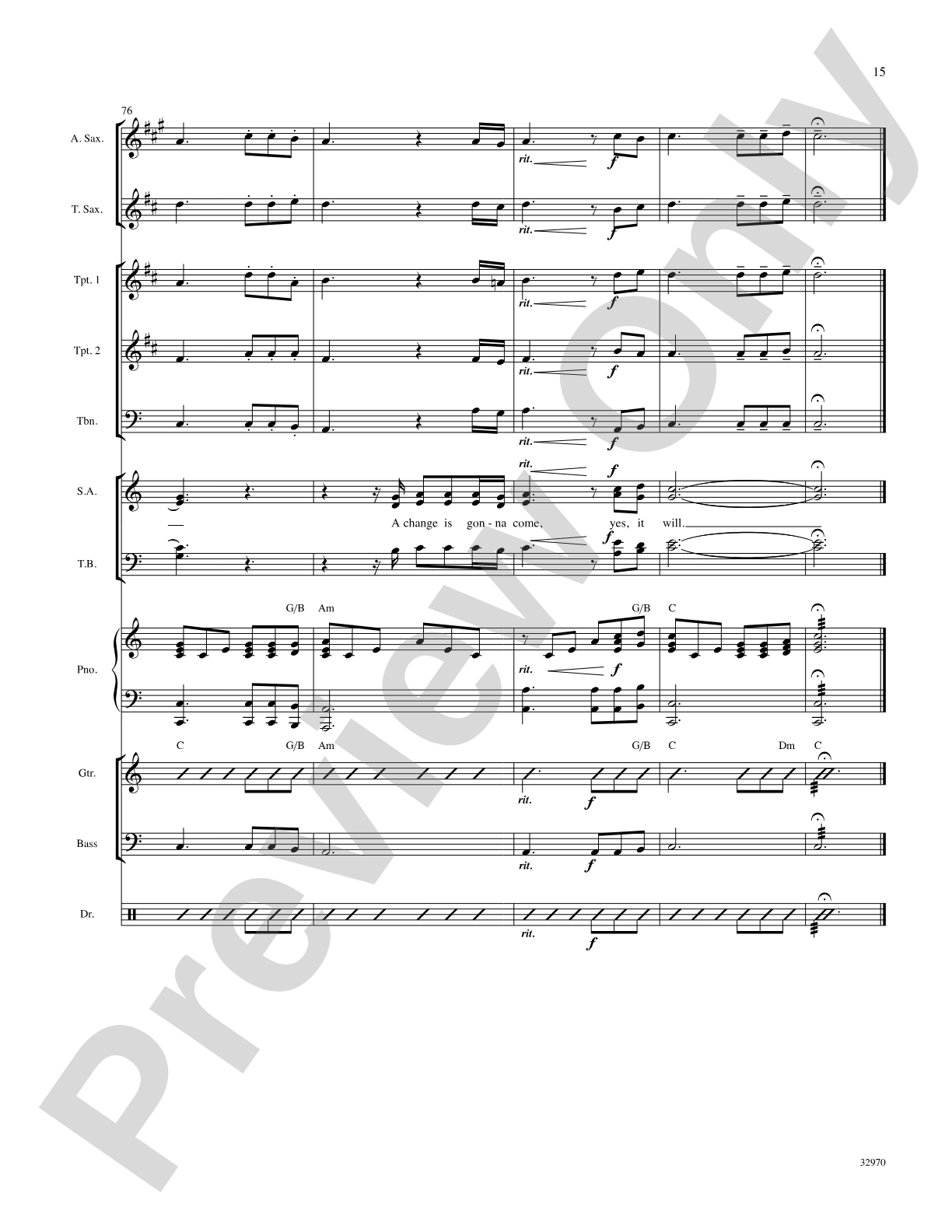


A Change Is Gonna Come: Score: Choral SoundPax
Words and music by Sam Cooke / arr. Jay Althouse
Item: 00-PR-0002742
$8.00
Pickup currently not available
Description
This 1964 gospel-style tune by legendary R&B singer-songwriter Sam Cooke has found new life in today's pop world. Both Seal (on his Soul album) and American Idol's Adam Lambert have hit recordings. "It's been a long time comin', but I know a change is gonna come."


Don't just read it, hear it, play along with it, and watch your students grow with it. In MakeMusic Cloud, A Change Is Gonna Come: Score: Choral SoundPax comes alive with professional accompaniment, adjustable tempo, and built-in practice tools that turn solo practice into real progress.
Open in the Player
Jump straight in and assign it today.
Start Your Free Trial
Open this title and explore the full library in minutes.
Sample Audio
1
Audio File
--:--
0:00
0:00
Sample Video
No sample videos found.
Additional Details
Series:
Alfred Pop Choral Series
Publisher:
Alfred Music
Page Count:
32
SKU:
00-PR-0002742
Instrumentation:
SoundPax
More about this title
About the Composer: Sam Cooke
Sam Cooke (1931-1964) was a pioneering R&B and soul singer-songwriter whose influence on American music extends far beyond his own era. He bridged gospel roots with secular popular music, crafting songs that combined emotional depth with radio accessibility. "A Change Is Gonna Come," released in 1964, stands as one of his most enduring compositions, a work that articulated hope and social consciousness during a pivotal moment in American history.
Cooke's compositional gift lay in his ability to write melodies that felt both immediate and timeless. His songs have been recorded countless times across genres, and they continue to resonate with artists seeking material with genuine emotional weight. For choral programs, his work offers access to authentic popular song writing from a master craftsman.
Why we love this
This arrangement invites singers to connect with a song that carries real historical and emotional resonance without requiring them to navigate overly complex harmony or production choices. Jay Althouse's adaptation for choir respects the song's dignity while making it achievable for singers of varying experience levels. Programming this piece signals to your audience that pop and secular repertoire can be substantive, moving, and worthy of serious musical attention.
What to expect
The performance unfolds with quiet conviction. There's an almost conversational intimacy in how the melody sits, as if the singer is confiding in you rather than performing at you. The harmonic language feels grounded and warm, drawing from gospel tradition while remaining accessible to modern ears. By the final statements, what began as intimate testimony builds into something that feels like collective affirmation.
Who it's for
This arrangement works for intermediate to advanced choral ensembles with pop or contemporary music experience. Singers should be comfortable with syncopated rhythms and the conversational phrasing of soul-influenced vocal writing. Directors seeking repertoire that bridges classical training with contemporary relevance will find this piece resonates with both young singers and adult community choirs.
How to get the most out of it
- Honor the song's conversational opening. The famous opening line works best when delivered with the naturalness of spoken truth rather than theatrical delivery; let the sincerity emerge from restraint.
- Balance ensemble cohesion with individualized phrasing in the chorus. The recorded accompaniment can help lock everyone together, but encourage singers to breathe with the music rather than mechanically hitting downbeats.
- Pay attention to dynamic shape across the arc. This piece builds gradually, and maintaining clear dynamic differentiation between verse and chorus (and within the final statements) gives the performance genuine momentum.
- Consider how your soprano and alto lines interact in the harmonic fabric. Clear voice leading here prevents the arrangement from feeling muddy, especially in mid-range passages where multiple parts move together.
How to use it
This works beautifully in a concert centered on American song or social justice themes, anchoring a set of pop arrangements without requiring specialized vocal amplification or staging. Consider pairing it with other songs from the American popular songwriting tradition to create a narrative arc that honors different eras and styles. It's also ideally suited for spring concerts where programs can accommodate contemporary material alongside classical selections.
Skills your students will build
- Singing syncopated rhythms against a straight accompaniment line
- Maintaining phrase shape and text clarity in soul-influenced vocal writing
- Balancing blend across multiple voice parts in close harmonic spacing
- Connecting with lyrical content that carries historical and social weight
- Responding to recorded accompaniment without losing ensemble independence