
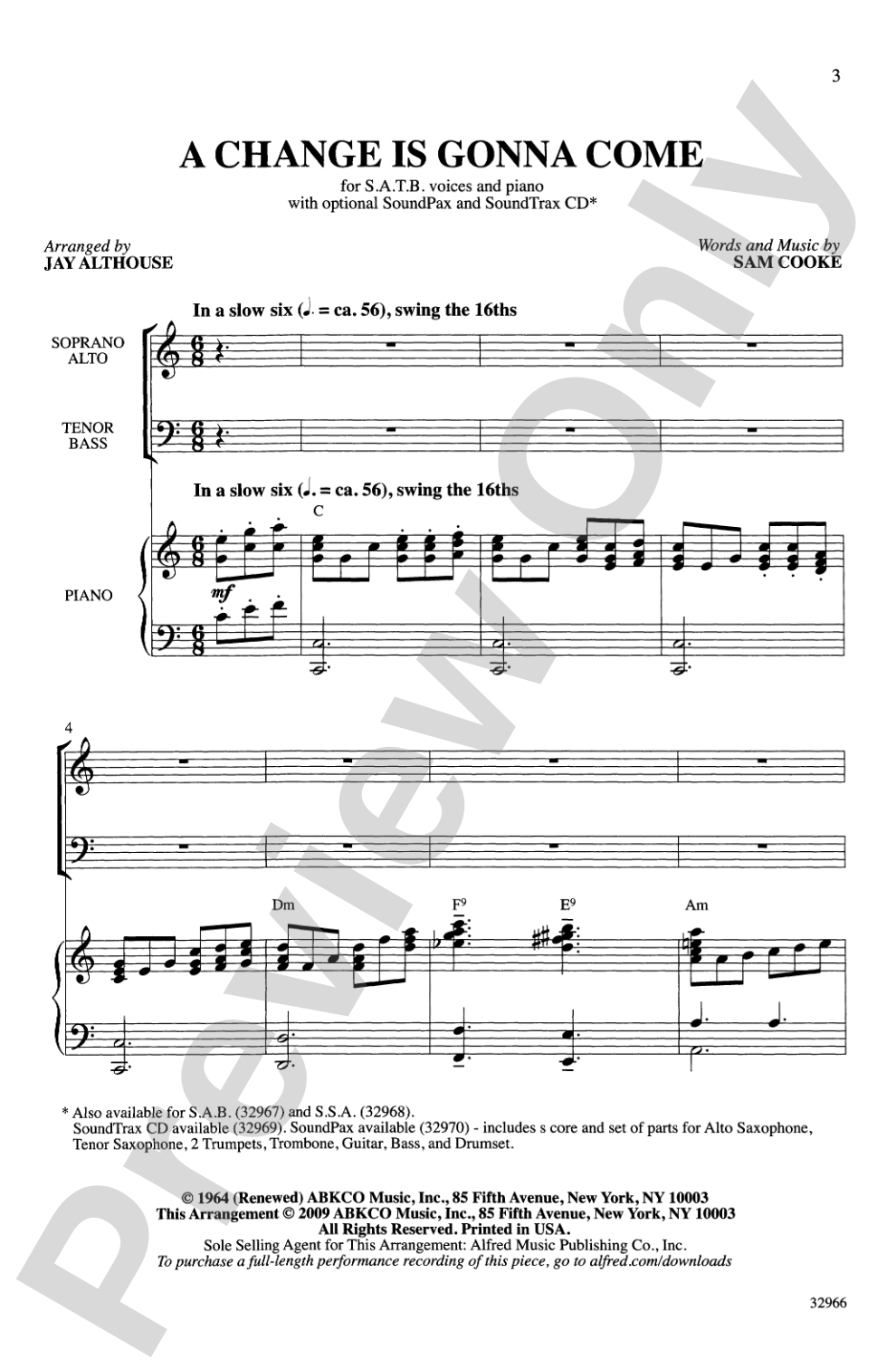
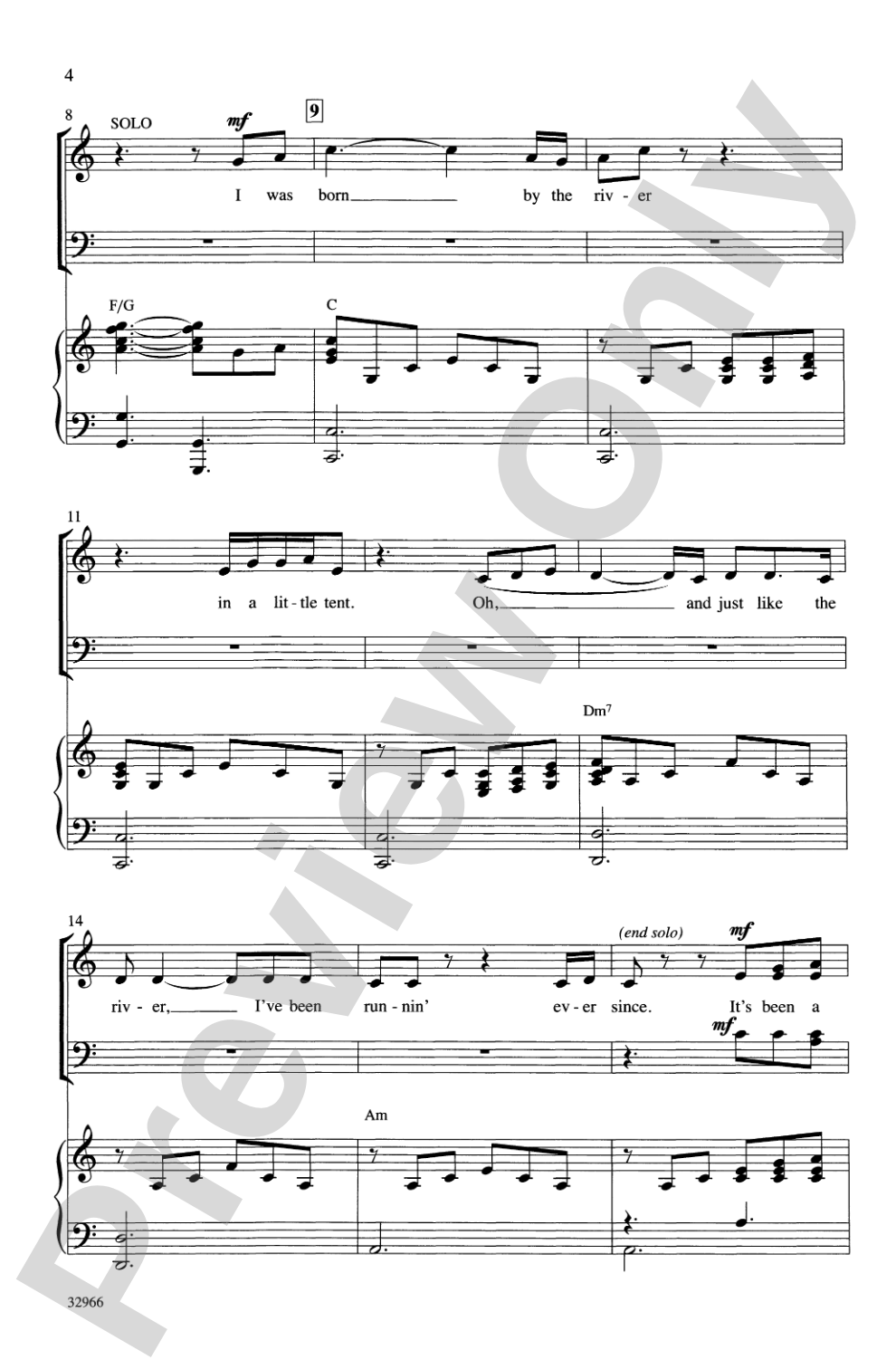

A Change Is Gonna Come: SATB Choral Octavo
Words and music by Sam Cooke / arr. Jay Althouse
Item: 00-PO-0003171

$2.10
Minimum order quantity: 20 copies
Pickup currently not available
Related Items
A Change Is Gonna Come: SoundTrax Digital Audio Download |
$27.99
|
View | |
A Change Is Gonna Come: Choral SoundPax |
$30.00
|
View | |
A Change Is Gonna Come: SATB Choral Octavo |
$2.10
|
View | |
A Change Is Gonna Come: SAB Choral Octavo |
$2.10
|
View | |
A Change Is Gonna Come: SSA Choral Octavo |
$1.85
|
View | |
A Change Is Gonna Come: Choral Octavo SoundTrax CD |
$27.99
|
View | |
A Change Is Gonna Come: Choral SoundPax |
$30.00
|
View |
Description
This 1964 gospel-style tune by legendary R&B singer-songwriter Sam Cooke has found new life in today's pop world. Both Seal (on his Soul album) and American Idol's Adam Lambert have hit recordings. "It's been a long time comin', but I know a change is gonna come."


Don't just read it, hear it, play along with it, and watch your students grow with it. In MakeMusic Cloud, A Change Is Gonna Come: SATB Choral Octavo comes alive with professional accompaniment, adjustable tempo, and built-in practice tools that turn solo practice into real progress.
Open in the Player
Jump straight in and assign it today.
Start Your Free Trial
Open this title and explore the full library in minutes.
Sample Audio
1
Audio File
--:--
0:00
0:00
Sample Video
No sample videos found.
Additional Details
Series:
Alfred Pop Choral Series
Publisher:
Alfred Music
Page Count:
12
SKU:
00-PO-0003171
More about this title
About the Composer: Sam Cooke
Sam Cooke (1931-1964) stands among the most influential singer-songwriters in American music history. His career bridged soul, R&B, gospel, and pop with a sophistication and social awareness that reshaped popular music in the 1950s and early 1960s. "A Change Is Gonna Come," released in 1964, became an anthem of the Civil Rights Movement while showcasing Cooke's gift for writing melodies that lodge instantly in memory yet carry profound emotional weight.
Cooke's compositions have endured because they balance accessibility with artistic depth. His influence extends far beyond his era; contemporary artists from multiple genres continue to record his work, and his songs remain staples in music education settings where they connect students to both popular music history and social justice themes.
Why we love this
Jay Althouse's arrangement honors the song's gospel roots while making it accessible for mixed choirs at a reasonable difficulty level. The piece carries genuine emotional substance without requiring soloists or extreme vocal ranges, making it viable for most ensembles. Directors appreciate how effectively it teaches students to blend pop sensibilities with choral technique, and the cultural and historical resonance of the song itself sparks meaningful conversations about music, identity, and activism.
What to expect
Grounded and soulful, with a straightforward melodic beauty that unfolds over time. The song's restraint is part of its power; it trusts the simplicity of the hook and the resonance of the lyric rather than relying on vocal fireworks or complex harmonic twists.
Who it's for
Intermediate to advanced mixed choirs looking for repertoire that connects to contemporary pop and R&B traditions while offering meaningful historical and social content. This arrangement works well for groups seeking to program material that feels current yet substantive, and for directors who want to build students' understanding of how great melodies transcend genre and era.
How to get the most out of it
- Shape the melodic line with intention rather than simply hitting the notes. This song's power comes from its simplicity, so focus on clarity of diction and the arc of each phrase rather than adding unnecessary ornamentation.
- Balance the harmonic texture carefully so no single voice part overwhelms. The arrangement likely features the melody primarily in the sopranos, but the supporting voices carry important harmonic color that should be heard.
- Invest time in the rhythmic precision of the rhythm section parts if using instrumental accompaniment. The groove of this song grounds the emotional content; rushing or dragging shifts the song's character entirely.
- Work the text with your singers so they understand what they're singing about. This is a song born from a specific historical moment, and singers who grasp that context will deliver a more authentic, affecting performance.
How to use it
This works beautifully as an anchor piece in concerts exploring American popular music, social justice themes, or the evolution of R&B and soul into mainstream pop. It pairs naturally with other contemporary pop arrangements or historical protest songs, and its 12-page length makes it substantial enough to stand on its own within a program.
Skills your students will build
- Blending pop melodic sensibility with choral blend and balance
- Singing with rhythmic precision in a groove-based style
- Understanding historical context as a pathway to authentic interpretation
- Sustaining vocal energy across a song with a simple, repetitive melodic structure