
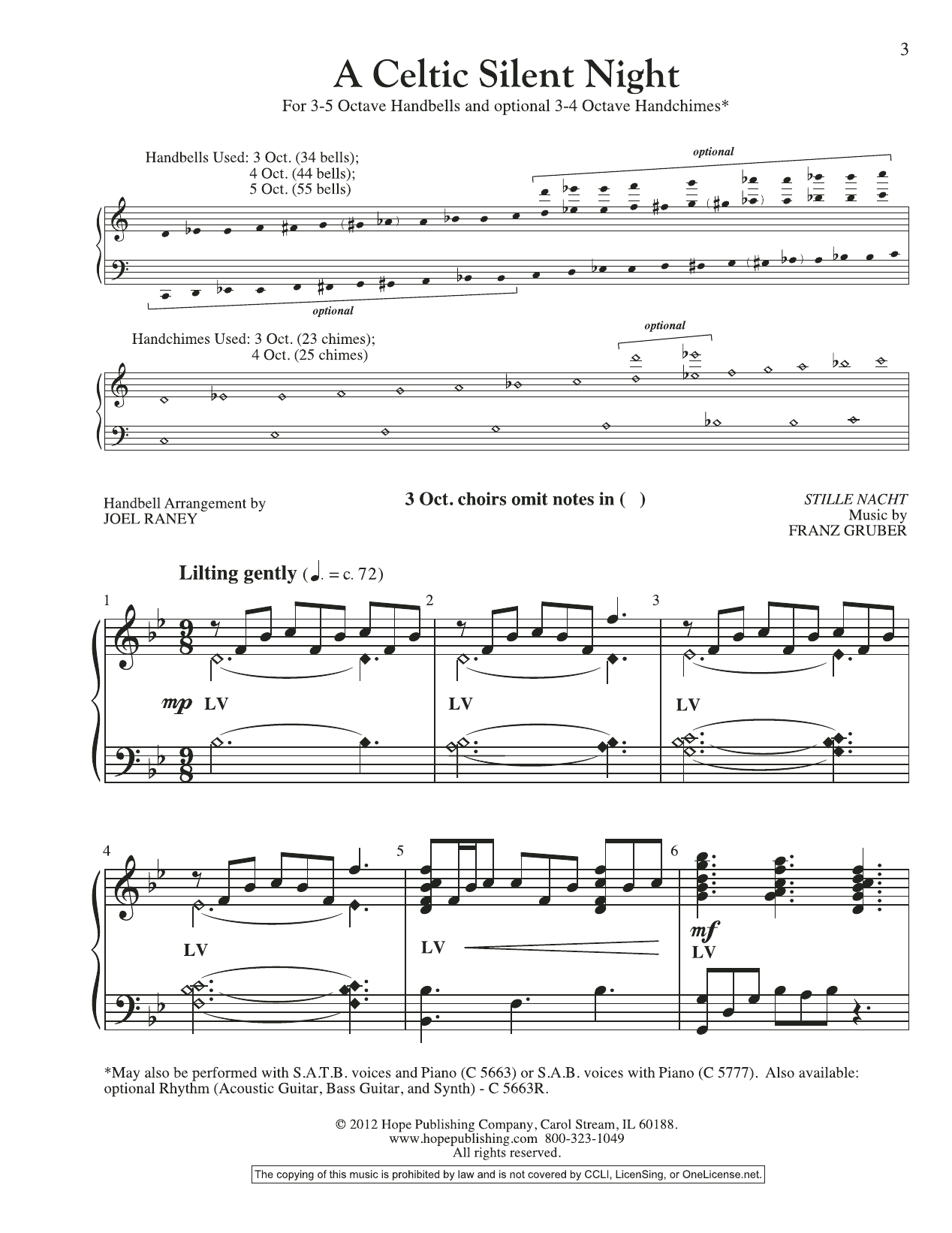

A Celtic Silent Night: Choral Instrumental Pak
By Franz Gruber / Arranged by Joel Raney
Item: 35-PK00445650
$5.25
Pickup currently not available
Buy Extra Parts (Digital PDF Download)
| Product | Price | Quantity |
|---|---|---|
| A Celtic Silent Night - Handbells: Choral Instrumental Pak | $5.00 |
Parts Added to Cart!
Description
A Celtic Silent Night


A Celtic Silent Night: Choral Instrumental Pak isn't in MakeMusic Cloud just yet...but it could be. Let us know you'd like to see it, and you'll help shape what comes next. In the meantime, start a free trial and dive into thousands of interactive titles your students can play along with today.
Request This Title
Tell us you want it.
Start Your Free Trial
Explore everything that's ready to play right now.
Sample Audio
No sample audio found.
Sample Video
No sample videos found.
Additional Details
Publisher:
Hal Leonard
SKU:
35-PK00445650
More about this title
About the Composer: Franz Gruber
Franz Gruber (1801-1863) was an Austrian organist and composer best known for creating one of the world's most enduring melodies. Working as a schoolteacher and church musician in the small village of Oberndorf, Gruber composed the music for "Silent Night" on guitar in 1818, just hours before the carol's Christmas Eve premiere. His simple yet profound melody has since become a cornerstone of holiday music education, recorded thousands of times and sung in countless languages across the globe.
Gruber's contribution to music pedagogy extends far beyond that single composition. His understanding of how melody can communicate across cultures and skill levels makes his work particularly valuable in educational settings. Arrangers continue to reimagine his carol because the underlying musical material is so strong that it sustains fresh interpretations while remaining instantly recognizable.
Why we love this
Joel Raney's Celtic treatment brings genuine harmonic and textural sophistication to this familiar carol without overshadowing its essential character. The arrangement respects the meditative quality that makes the original so powerful while adding enough color and contemporary interest to keep audiences engaged. Directors looking for a holiday piece that works both as a genuine musical offering and a sing-along moment will find this strikes that difficult balance beautifully.
What to expect
A quiet moment of reflection given new dimension through layered harmonies and a warmly Celtic sensibility. Gruber's melody becomes almost a meditation, held aloft by supporting voices and instruments that suggest candlelight and old stone chapels. The arrangement feels intimate despite potentially involving many performers.
Who it's for
Choirs seeking holiday repertoire that honors tradition while offering artistic depth will find this arrangement engaging for both singers and listeners. This works well for school, church, and community choirs looking to program something recognizable yet fresh. Ensembles with access to some instrumental players will unlock the full potential of the Pak format.
How to get the most out of it
- Balance the vocal line so it remains prominent even as the instrumental voices create a richer harmonic environment. The melody has carried generations of singers; let it still do that work.
- Pay attention to the arrangement's harmonic rhythm. Celtic voicings often move differently than traditional four-part writing, so ensure your ensemble hears the underlying pulse clearly.
- Shape the dynamics gradually across the piece rather than in sudden shifts. The contemplative nature of the text calls for fluid, organic changes in volume.
- Consider the tempo carefully. This arrangement likely benefits from a pace that allows the text to be heard clearly while maintaining the carol's gentle forward motion.
How to use it
Place this strategically in a holiday concert as a moment of genuine stillness, perhaps after more rhythmically active or joyful selections. It serves equally well as a concert closer or as the contemplative heart of a mixed seasonal program. The arrangement's accessibility makes it an excellent choice for audiences unfamiliar with contemporary choral writing.
Skills your students will build
- Singing sustained melodic lines with consistent tone quality over changing harmonic backgrounds
- Blending voices in Celtic-influenced harmonic voicings that differ from traditional diatonic writing
- Balancing vocal parts with instrumental accompaniment
- Interpreting a familiar melody in a new harmonic and textural context
- Maintaining musical line through sparse, contemplative arranging choices