
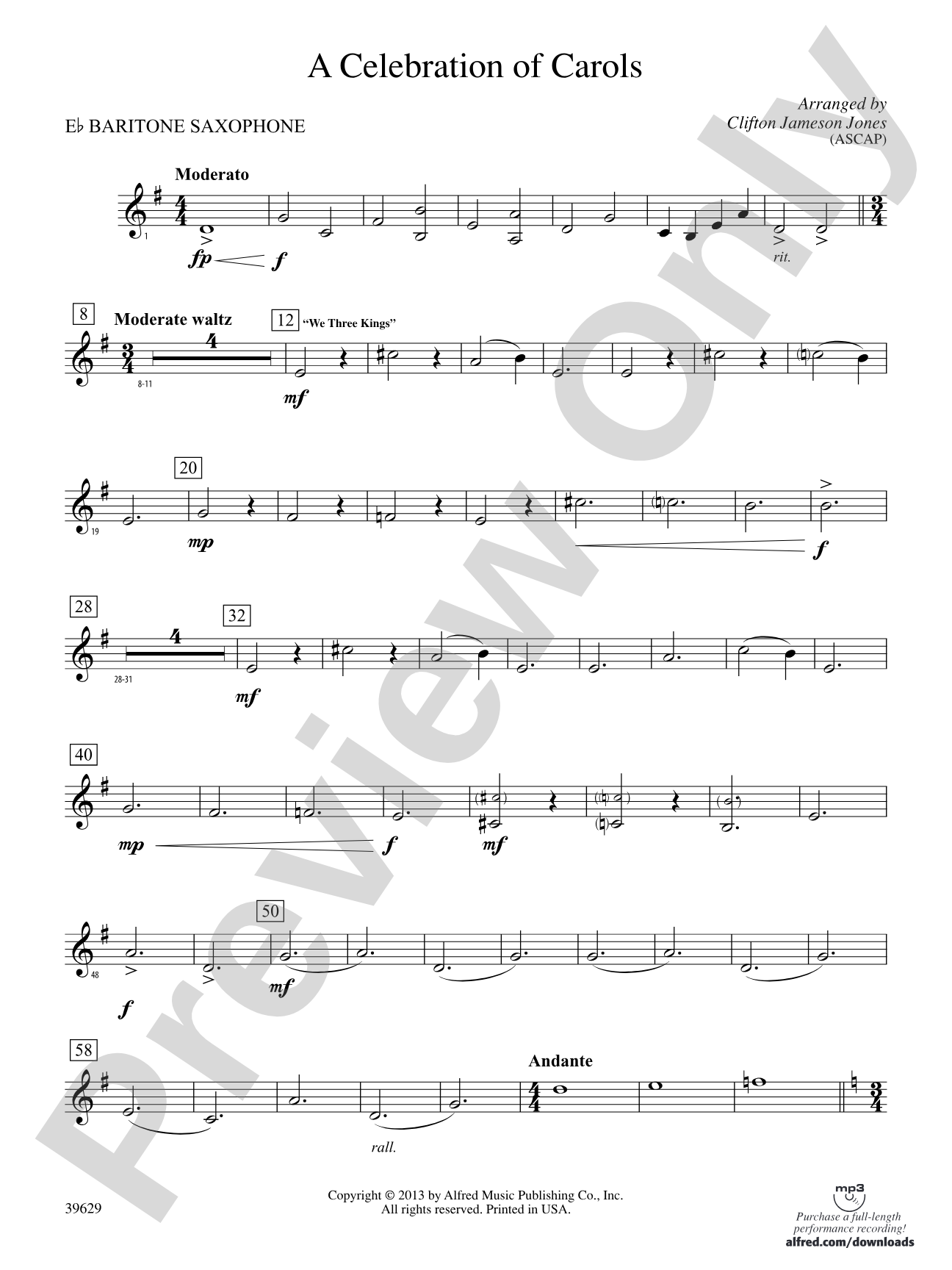

A Celebration of Carols: E-flat Baritone Saxophone
Arr. Clifton Jameson Jones
Grade: 3 (Medium)
Item: 00-PC-0015903_BTX
$5.99
Pickup currently not available
Description
Weaving three favorite Christmas carols together into a work which will appeal to young performers and audiences alike, this piece includes "We Three Kings," "Silent Night," and "Angels We Have Heard on High," all arranged to create some holiday cheer for your next concert. (3:45)


Don't just read it, hear it, play along with it, and watch your students grow with it. In MakeMusic Cloud, A Celebration of Carols: E-flat Baritone Saxophone comes alive with professional accompaniment, adjustable tempo, and built-in practice tools that turn solo practice into real progress.
Open in the Player
Jump straight in and assign it today.
Start Your Free Trial
Open this title and explore the full library in minutes.
Sample Audio
1
Audio File
--:--
0:00
0:00
Sample Video
No sample videos found.
Additional Details
Series:
Young Symphonic
Publisher:
Alfred Music
Page Count:
262
SKU:
00-PC-0015903_BTX
More about this title
About the Arranger: Clifton Jameson Jones

Clifton Jameson Jones composes and arranges for band, orchestra, jazz ensemble, and woodwind groups. A Houston native, he studied composition and theory at Trinity University and the University of Houston, then specialized in arranging at San Jacinto College. He performs clarinet with the Austin Symphonic Band and has dedicated numerous works to the ensemble and its director, Richard Floyd.
Jones teaches woodwind methods in the College Station Independent School District and directs the jazz ensemble at A&M Consolidated High School. He holds membership in the Texas Music Educators Association, Texas Jazz Educators Association, and ASCAP.
Why we love this
Jones knows how to build a medley that holds together musically rather than feeling like a string of tunes. The scoring sits perfectly for developing ensembles: substantial enough to engage your musicians, transparent enough that balance problems show up immediately. At just under four minutes, this hits the sweet spot for a concert closer that energizes audiences without overstaying.
What to expect
Familiar carols bloom into something fresh through careful orchestration. The piece feels celebratory without being saccharine, reverent without becoming slow, and structured enough that young players can hear how three melodies coexist rather than compete. There's warmth here, the kind that comes from straightforward musicianship rather than artificial sentiment.
Who it's for
Grade 3 concert bands developing their ability to handle multiple melodic lines and maintain stylistic control across contrasting sections. Young ensembles that want to program substantive holiday music without the technical demands of more advanced arrangements. Conductors looking for repertoire that engages both developing musicians and audiences in winter concerts.
How to get the most out of it
- Balance the melodic lines carefully across sections; the effectiveness of weaving three familiar tunes depends on clarity of part relationships, especially where voices trade the primary theme.
- Shape each carol's contrasting character distinctly. 'We Three Kings' calls for a more processional feel; 'Silent Night' requires genuine legit tone; 'Angels We Have Heard on High' builds with energy. Treat them as three separate musical statements rather than one continuous texture.
- Lock the tempo relationships between sections before rehearsing the transitions. A tempo marking slip between carols will jar the ensemble and audience both.
- Use the exposed woodwind and brass solos as moments to build confidence in younger players. These aren't buried in texture; they're heard clearly, which makes them opportunities for growth, not threats.
How to use it
Program this as your second-to-last piece on a winter concert; it bridges the energy between serious repertoire and a true finale, giving audiences a moment of shared cultural recognition while showcasing your band's ability to balance and blend. The relatively compact length makes it ideal for a concert that includes both concert band and jazz ensemble performances. This arrangement also works well for community holiday events where you want programming that connects with non-musician listeners without sacrificing musical integrity.
Skills your students will build
- Balancing competing melodic lines without losing individual part clarity
- Maintaining consistent style and articulation across contrasting sections
- Reading and executing clear voice leading in scored medleys
- Sustaining tonal control in exposed woodwind and brass passages
- Responding to conductor direction during tempo transitions between connected movements