A Carmen Celebration Sheet Music Preview

A Carmen Celebration: Piano

By Georges Bizet / arr. Kevin Olson

Item: 98-DE1040

Digital Download
$12.95
Description
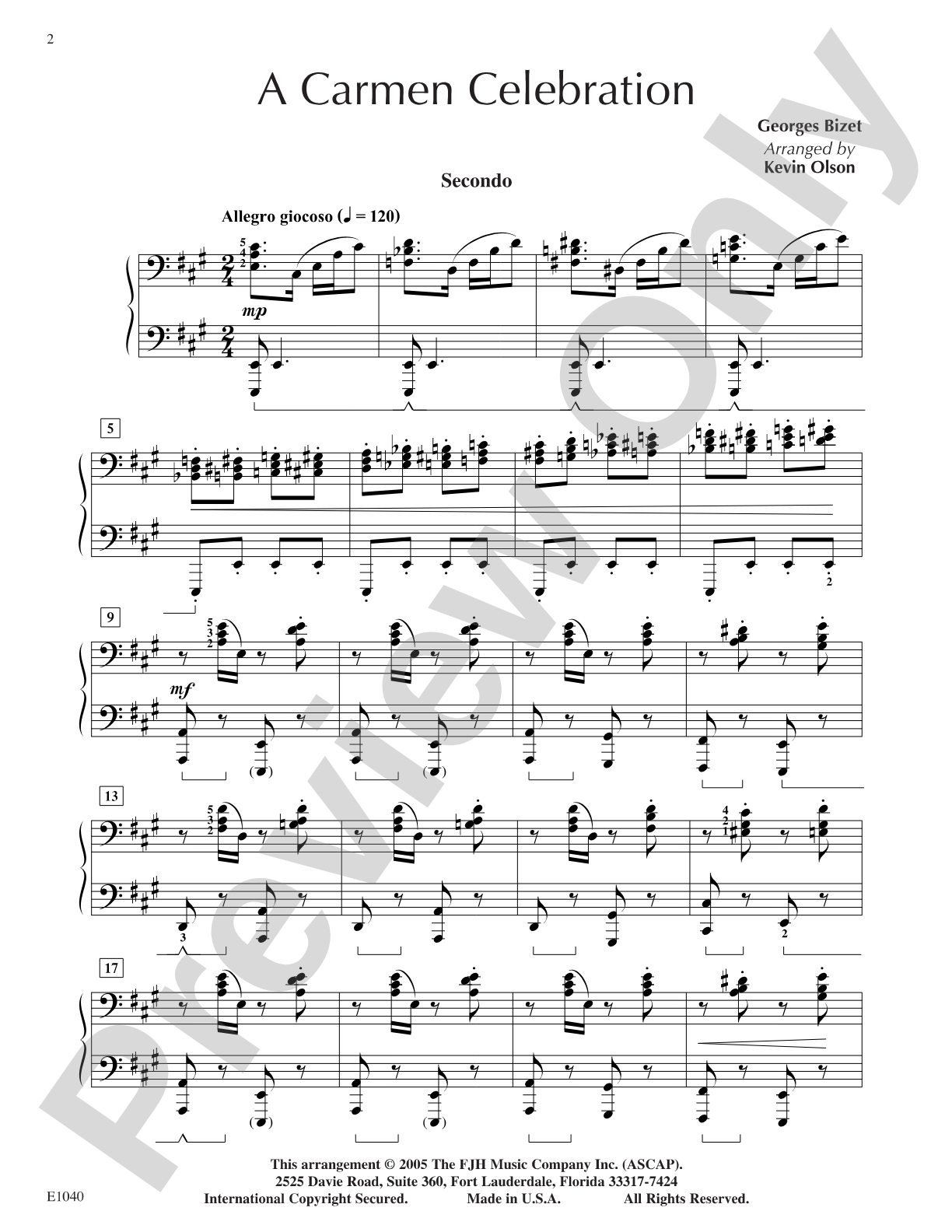
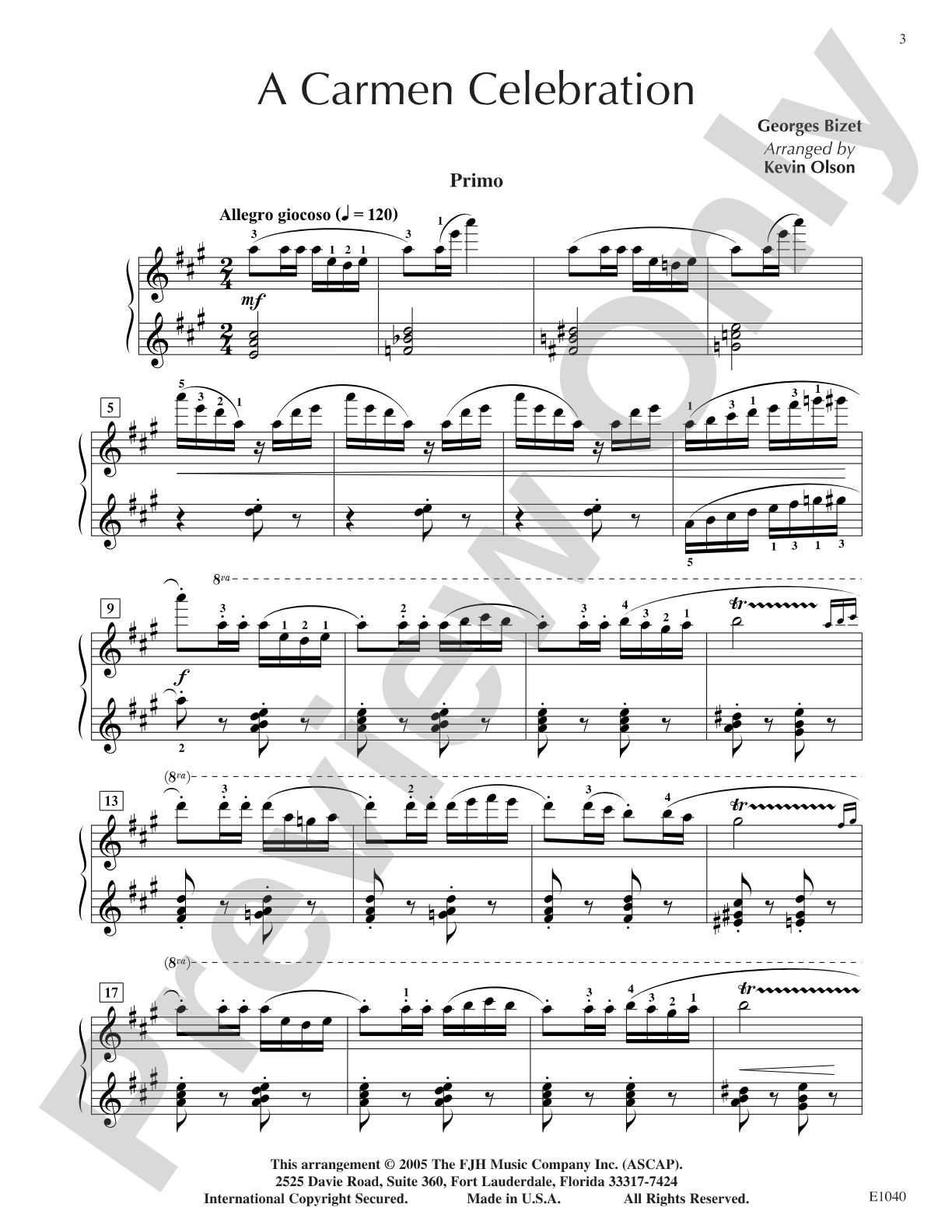
An exciting, idiomatic arrangement for one piano, four hands, with an optional second piano part, this piece, based on Bizet's timeless opera, Carmen, contains unusual harmonies that accompany the lush melody and will be a favorite in recitals and festivals.

A Carmen Celebration: Piano isn't in MakeMusic Cloud just yet...but it could be. Let us know you'd like to see it, and you'll help shape what comes next. In the meantime, start a free trial and dive into thousands of interactive titles your students can play along with today.

Sample Audio
No sample audio found.
Sample Video
Additional Details
Series: The FJH Piano Ensemble Series
Publisher: The FJH Music Company, Inc.
SKU: 98-DE1040

More about this title

About the Composer: Georges Bizet

Georges Bizet (1838-1875) composed Carmen in 1874, creating one of the most performed operas in the repertoire. His gift for memorable melody and dramatic orchestration made him a pivotal figure in 19th-century French opera, even though his career was cut short by his early death in Paris.

Why we love this

Kevin Olson's arrangement captures the swagger and fire of Carmen's most recognizable moments without requiring an orchestra or full vocal ensemble. The optional second piano part gives you flexibility for recitals, festivals, or collaborative performances, and the unusual harmonies elevate what could have been a straightforward transcription into something genuinely fresh.

What to expect

Dramatic and passionate, with the grandeur of the opera house distilled into the intimacy of a piano duet. The lush harmonies give familiar Bizet melodies a modern sensibility while keeping the work rooted in Romantic sweep.

Who it's for

Intermediate to early advanced pianists looking for a stylish four-hand showpiece that draws on opera without requiring operatic training. This works equally well for two pianists of similar ability or for a teacher and advanced student collaboration.

How to get the most out of it

  • Balance the melody generously in the primo part; the lush harmonies in the secondo should support rather than overshadow the singing line.
  • Coordinate dynamic shifts between both players carefully, especially where the arrangement uses unexpected harmonic colorings that might otherwise sound unmoored.
  • If using the optional second piano, establish clear communication about tempo and phrasing in advance; the added texture requires precise ensemble listening.
  • Let the idiomatic writing breathe; this is not a note-for-note reduction, so honor the arranger's harmonic choices rather than fighting against them.

How to use it

An excellent choice for a spring recital or collaborative festival where you want to program accessible but musically substantial repertoire. It pairs well alongside other masterwork arrangements or standalone duets, offering a bridge between classical opera and contemporary piano literature.

Skills your students will build

  • Balanced ensemble playing between primo and secondo parts
  • Interpretation of non-traditional harmonies supporting a primary melody
  • Coordination of dynamic and expressive nuance across two independent piano parts
  • Sight-reading flexibility when incorporating an optional second piano part

You May Also Like