

A Cappella Overtures: SATB, a cappella Choral Octavo
Arr. Andy Beck
Item: 00-PO-0000509
$2.95
Minimum order quantity: 20 copies
Pickup currently not available
Related Items
A Cappella Overtures: SATB, a cappella Choral Octavo |
$2.95
|
View |
Description
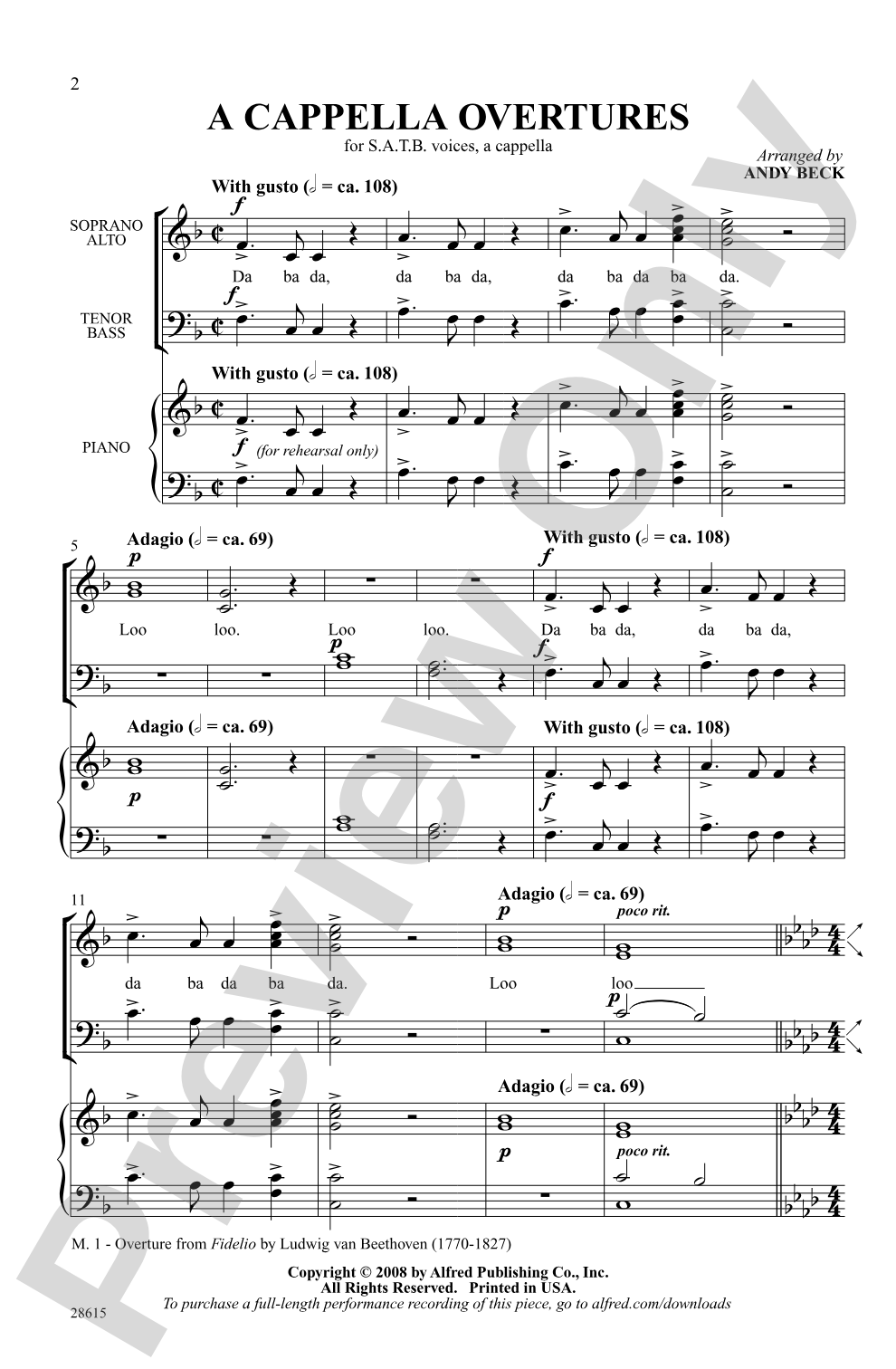
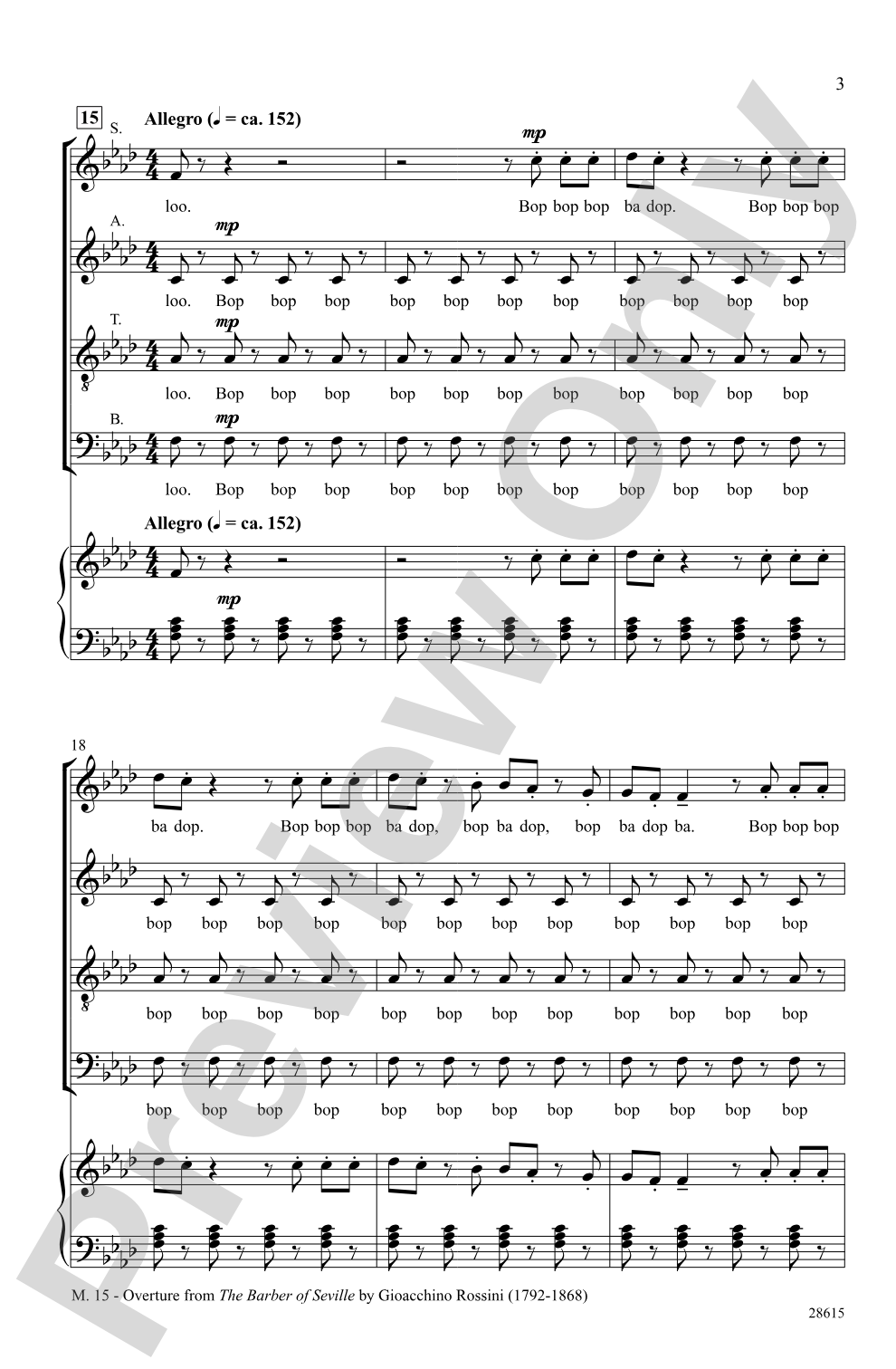
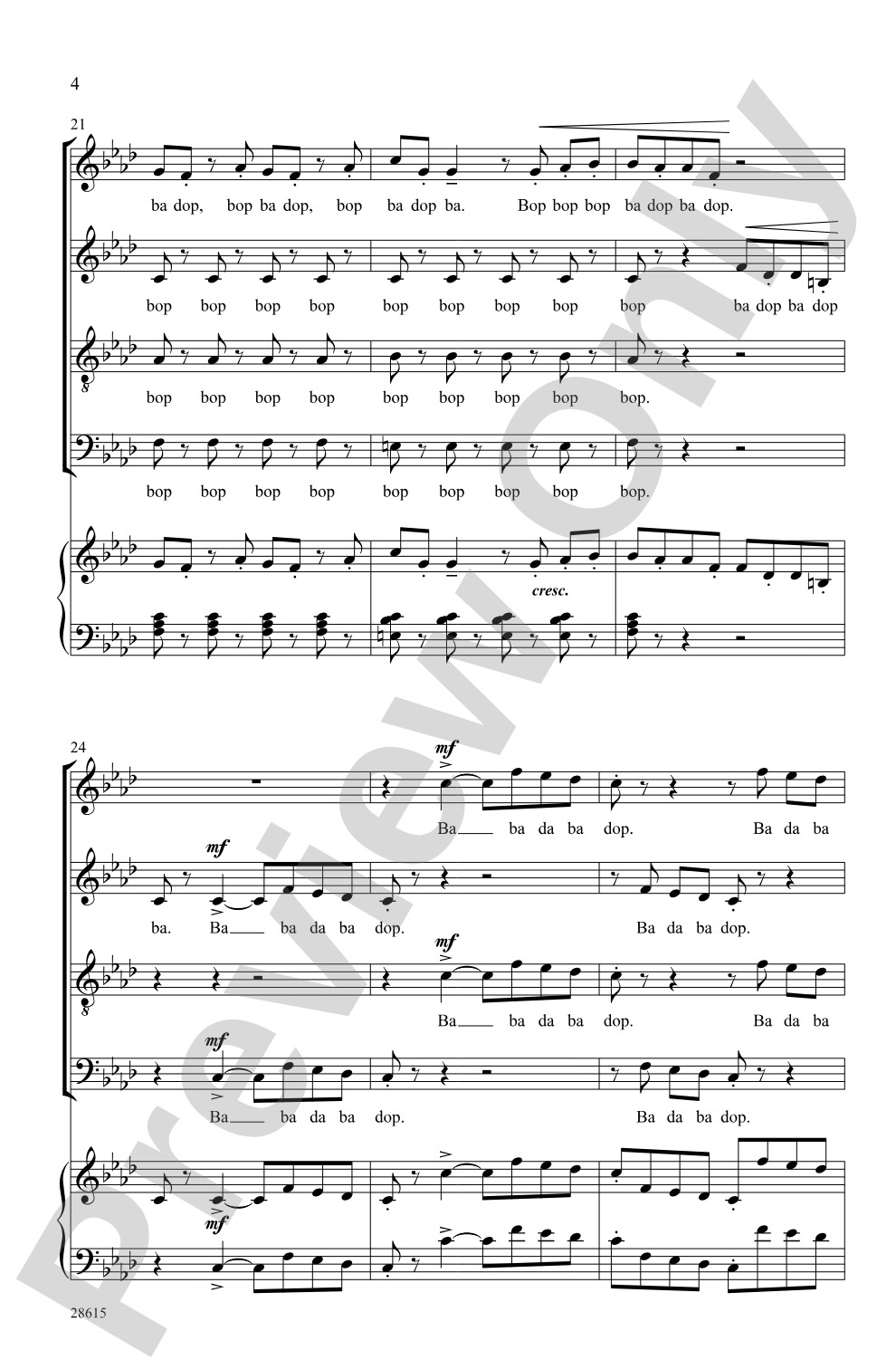
Six world-famous opera overtures arranged for SATB choirs with a sense of adventure. Sung entirely on nonsensical "dops" and "bops," this fast-paced musical collage is guaranteed to both entertain and educate! Includes snippets from: Fidelio, The Barber of Seville, Die Fledermaus, The Magic Flute, The Marriage of Figaro, and William Tell.


A Cappella Overtures: SATB, a cappella Choral Octavo isn't in MakeMusic Cloud just yet...but it could be. Let us know you'd like to see it, and you'll help shape what comes next. In the meantime, start a free trial and dive into thousands of interactive titles your students can play along with today.
Request This Title
Tell us you want it.
Start Your Free Trial
Explore everything that's ready to play right now.
Sample Audio
1
Audio File
--:--
0:00
0:00
Sample Video
No sample videos found.
Additional Details
Series:
Alfred Archive Edition: Alfred Choral Designs
Publisher:
Alfred Music
Page Count:
16
SKU:
00-PO-0000509
More about this title
About the Arranger: Andy Beck

Andy Beck directs choral publications at Alfred Music and has composed and arranged more than 450 works for singers of all ages, from children's musicals to sophisticated choral literature now performed worldwide. His educational resources include widely adopted sight-singing and vocal technique books that have shaped choral pedagogy across countless programs. Beck holds degrees in Music Education from Ithaca College and Northwest Missouri State University, and his commitment to music literacy informs every project he develops.
Beyond the page, Beck is an active tenor, conductor, and clinician who guest leads honor choirs across the United States and serves as adjudicator at festivals and competitions. He has sung with Alfred Music's studio teams since 1992 and performs regularly with the North Carolina Master Chorale Chamber Choir. His dual expertise in composition and pedagogy makes him a sought-after voice in choral education.
Why we love this
Beck has taken six beloved operatic overtures and distilled them into a single, high-energy arrangement that gives choirs instant access to masterworks without requiring operatic soloists or orchestras. The nonsense-syllable approach removes language barriers and keeps focus on musical storytelling, making this both genuinely fun to perform and musically sophisticated enough to hold an audience's attention from start to finish.
What to expect
Playful and propulsive, this arrangement sparkles with the famous melodies audiences recognize while maintaining the irreverent energy of a musical game. Singing nonsense syllables instead of words paradoxically frees singers to focus on ensemble precision and character, making the piece feel both silly and satisfyingly sophisticated.
Who it's for
SATB choirs looking for an entertaining showstopper that teaches operatic literature without requiring singers to tackle foreign languages or classical vocal demands. High school and college choirs thrive with this piece, and it works equally well for community or adult ensembles seeking a lighthearted concert moment with musical substance.
How to get the most out of it
- Establish clear, exaggerated articulation on the syllables 'dop' and 'bop' to help each section lock into the rhythmic precision the arrangement demands. Slow practice with a metronome pays dividends here.
- Shape each operatic snippet distinctly so listeners can recognize the transition from one overture to the next. Color changes between sections prevent the piece from feeling like undifferentiated noise.
- Use dynamic contrast generously. The moments where the full choir drops back or a single voice line emerges will land much harder if the ensemble respects the written dynamics rather than singing at one comfortable level throughout.
- Rehearse the transitions between overtures with special care, since momentum and ensemble cohesion are what carry the collage concept. These pivot moments are brief but critical.
How to use it
Program this as a closer or a strategic spot in the middle of a concert where the audience needs a jolt of energy and humor. It pairs naturally with classical choral works or operatic selections, serving as a bridge between formal repertoire and contemporary music that shows choirs can command both musicality and personality.
Skills your students will build
- Rapid articulation and diction clarity on nonsense syllables
- Recognition of famous operatic melodies and themes
- Singing rapid pitch changes and syncopated rhythms in ensemble
- Maintaining harmonic blend while executing fast-moving melodic lines
- Transition control between contrasting musical sections