A Capital Ship: Violin 2 Sheet Music Preview

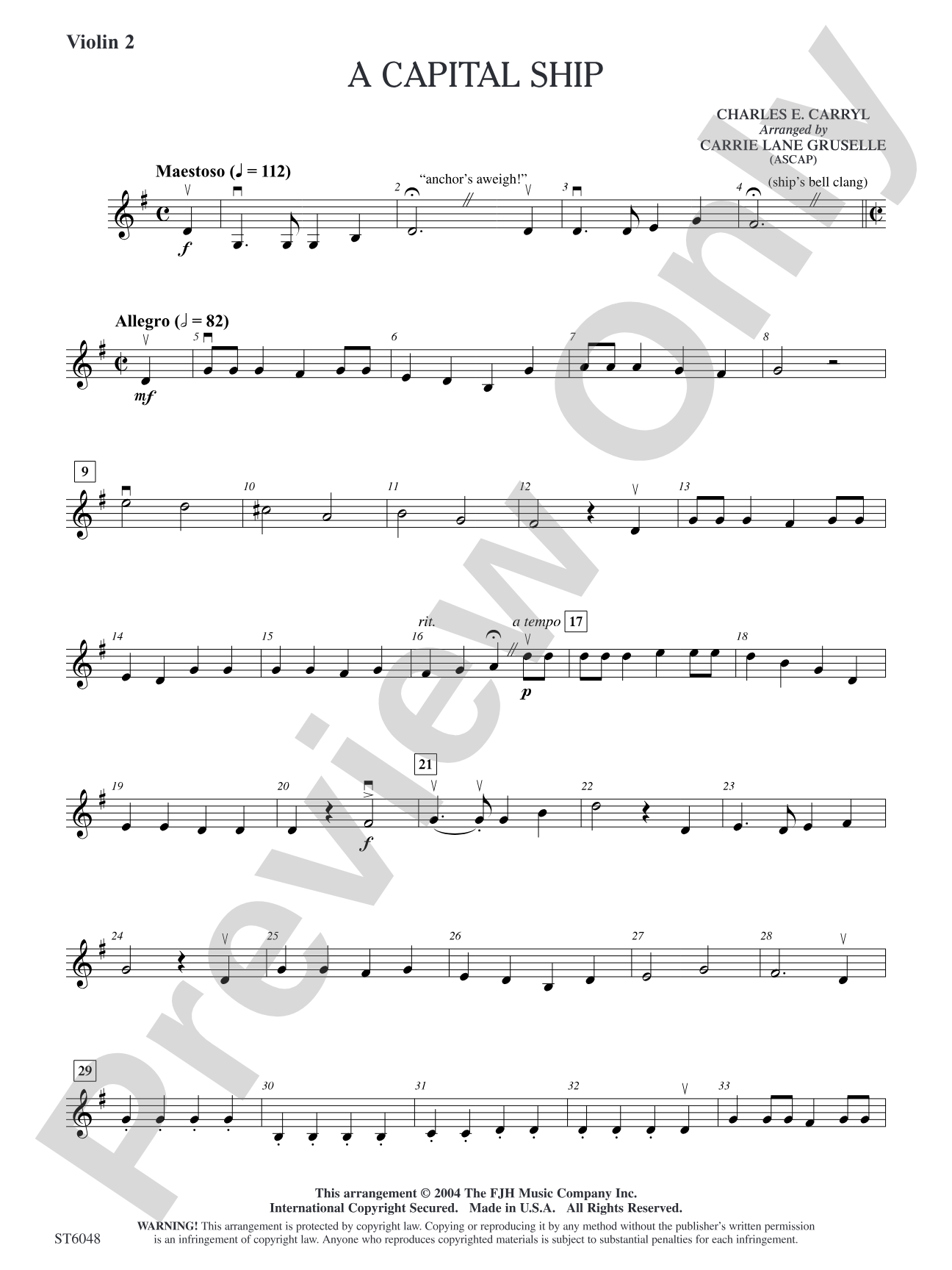
A Capital Ship: Violin 2

By Charles E. Carryl / arr. Carrie Lane Gruselle

Grade: 2

Item: 98-PC-DST6048_VN2

Digital Download
$7.00
Description
This arrangement for young string players and optional ship's bell portrays an imaginary voyage, which includes "gummery bread," a "rubagub tree," and "Binnacle-bats" wearing "waterproof hats." All instruments stay in first position and only violin 1 uses the "low second finger." The homophonic texture and straightforward rhythms and harmonies let students focus on style and musicianship. Students will also develop various articulations (staccato, accent, pizzicato) and watching skills (fermata, ritardando, tempo changes, and a caesura). Excellent writing by an excellent teacher!

A Capital Ship: Violin 2 isn't in MakeMusic Cloud just yet...but it could be. Let us know you'd like to see it, and you'll help shape what comes next. In the meantime, start a free trial and dive into thousands of interactive titles your students can play along with today.

Sample Audio
0:00
0:00
Sample Video
Additional Details
Series: FJH Developing Strings
Publisher: The FJH Music Company, Inc.
SKU: 98-PC-DST6048_VN2

More about this title

About the Composer: Charles E. Carryl

Charles E. Carryl (1841-1920) was an American writer and poet whose whimsical works for children became classics of Victorian literature. "Davy and the Goblin" and "The Plum Cake" showcase his gift for imaginative storytelling filled with absurdist humor and nonsensical charm. His poetry has inspired countless musical settings, appealing to educators seeking repertoire that engages young performers with humor and narrative.

Why we love this

This arrangement transforms a beloved literary text into a musical journey that actually feels like something is happening on stage. Carrie Lane Gruselle's writing strips away all technical obstacles so young players can focus on character, phrasing, and ensemble precision instead of fighting the notes. The optional ship's bell and imaginative maritime setting make this a natural centerpiece for a concert or festival program.

What to expect

A playful seafaring adventure where every rhythmic gesture and pizzicato pluck contributes to a living, breathing storyboard. The piece invites players to become storytellers themselves, bringing comic timing and musical personality to characters like Binnacle-bats and imaginary trees.

Who it's for

Young string orchestras at the Grade 2 level with developing technique and ensemble awareness. This works equally well for mixed-ability sections because all instruments remain in first position, with only violin 1 using low second finger, keeping technical demands manageable across parts.

How to get the most out of it

  • Shape the pizzicato section with clarity; treat it as a comedic moment rather than merely plucked notes, letting the rhythm speak with personality.
  • Watch the conductor carefully during the fermata and caesura markings. These breath moments are essential to the whimsy and timing of the narrative.
  • Differentiate your articulations: staccato should feel crisp and detached, accents punchy and deliberate. This variety anchors the changing moods throughout the voyage.
  • If using the ship's bell, coordinate it precisely with the string section so it punctuates rather than overwhelms. It's a narrative device, not a percussion solo.

How to use it

Program this as a family concert opener or a festival showcase piece that demonstrates young musicians' ability to balance technical control with interpretive maturity. It pairs beautifully with more serious repertoire, giving your program breadth and showing audiences that string players at this level can command both comedy and musicality.

Skills your students will build

  • Articulation control (staccato, accent, pizzicato)
  • Reading and executing tempo changes and ritardando markings
  • Responding to conducting cues (fermata, caesura, tempo adjustments)
  • Homophonic texture awareness and blend
  • Ensemble precision in rhythmic passages
  • Musical phrasing and character development

You May Also Like