
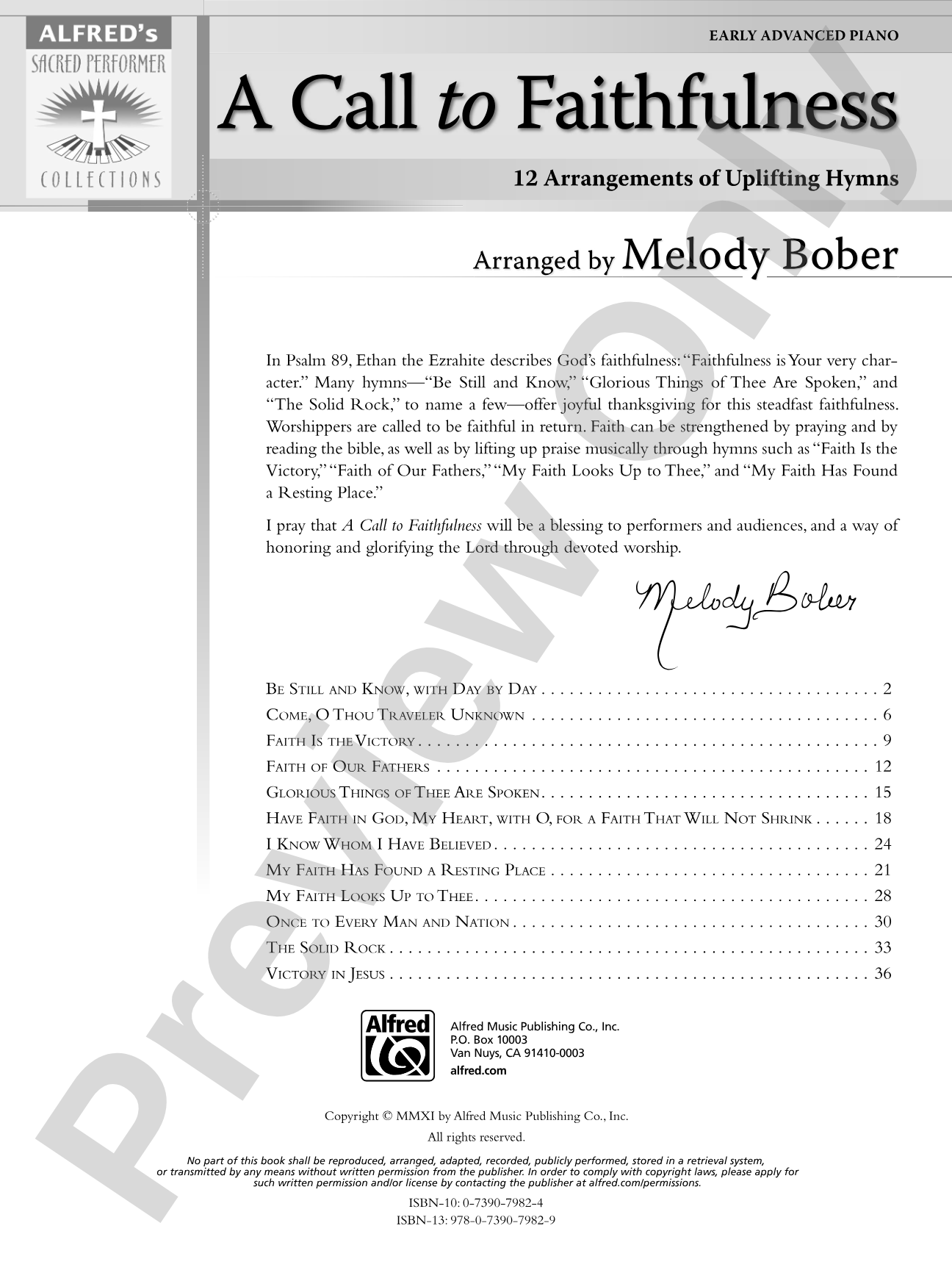
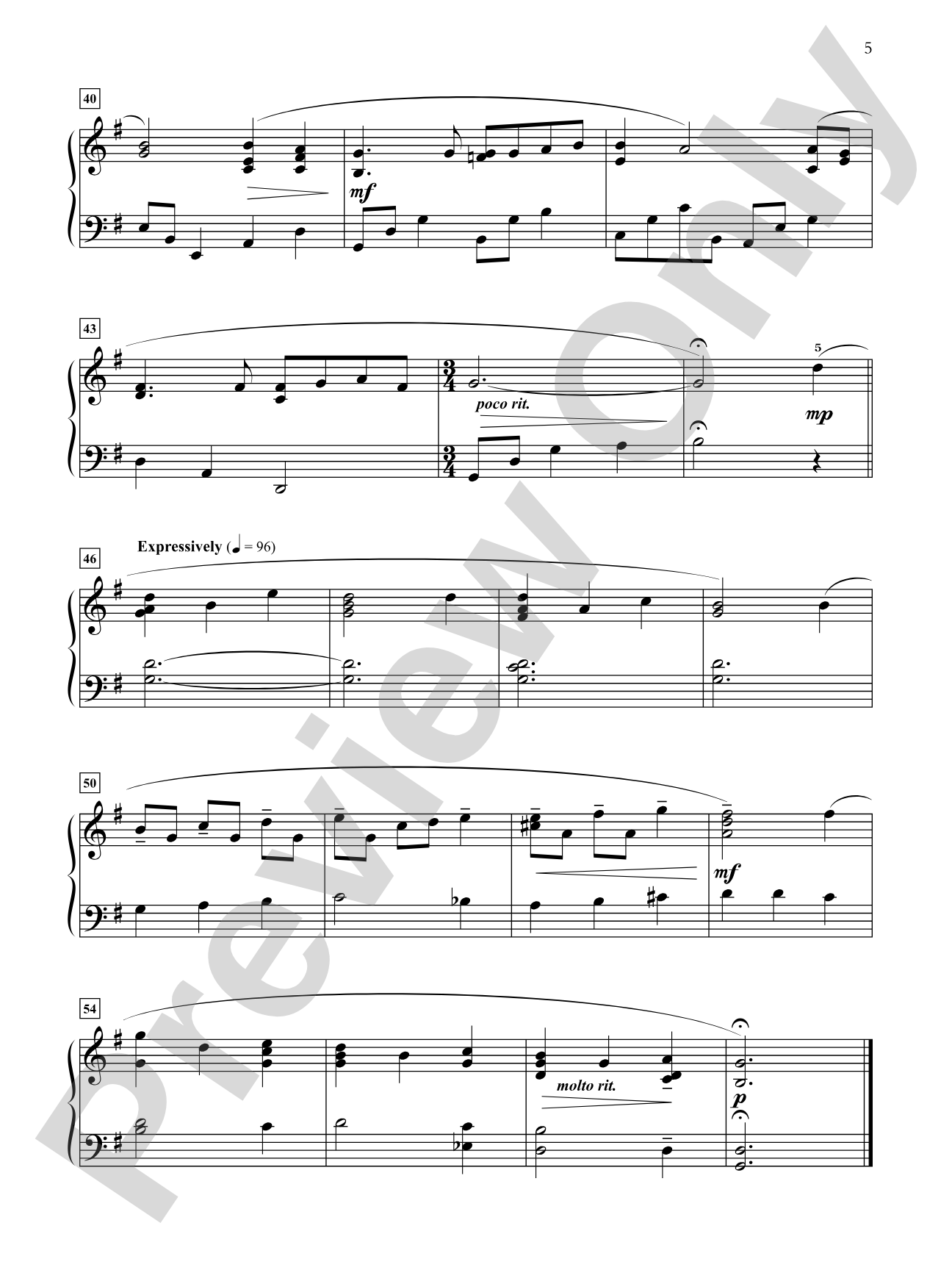
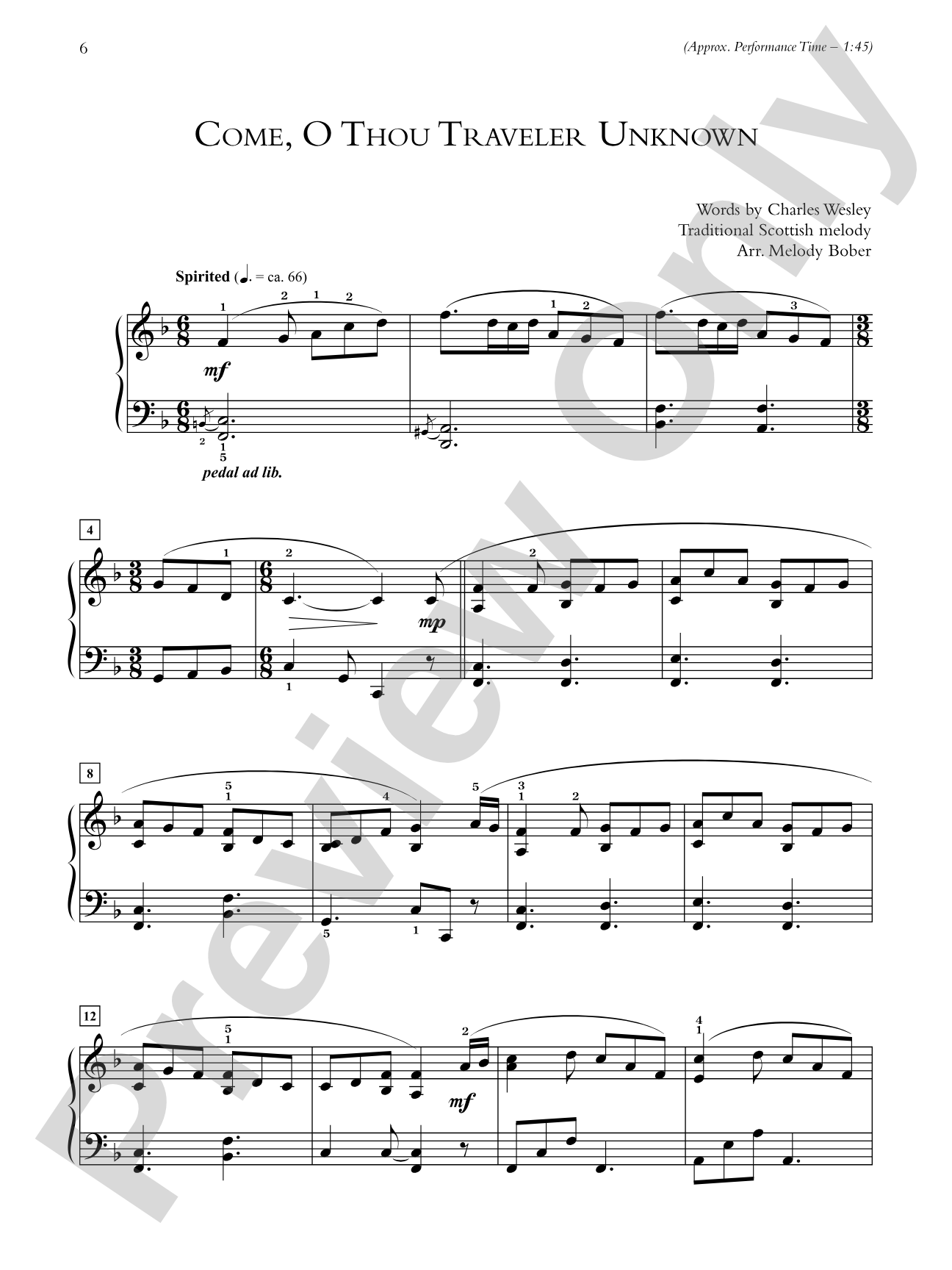
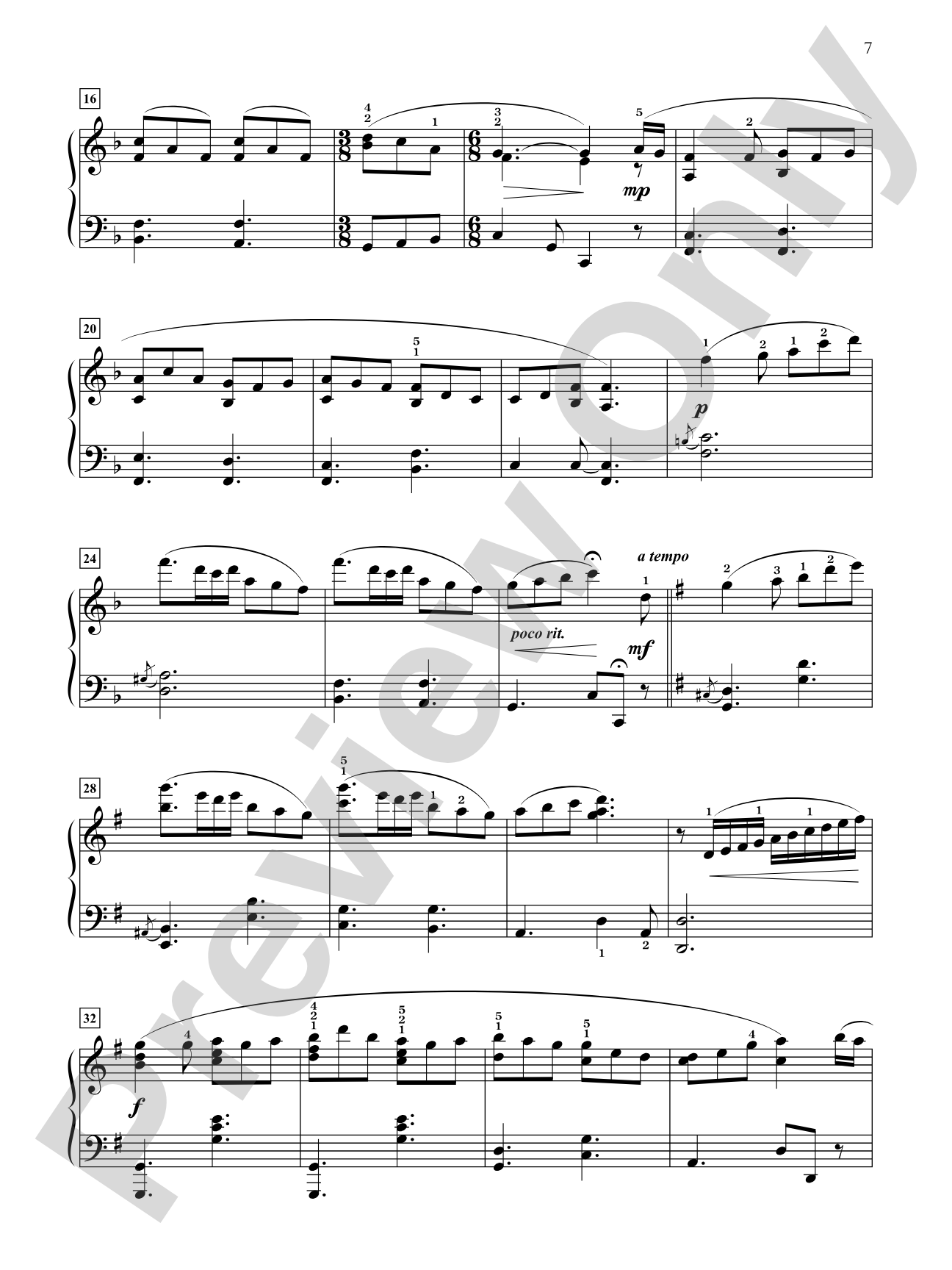
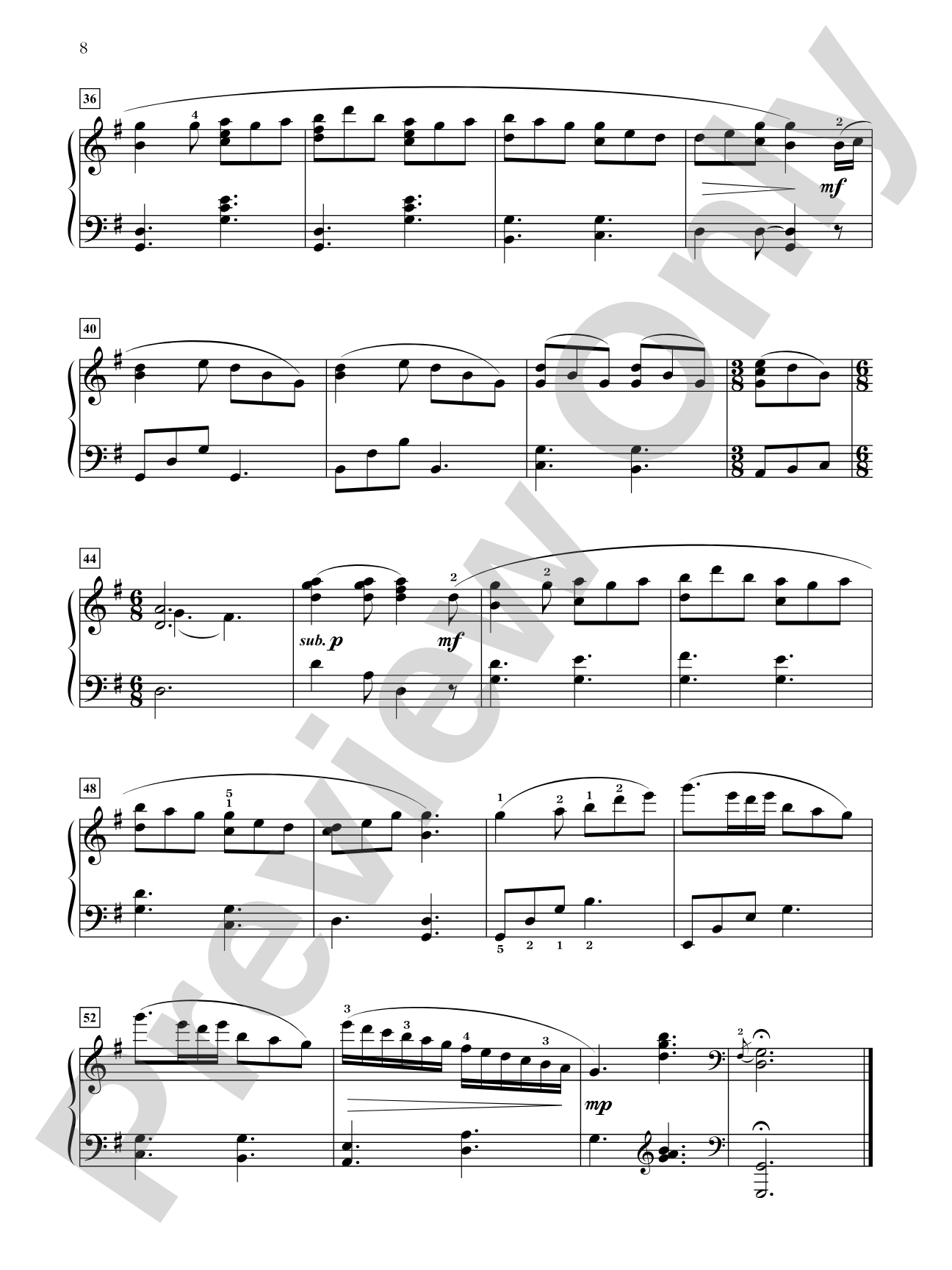

A Call to Faithfulness: 12 Arrangements of Uplifting Hymns: Piano
12 Arrangements of Uplifting Hymns
Arranged by Melody Bober
Level: Early Advanced
Item: 00-PB-0000892
$12.99
Pickup currently not available
Related Items
A Call to Faithfulness: Piano Book |
$12.99
|
View |
Description
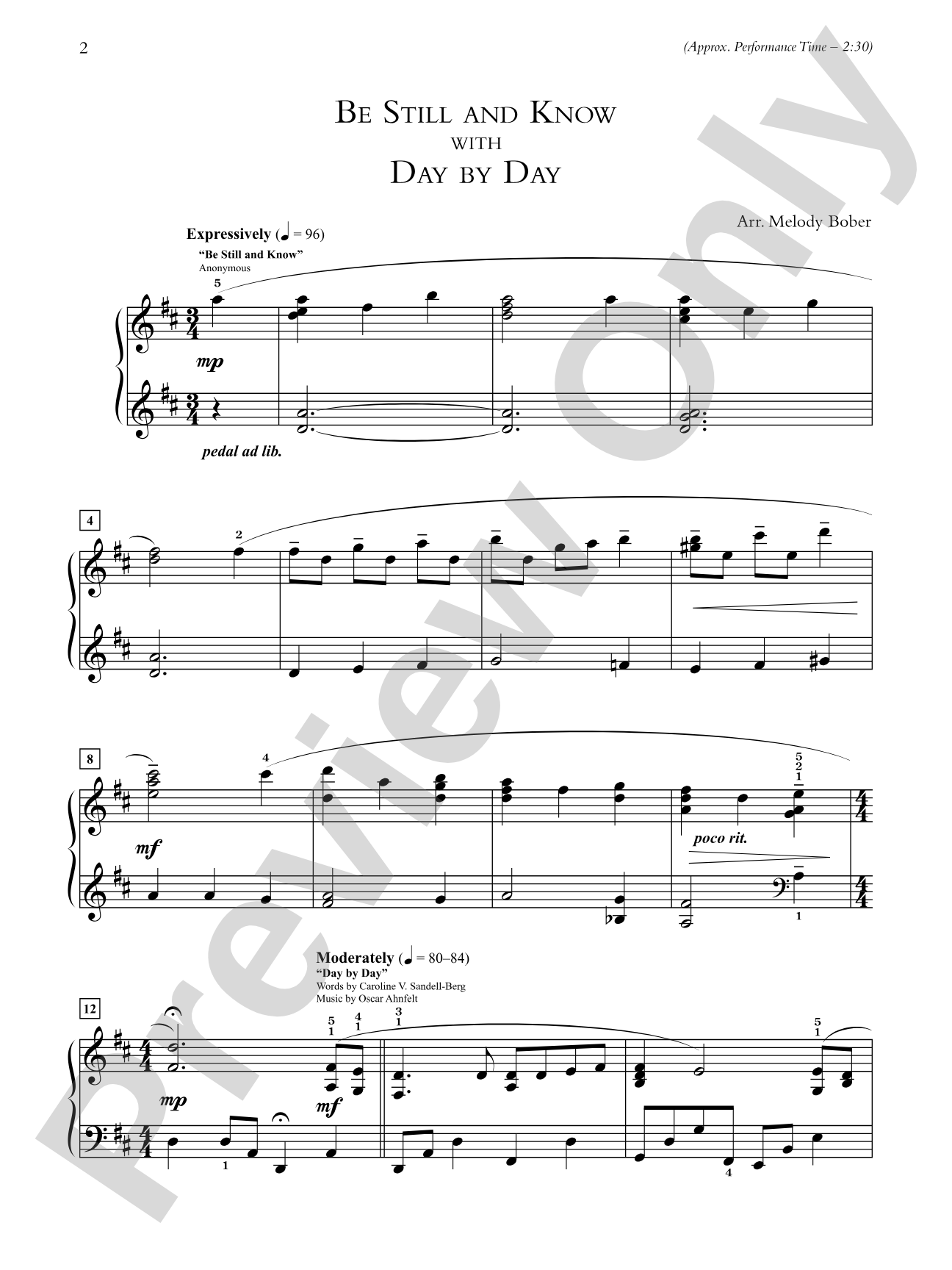
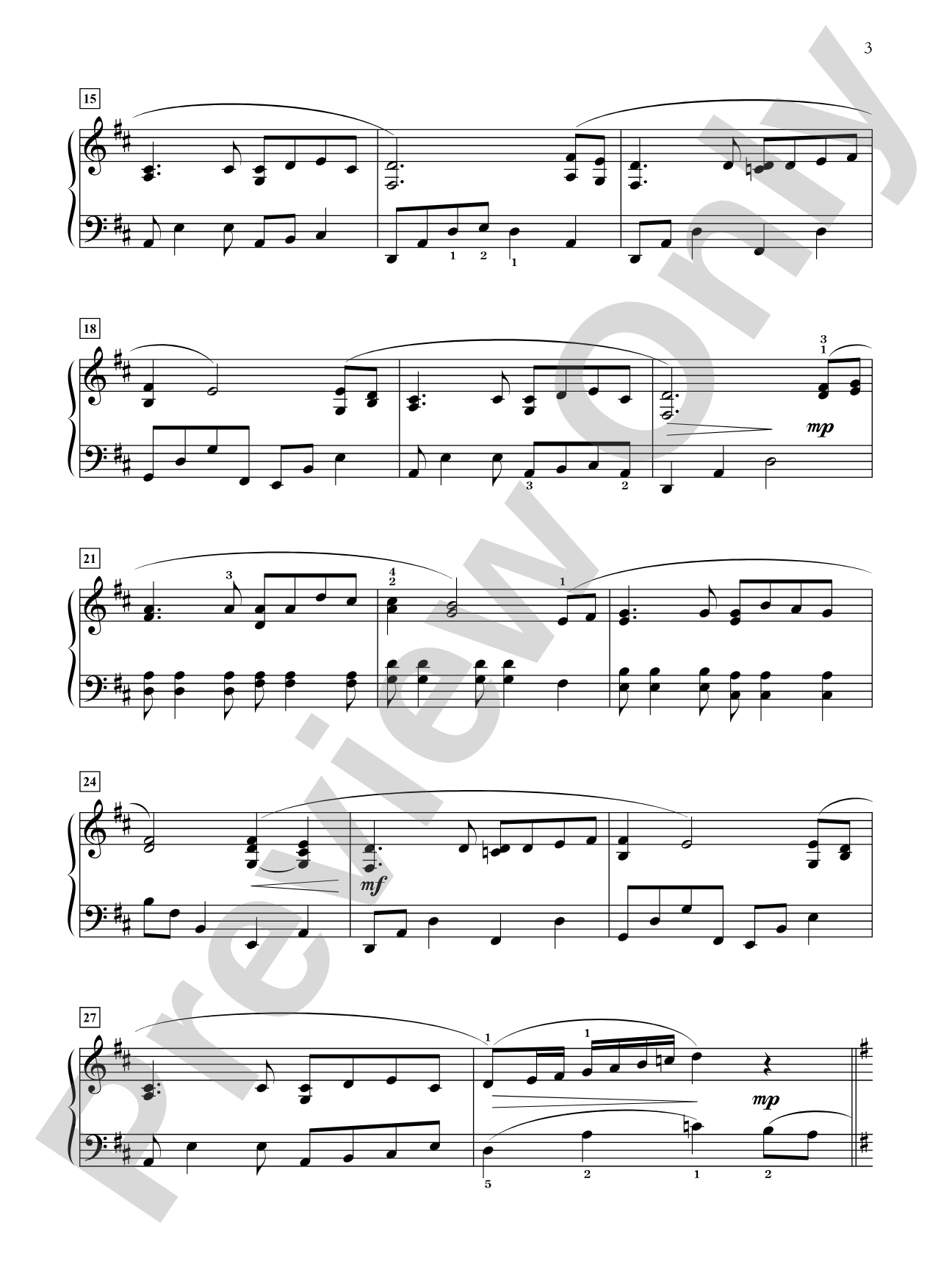
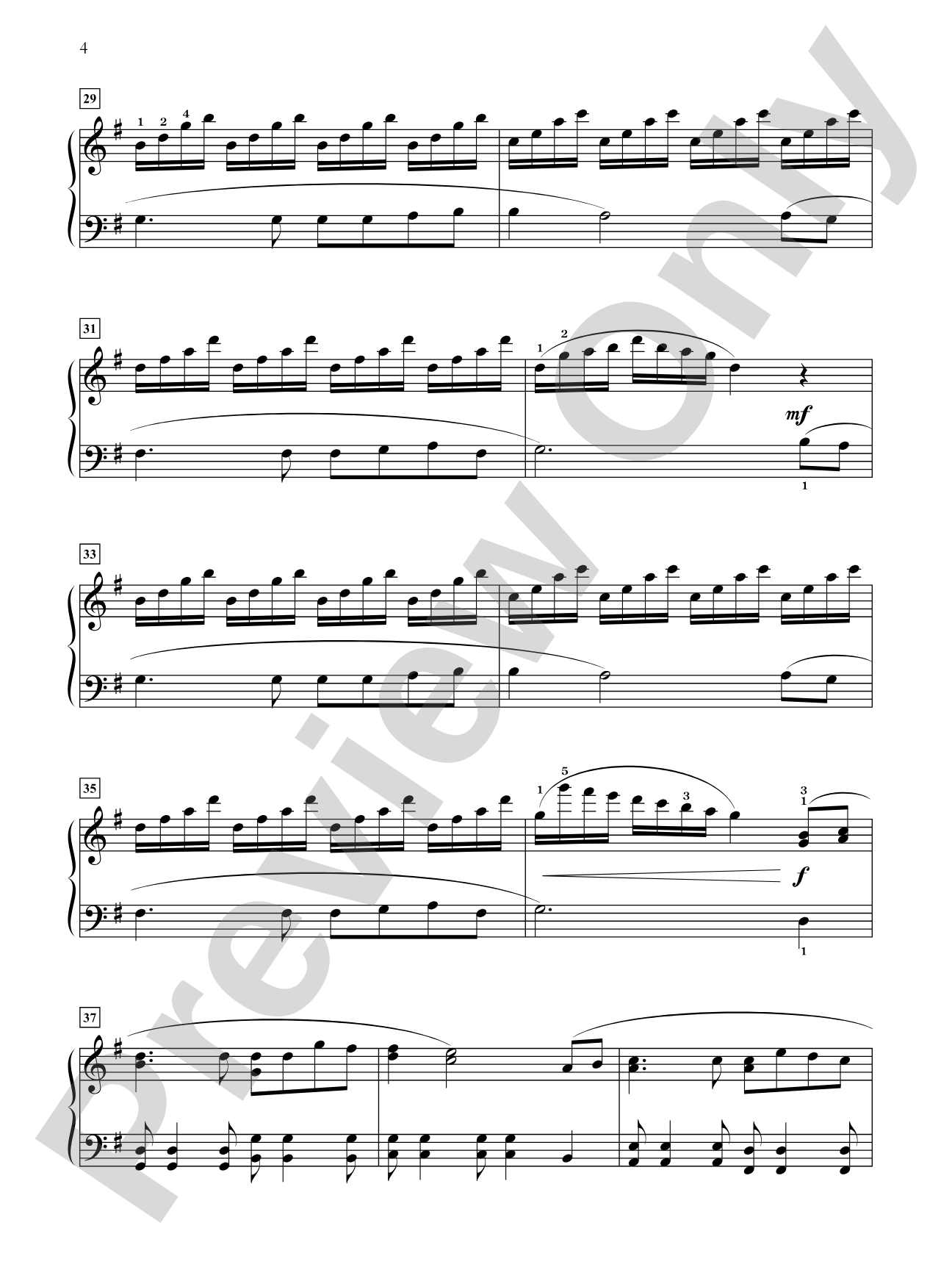
Twelve inspiring hymns, which vary from expressive meditation to joyous exultation, include approximate performance times making them easy to incorporate into services. Titles: Be Still and Know, with Day by Day * Come, O Thou Traveler Unknown * Faith Is the Victory * Faith of Our Fathers * Glorious Things of Thee Are Spoken * Have Faith in God, My Heart, with O, for a Faith That Will Not Shrink * I Know Whom I Have Believed * My Faith Has Found a Resting Place * My Faith Looks Up to Thee * Once to Every Man and Nation * The Solid Rock * Victory in Jesus. A Federation Festivals 2024-2028 selection.


A Call to Faithfulness: 12 Arrangements of Uplifting Hymns: Piano isn't in MakeMusic Cloud just yet...but it could be. Let us know you'd like to see it, and you'll help shape what comes next. In the meantime, start a free trial and dive into thousands of interactive titles your students can play along with today.
Request This Title
Tell us you want it.
Start Your Free Trial
Explore everything that's ready to play right now.
Sample Audio
No sample audio found.
Sample Video
No sample videos found.
Additional Details
Series:
Sacred Performer Collections
Publisher:
Alfred Music
Page Count:
40
SKU:
00-PB-0000892
More about this title
About the Arranger: Melody Bober

Melody Bober combines deep roots in music education with a gift for arranging music that speaks to both the mind and heart. She earned a bachelor's degree in music education from the University of Illinois at Champaign-Urbana (summa cum laude) and a Master of Arts in piano performance from Minnesota State University, Moorhead, studying with Joel Shapiro, Andrew Froelich, Mary Hoffman, and Tony Caramia. Her career spans two decades of public school teaching, university instruction, and private studio work across Minnesota.
Beyond the studio and classroom, Bober serves as an active church pianist and has directed church music programs, giving her intimate knowledge of what works in worship settings. She is a sought-after clinician at piano teacher conventions and workshops throughout North America, known for her innovative arrangements and her ability to inspire students through repertoire that matters. She and her husband Jeff live in Minnesota.
Why we love this
Bober's arrangements honor the spiritual weight of these beloved hymns while making them genuinely pianistic and engaging to play. The collection smartly balances reflective pieces with triumphant ones, and the inclusion of performance times removes guesswork when programming for services or recitals. Early advanced pianists gain access to meaningful sacred repertoire that develops both technical skill and interpretive depth.
What to expect
These arrangements move between quiet contemplation and jubilant celebration, mirroring the emotional range of hymn texts themselves. You experience moments of crystalline simplicity alongside passages of warm harmonic depth, all grounded in the timeless melodies that generations know by heart.
Who it's for
Church musicians and pianists serving in worship contexts will find immediately usable repertoire that bridges congregational familiarity with fresh, thoughtful arrangements. Early advanced students studying at the high school or early college level benefit from access to sacred literature that develops interpretive maturity alongside technical facility.
How to get the most out of it
- Study the approximate performance times before rehearsal to help you pace the emotional arc and plan transitions between pieces in a service or recital setting.
- Pay attention to the dynamic contrasts within each arrangement; hymn texts often contain shifts from introspection to affirmation that the piano writing mirrors and clarifies.
- Let the harmonic language guide your tempo choices. Many of these arrangements use richer voicings that benefit from unhurried tempos that allow listeners to hear the layering.
- Consider how each piece might connect thematically to the one before it rather than treating them as isolated selections; this deepens the overall impact when programming multiple pieces.
How to use it
Build a spring service or special worship event around thematic selections from this collection, using the performance times to create a balanced liturgical arc. Program individual pieces as prelude or postlude music during the church year, or assemble a full recital of five to eight selections for a piano student's spring recital.
Skills your students will build
- Interpreting sustained harmonic progressions and voicing clarity in early advanced textures
- Balancing melody and accompaniment across both hands in varied textures
- Shaping longer phrases through dynamic control and tempo flexibility
- Connecting technical execution with textual and spiritual meaning
- Programming and transitioning between contrasting pieces in a cohesive performance