
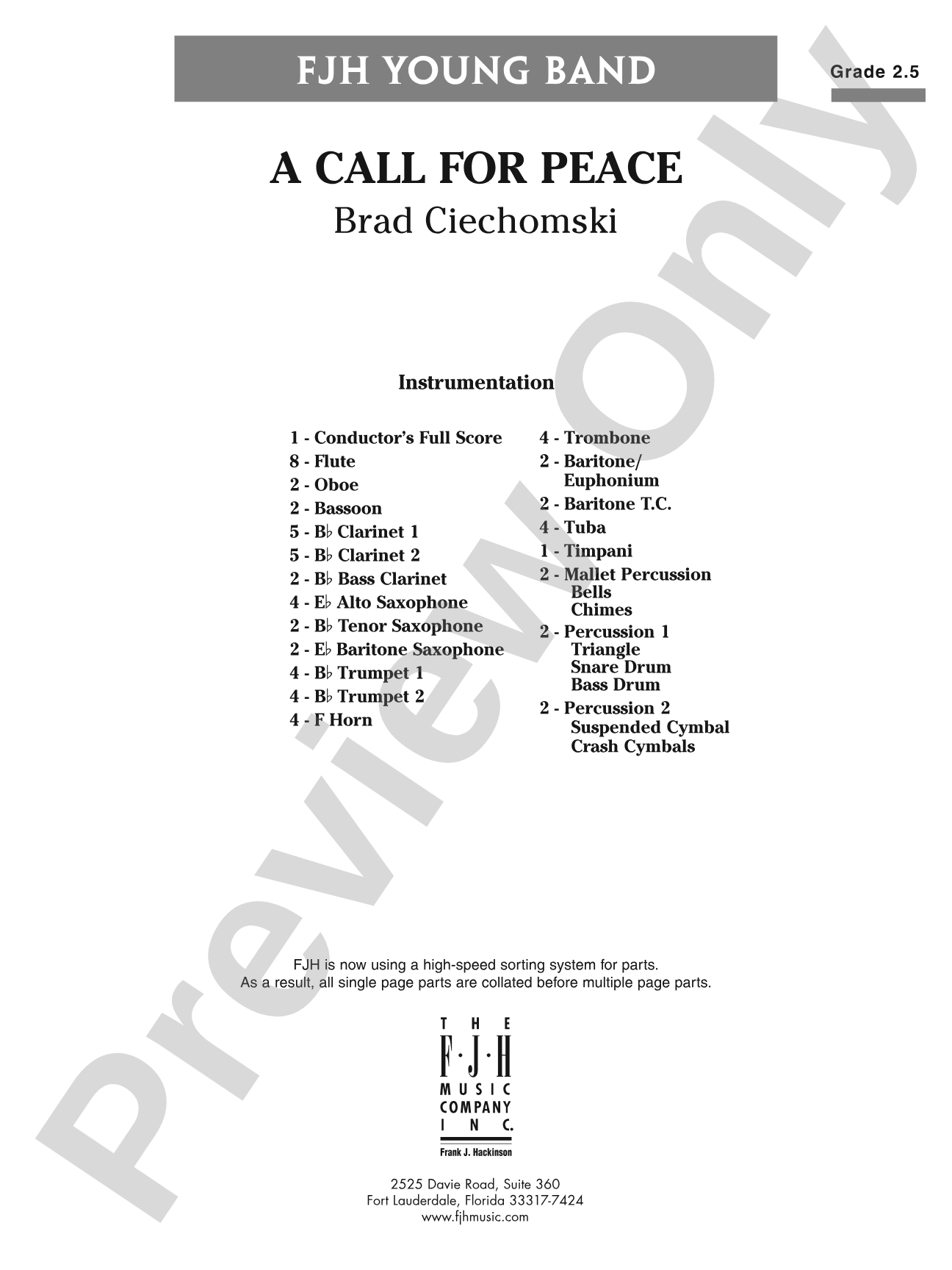
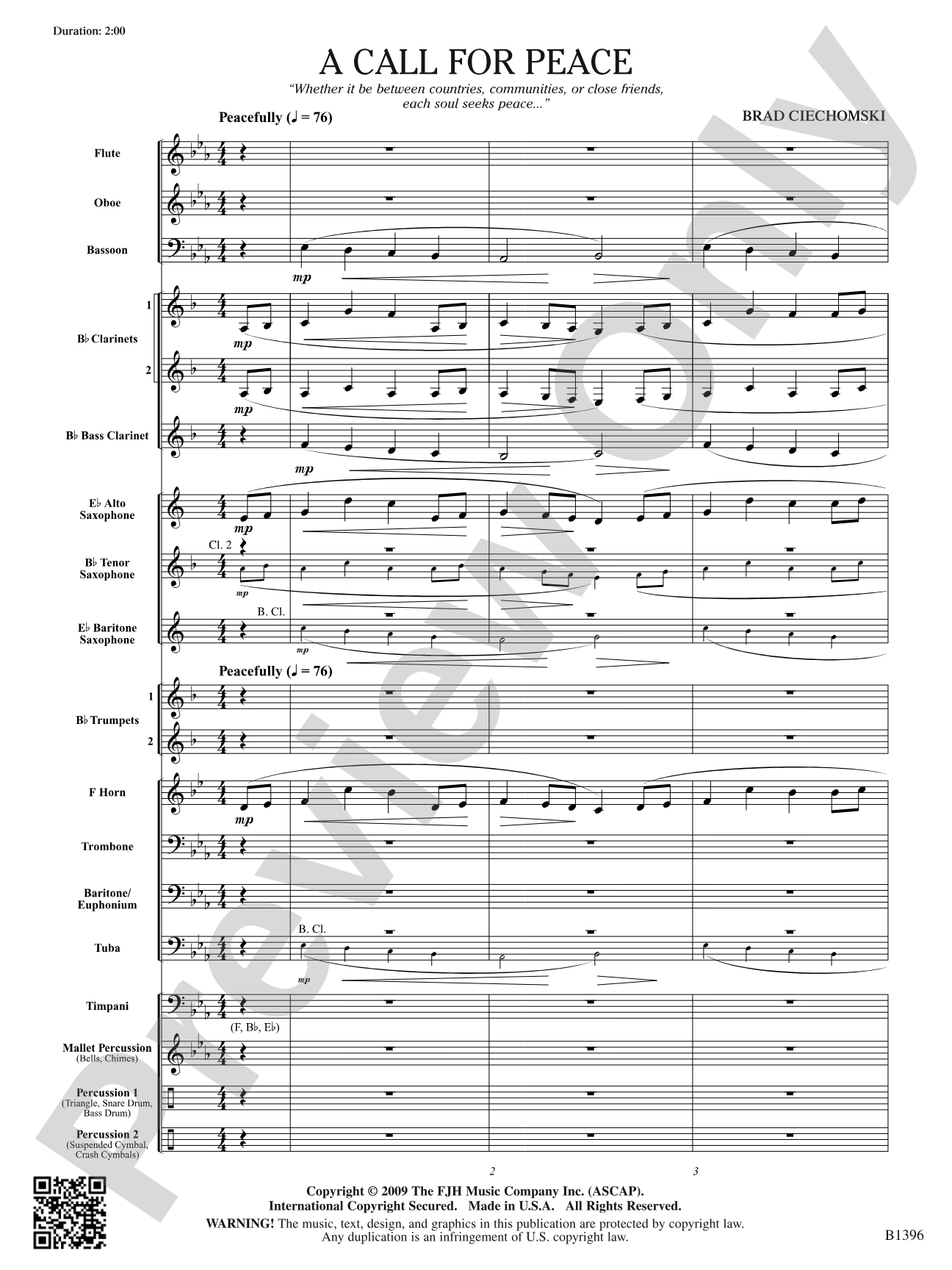
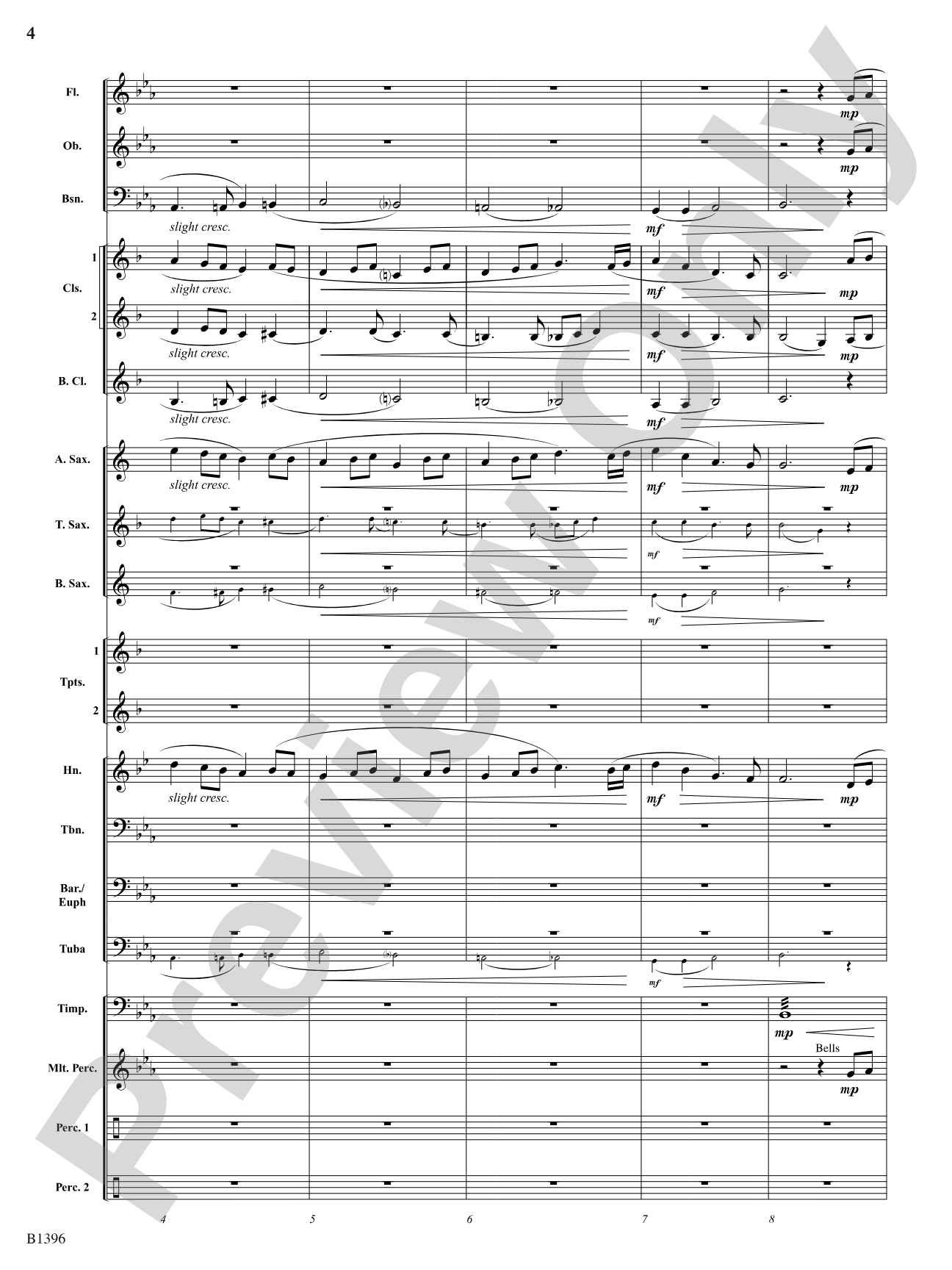
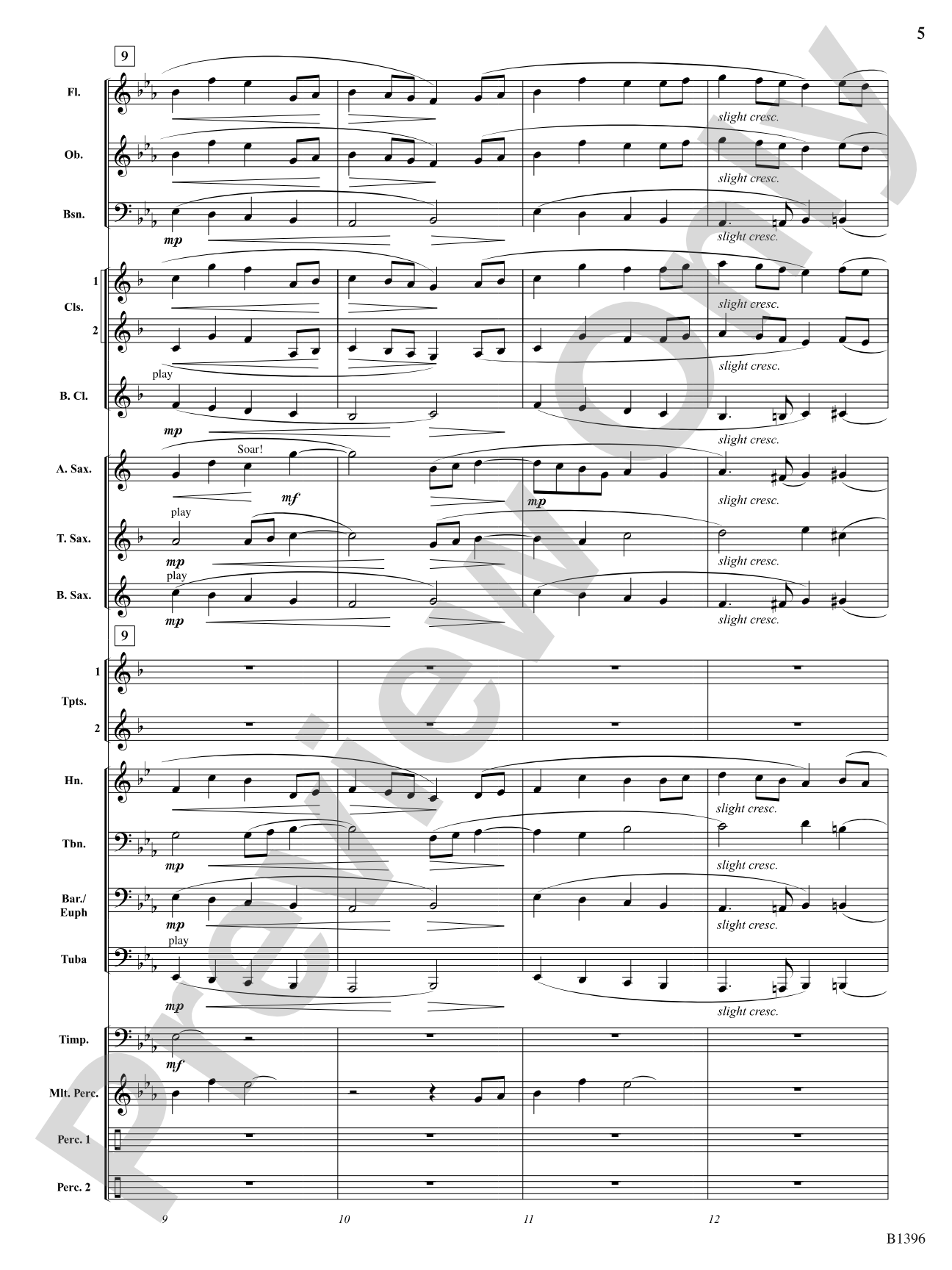
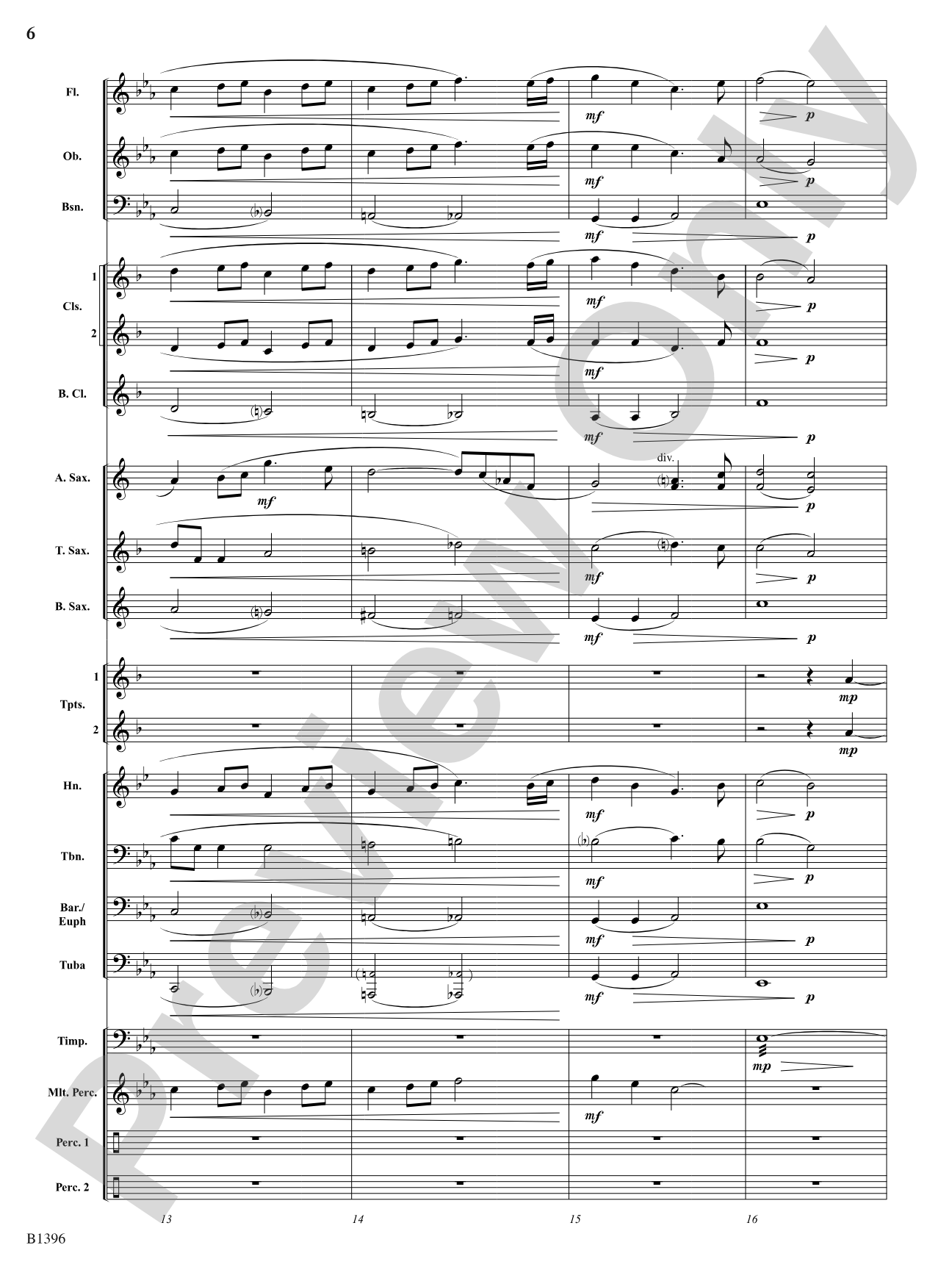
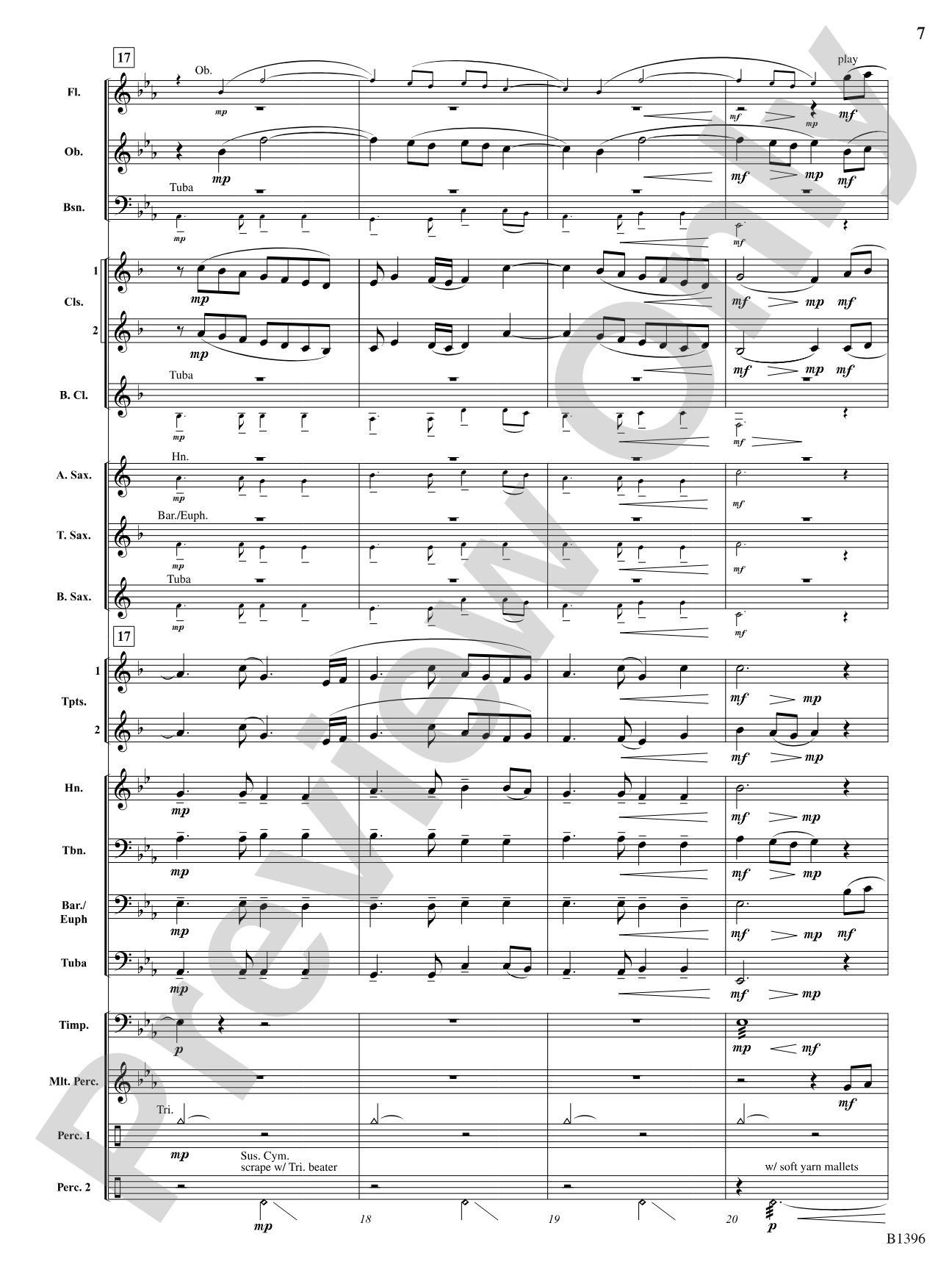
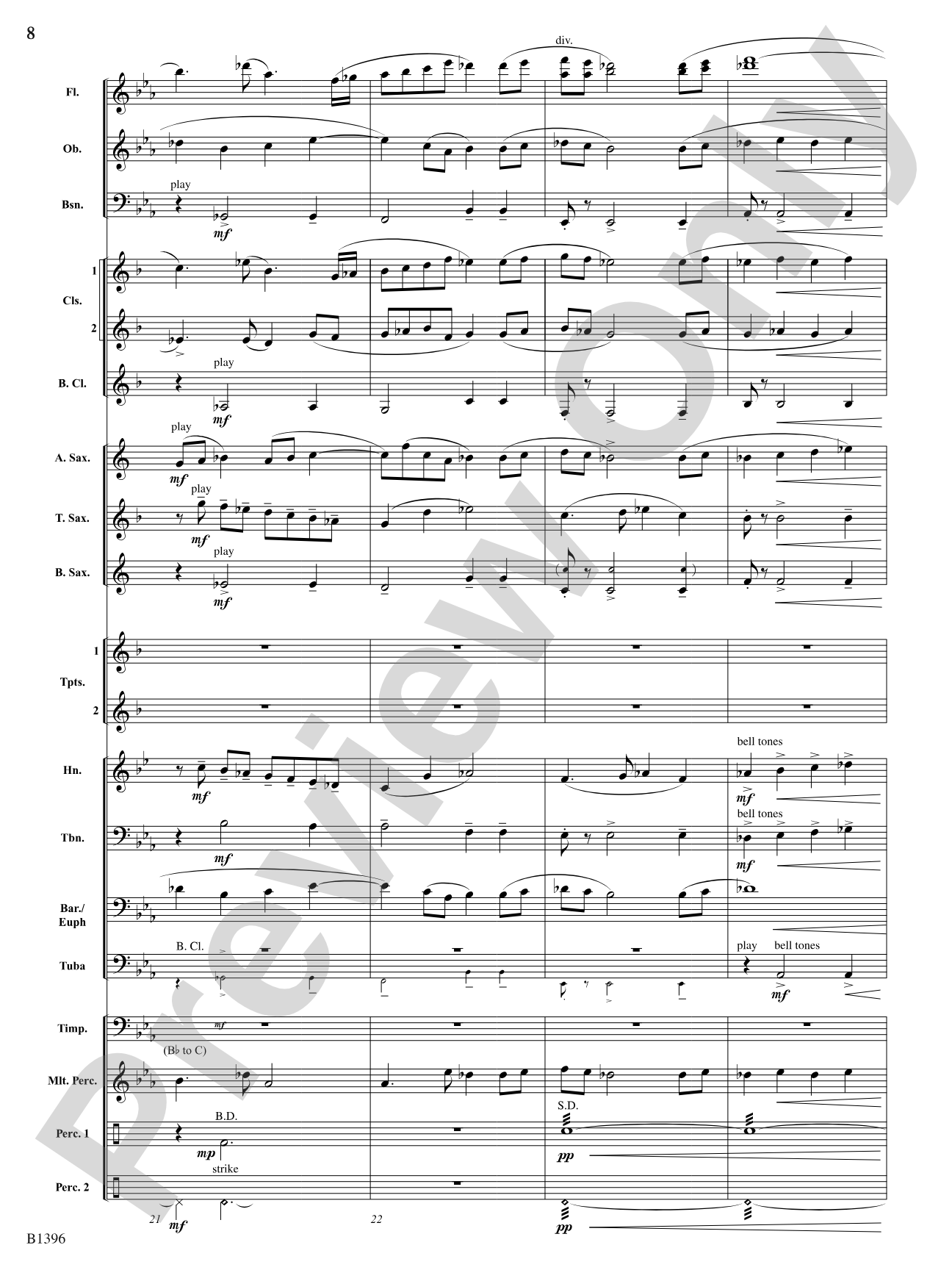
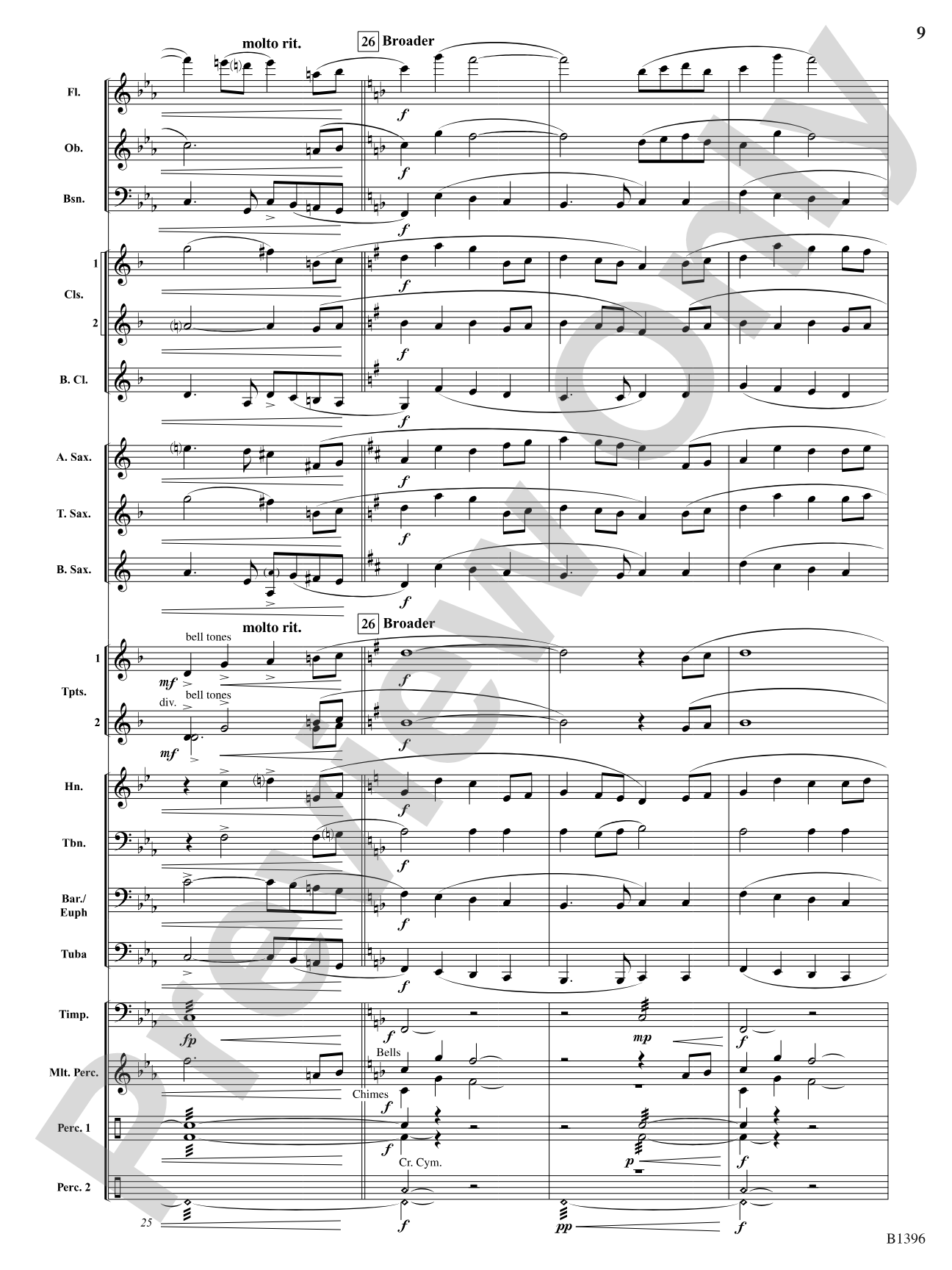
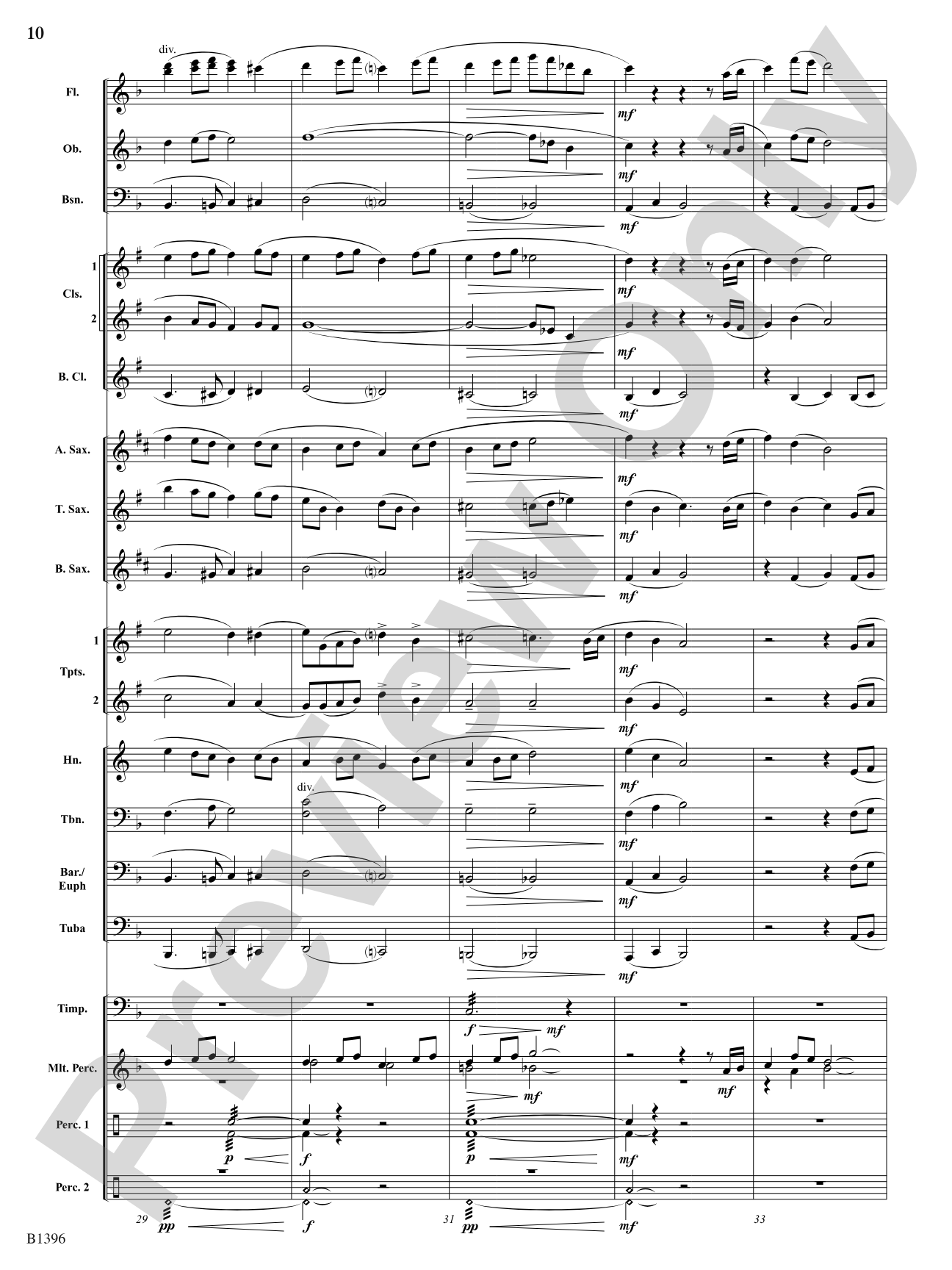
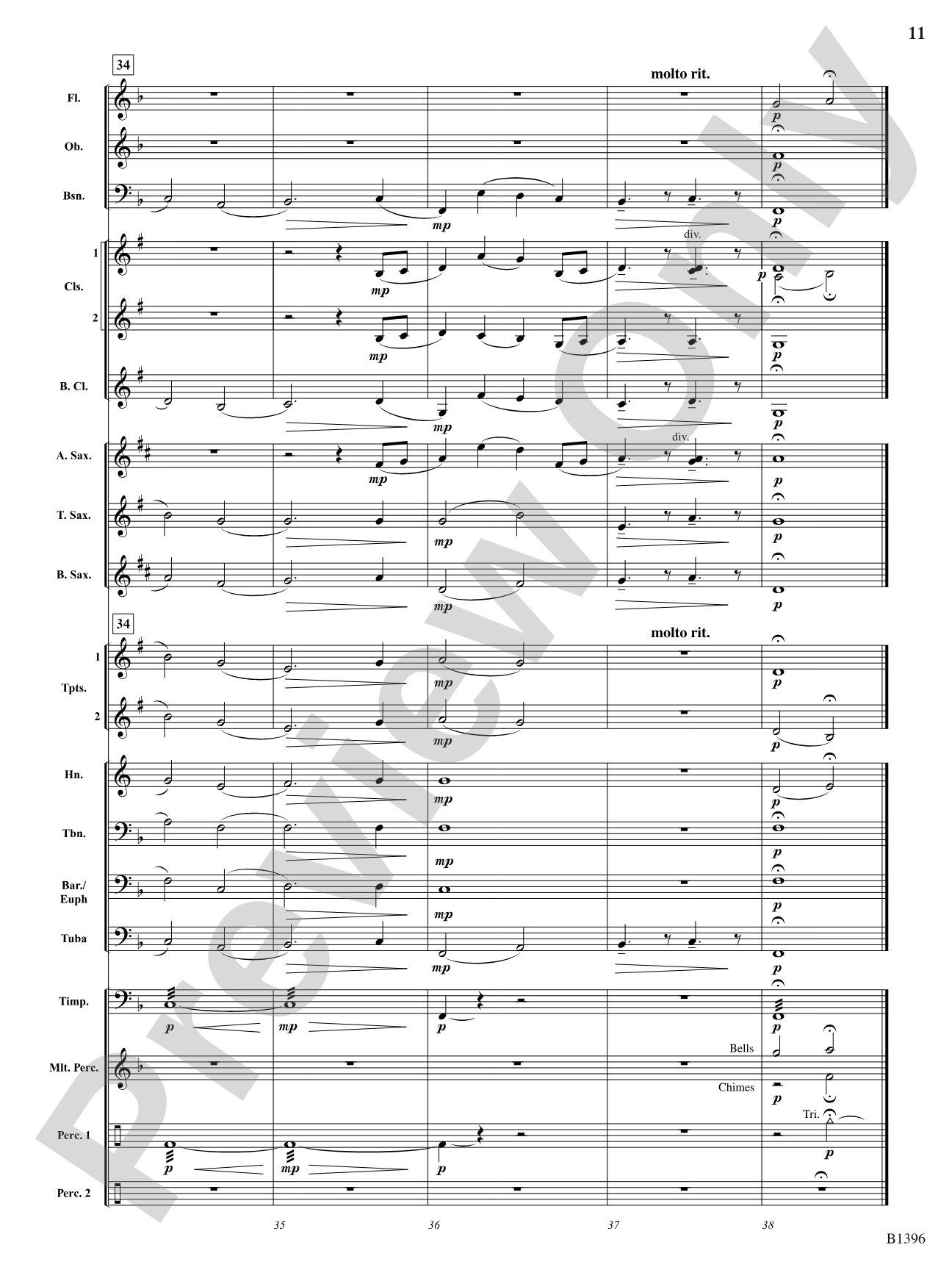

A Call for Peace: Score
By Brad Ciechomski
Grade: 2.5
Item: 98-DB1396S
$11.00
Pickup currently not available
Description
Change the pace of your next concert with this wonderfully lyrical work based on a world without conflict. Beautiful sweeping lines and soaring countermelodies build to an intense key change before the work returns to the gentle orchestration found at the beginning. Wonderful music that is quite achievable for bands at this level while providing exceptional opportunities for music making.


A Call for Peace: Score isn't in MakeMusic Cloud just yet...but it could be. Let us know you'd like to see it, and you'll help shape what comes next. In the meantime, start a free trial and dive into thousands of interactive titles your students can play along with today.
Request This Title
Tell us you want it.
Start Your Free Trial
Explore everything that's ready to play right now.
Sample Audio
1
Audio File
--:--
0:00
0:00
Sample Video
No sample videos found.
Additional Details
Series:
FJH Young Band
Publisher:
The FJH Music Company, Inc.
SKU:
98-DB1396S
More about this title
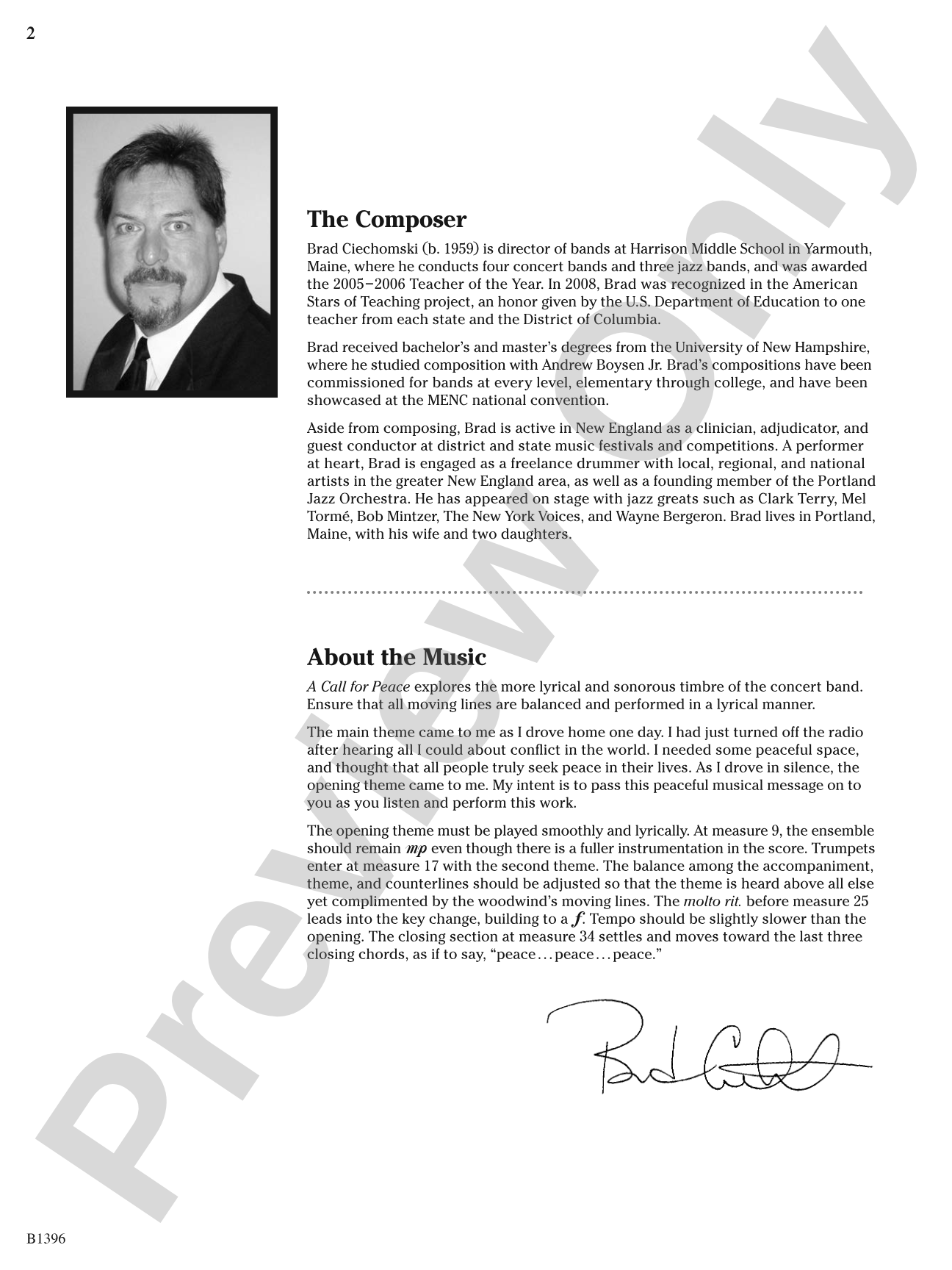
About the Composer: Brad Ciechomski

Brad Ciechomski directs bands at Harrison Middle School in Yarmouth, Maine, where he was named teacher of the year in 2005-2006 and received the American Star of Teaching award in 2008. He holds bachelor's and master's degrees from the University of New Hampshire, where he studied composition with Andrew Boysen Jr. His commissions span all levels of band, from elementary through college, and his work has been featured at the MENC national convention.
Beyond the composer's desk, Ciechomski is deeply active in New England as a clinician, adjudicator, and guest conductor at district and state festivals. He conducts four concert bands and three jazz ensembles at his school and performs regionally and nationally as a freelance drummer, having shared the stage with artists including Clark Terry, Mel Torme, Bob Mintzer, and David Crosby. He lives in Portland, Maine with his family.
Why we love this
This piece strikes an uncommon balance for Grade 2.5: the writing is genuinely lyrical and emotionally coherent without sacrificing accessibility. Ciechomski's ear for countermelody and orchestration means your band will sound fuller and more mature than many pieces at this level, and students will feel the arc of the work from opening serenity through a powerful key change and back to stillness. The dynamic range keeps everyone engaged without demanding virtuosity.
What to expect
The piece opens with tranquil, flowing lines that invite players into a contemplative space. As countermelodies emerge and build, there's an arc of hope and longing that crests in a sudden, intense key change, then yields back to the gentle, almost meditative character of the beginning.
Who it's for
This is ideal for middle school and early high school bands seeking a concert work with genuine musical substance at an achievable technical level. Directors looking to program something serene and introspective will find a piece that sits comfortably in student range while offering interpretive depth.
How to get the most out of it
- Shape the opening sweeping lines with long-term phrasing rather than phrase-by-phrase punctuation; let sections breathe into one another to establish the lyrical character from the start.
- Prepare the key change as a genuine moment of intensity by bringing ensemble focus and balance to the climactic passage, then pull back deliberately as the texture returns to the gentle orchestration.
- Balance the soaring countermelodies so they sing above the harmonic foundation without overshadowing it; this requires transparent voices in the inner parts.
How to use it
Program this as a centerpiece for a concert themed around peace, reflection, or hope; it provides strong contrast to more energetic or technically driving works. It also serves beautifully as a closer for a concert program, leaving audiences with a sense of calm resolution.
Skills your students will build
- Sustaining long lyrical lines with consistent breath support and tone
- Balancing ensemble parts in countermelodic textures
- Managing dynamic contrast and intensity through a key change
- Listening to harmonic movement and blending within chord structures
- Interpreting and responding to conductor shaping for musical phrasing