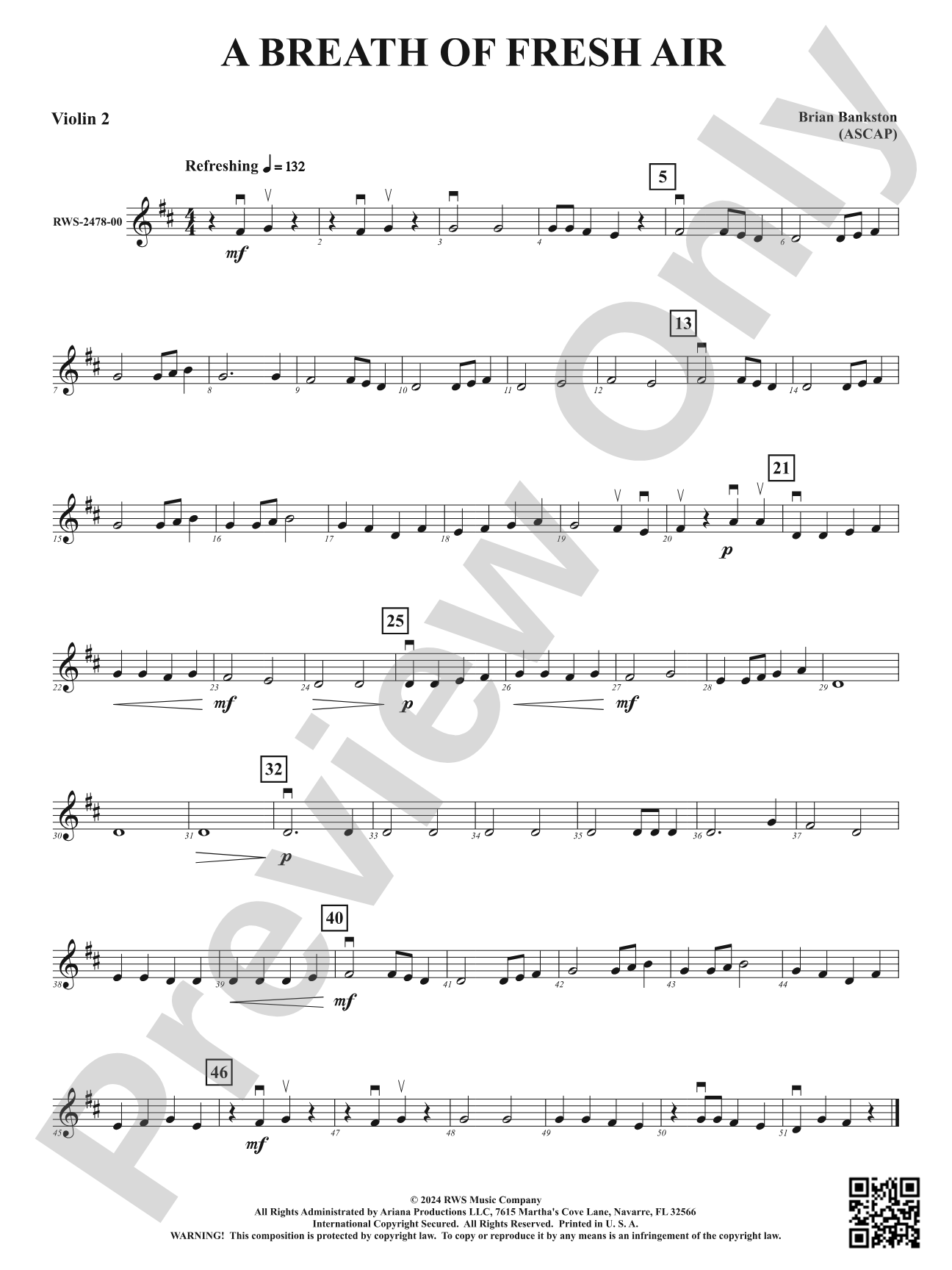
Designed with accessibility in mind, A Breath of Fresh Air by Brian Bankston offers young musicians a supportive and engaging environment to develop their skills and express their creativity. From bowing techniques to finger placement, each element of the composition is carefully crafted to guide players on their musical journey with confidence and enthusiasm. With its gentle melodies and uplifting harmonies, A Breath of Fresh Air evokes the sensation of stepping into a sunlit meadow or feeling a cool breeze on a warm day. Like a refreshing gust of wind, the music breathes new life into the strings, inspiring players to embrace their instruments with a sense of wonder and joy. (1:37)
Discover MakeMusic Cloud: thousands of interactive titles your students can play along with today.
Bankston understands what young string players need to hear and feel. The piece builds confidence through accessible writing that never talks down to the ensemble, pairing technical guidance embedded in the music itself with genuine melodic satisfaction. At 1:37, it fits naturally into any concert without sacrificing substance.
What to expect
Stepping outside on a clear day when the air carries that perfect mix of warmth and coolness. The music moves gently forward, never rushed, with harmonies that feel open and uncomplicated, allowing individual voices to emerge without crowding the texture.
Who it's for
Grade 1 string orchestras preparing their first meaningful concert repertoire. This works equally well for beginning orchestras at the middle school level or for elementary string ensembles ready to move beyond unison playing.
How to get the most out of it
Establish a light, floating bow stroke during the opening melody. Encourage players to think of the bow as a feather riding on the string rather than pressing into it.
Balance tone production across the section by having players focus on consistent bow speed and contact point. Young players often tighten their shoulders when concentrating on finger placement; remind them that relaxed arms make better sound.
Let the gentle harmonic movement breathe. Resist the urge to push tempo; the piece works best when players have time to shape their individual lines without rushing.
Use the piece as an opportunity to refine unified bowing patterns. Check that all players in a section begin and end bow strokes together, which strengthens ensemble cohesion.
How to use it
Open a spring concert with this piece to establish an encouraging tone and build audience investment in young musicians. Its short length and accessibility also make it an excellent choice for community performances or festivals where you want to showcase ensemble development without overwhelming less experienced players.
Skills your students will build
Bow control and consistent tone production across longer phrases
Finger placement accuracy in first and second positions
Reading multiple string parts and maintaining individual lines within harmonic texture
Dynamic contrast and shaping individual melodies
Unified bowing technique across the ensemble
You May Also Like
Scan to Complete Your Purchase
Use your phone's camera to scan the code below
You'll log in on your phone and the order will be added to your account