
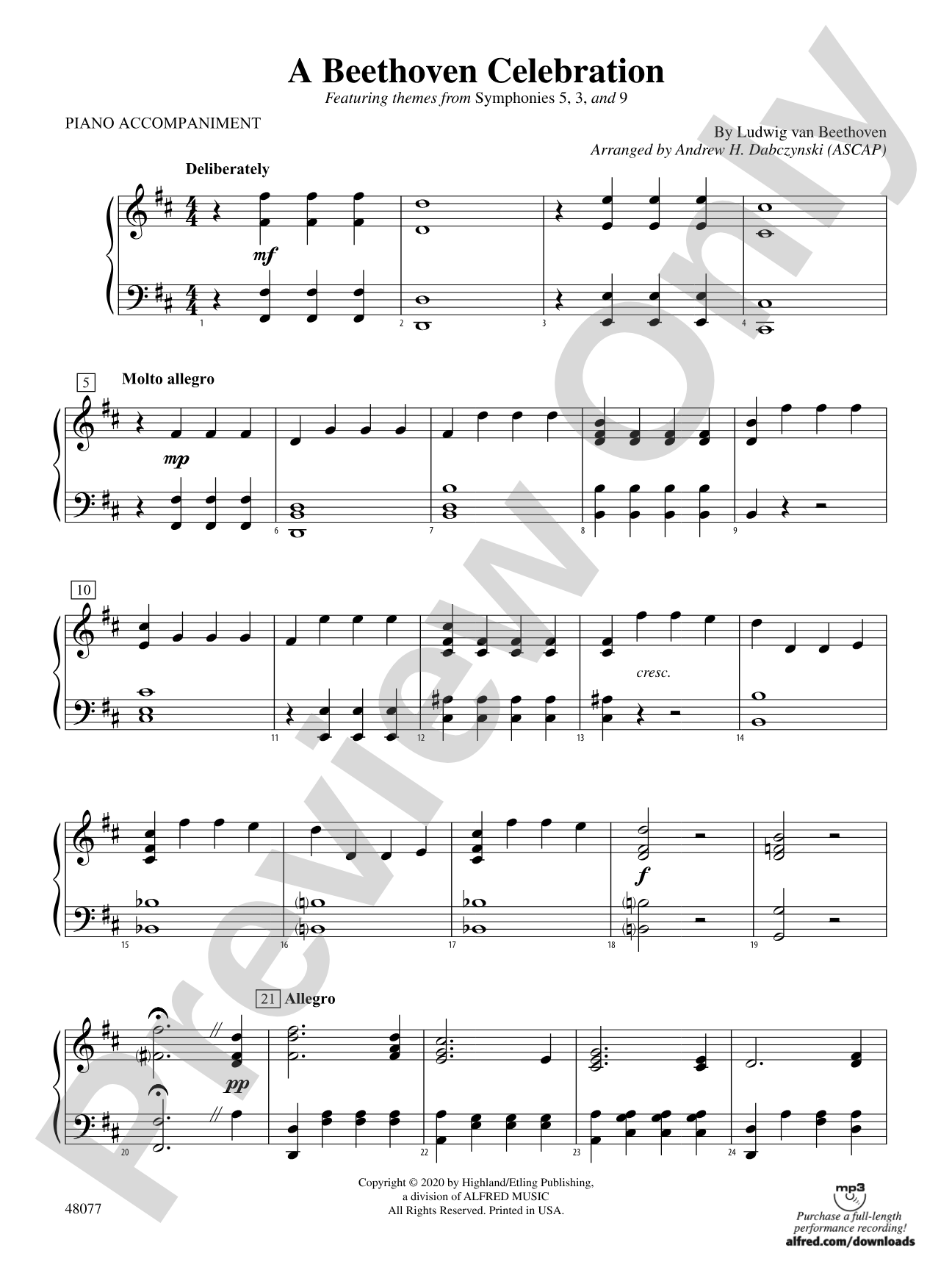

A Beethoven Celebration: Piano Accompaniment
Featuring Themes from Symphonies 5, 3, and 9
By Ludwig van Beethoven / arr. Andrew H. Dabczynski
Grade: 1.5
Item: 00-PC-0018456_K
$5.99
Pickup currently not available
Description
A Beethoven Celebration by Andrew H. Dabczynski is an arrangement that offers beginning strings an opportunity to play some of the greatest themes Beethoven ever composed. The opening to Symphony No. 5, a theme from Symphony No. 3, and "Ode to Joy" from Symphony No. 9 are presented as a medley that will bring depth to any concert program and significant growth to students' musicality. Correlated to String Explorer, Book 1, Unit 10. (2:00) This title is available in MakeMusic Cloud.


Don't just read it, hear it, play along with it, and watch your students grow with it. In MakeMusic Cloud, A Beethoven Celebration: Piano Accompaniment comes alive with professional accompaniment, adjustable tempo, and built-in practice tools that turn solo practice into real progress.
Open in the Player
Jump straight in and assign it today.
Start Your Free Trial
Open this title and explore the full library in minutes.
Sample Audio
1
Audio File
--:--
0:00
0:00
Sample Video
Additional Details
Series:
Highland/Etling String Explorer
Publisher:
Alfred Music
Page Count:
148
SKU:
00-PC-0018456_K
More about this title
About the Composer: Ludwig van Beethoven
Ludwig van Beethoven (1770-1827) stands as a towering figure in music history, a composer who bridged the Classical and Romantic eras while fundamentally reshaping what orchestral music could express. His symphonies, piano sonatas, and string quartets contain some of the most recognizable themes in all of Western music, melodies that have endured for nearly 200 years because they speak directly to human emotion and aspiration. For string students, Beethoven's work represents the height of what the orchestra can achieve: dramatic power, lyrical beauty, and structural clarity all working in concert.
In the classroom, Beethoven's themes teach students about phrasing, dynamic contrast, and the relationship between individual parts and the whole ensemble. His melodies are memorable enough to inspire young players while his harmonies remain sophisticated enough to stretch their musicianship. Teaching Beethoven means teaching students to reach beyond technical competency toward genuine musical expression.
Why we love this
This arrangement delivers three of classical music's most iconic themes in a single, cohesive medley that grade 1.5 students can actually play with conviction. Dabczynski has preserved the character and recognizability of each movement while keeping the technical demands reasonable, so students experience the satisfaction of playing "real" Beethoven rather than a simplified approximation. The variety across the three themes keeps both players and audiences engaged, and the pieces build genuine musicianship in a way that matters.
What to expect
Triumphant and urgent at the start, with the propulsive drive of that unforgettable five-note rhythm. The mood shifts to something more noble and lyrical as the Symphony No. 3 theme emerges, then settles into the warmth and universality of "Ode to Joy." The overall arc moves from dramatic tension through reflective beauty to affirmation, leaving audiences with a sense of uplift.
Who it's for
Beginning string orchestras seeking repertoire that combines recognizable, inspiring melodies with genuine musical growth. Students at this level gain confidence from playing themes they know while developing their ability to sustain long lines, balance ensemble texture, and execute dynamic shaping. Conductors building concert programs will find this piece both audience-friendly and pedagogically sound.
How to get the most out of it
- Balance the famous four-note motive from Symphony No. 5 between first and second violins so the rhythm lands clearly but the melody doesn't overshadow the harmonic support beneath it.
- Shape the Symphony No. 3 theme with long, singing phrases; encourage players to breathe with the line rather than chop it into small fragments.
- Let "Ode to Joy" bloom at its entry point. After the intensity of the opening two themes, this melody needs space and a warm, unified tone from all sections.
- Use the recorded accompaniment to establish steady tempos and to give students a secure harmonic foundation, especially during transitional passages between themes.
How to use it
Program this as a centerpiece of a concert celebrating orchestral masterworks, or pair it with other Classical-era pieces to frame a "Beethoven and His Contemporaries" program. The 2-minute duration and concert appeal make it an ideal selection for festivals and competitions where variety and audience engagement both matter. It works particularly well as a final piece on a concert featuring multiple shorter works, since its recognizable themes send students and listeners home satisfied.
Skills your students will build
- Sustained phrasing across four and eight-measure lines
- Dynamic shaping and contrast between forte and piano sections
- Balancing melody and accompaniment texture within the string section
- Rhythmic precision in syncopated and dotted-rhythm passages
- Intonation control in vertical harmony with multiple parts moving simultaneously
- Ensemble listening and blend, especially during theme transitions