A Ballad for the Duke: Tenor Sax 2 Sheet Music Preview

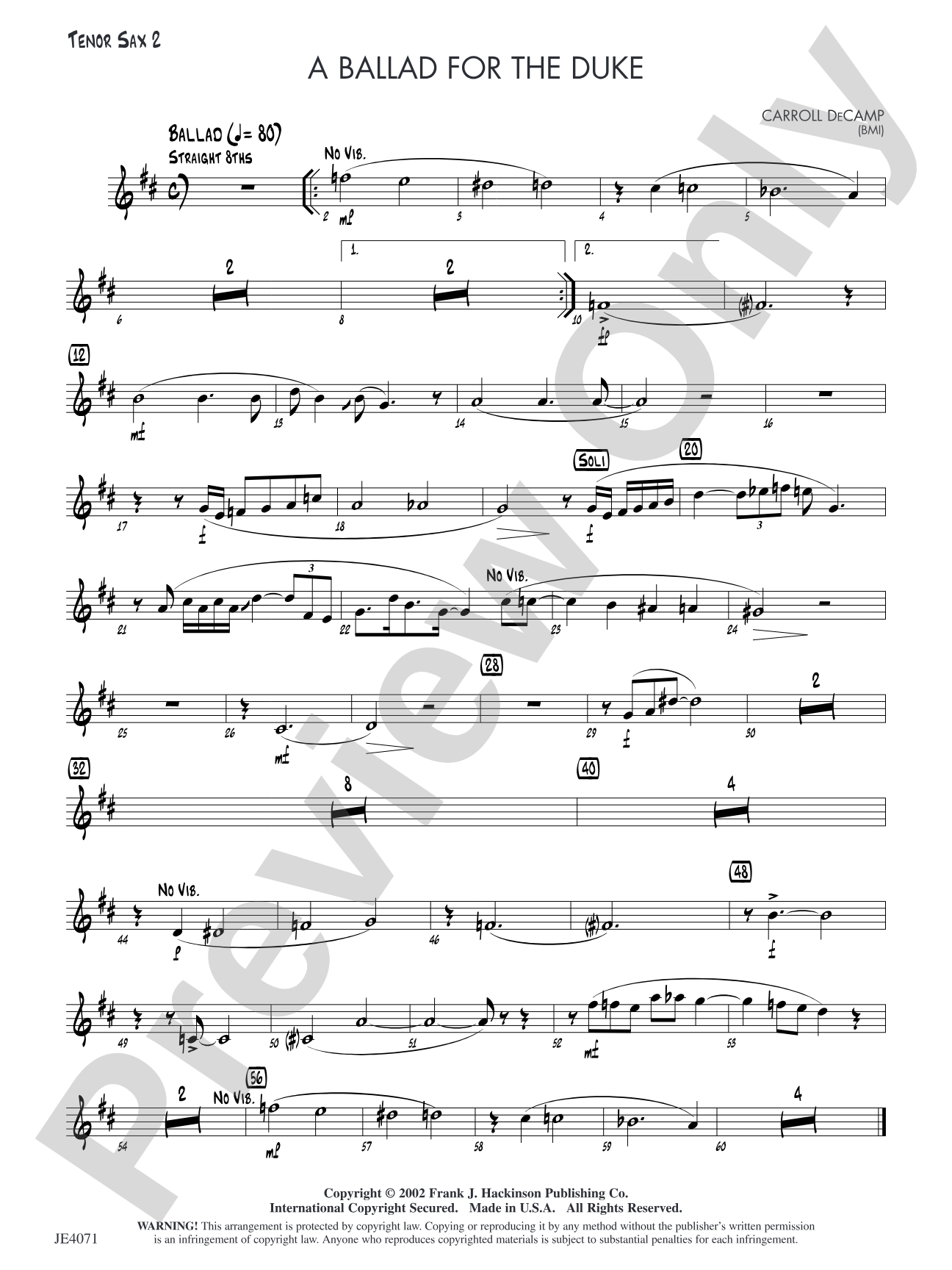
A Ballad for the Duke: Tenor Sax 2

By Carroll DeCamp

Grade: 3

Item: 98-PC-DJE4071_TX2

Digital Download
$7.00
Description
Written to showcase your lead alto, this medium-easy ballad is a tribute to the legacy of the great Duke Ellington. All the solos are written out, including a strain for the piano in the Duke's own fashionable way.

A Ballad for the Duke: Tenor Sax 2 isn't in MakeMusic Cloud just yet...but it could be. Let us know you'd like to see it, and you'll help shape what comes next. In the meantime, start a free trial and dive into thousands of interactive titles your students can play along with today.

Sample Audio
0:00
0:00
Sample Video
Additional Details
Series: FJH Intermediate Jazz Ensemble
Publisher: The FJH Music Company, Inc.
SKU: 98-PC-DJE4071_TX2

More about this title

Why we love this

This ballad taps into what makes Duke Ellington's music endure: sophisticated harmony and melodic grace wrapped in accessible ensemble writing. Your lead alto gets a moment that feels genuinely important, and the written-out solos (especially that piano strain) save rehearsal time while preserving the specific voice and character DeCamp had in mind.

What to expect

Graceful and unhurried, with the kind of melodic warmth that feels both classic and immediate. The arrangement lets the ensemble contribute texture and color rather than dominance, creating space for reflection and lyricism that ballads demand.

Who it's for

Jazz ensemble directors working with players at the intermediate level who want to give their lead alto a feature without tackling a full bebop vehicle. This works equally well for ensembles focused on listening and understanding jazz history and those prioritizing performance confidence.

How to get the most out of it

  • Balance the ensemble backdrop to let the alto solo cut through without drowning it out; the written harmony should support, not compete.
  • Work the rubato carefully with your rhythm section. Medium-easy doesn't mean metronomic; Ellington's music breathes, so give the piano and bass room to phrase expressively.
  • Pay attention to the piano's written strain. It's not accompaniment filler; treat it as a true solo statement and rehearse it with the same care you'd give the alto.

How to use it

Program this as a concert centerpiece that showcases your section's refinement without requiring extended technical fireworks. It fits naturally after a fast opener and before another feature, or as a standalone tribute to jazz history in a thematic concert.

Skills your students will build

  • Phrasing with space and breath in a slow tempo
  • Balancing ensemble blend when supporting a featured soloist
  • Reading and performing written jazz harmonies accurately
  • Responding to piano and bass in a small-group jazz context
  • Interpretation of swing articulation at moderate tempos

You May Also Like