
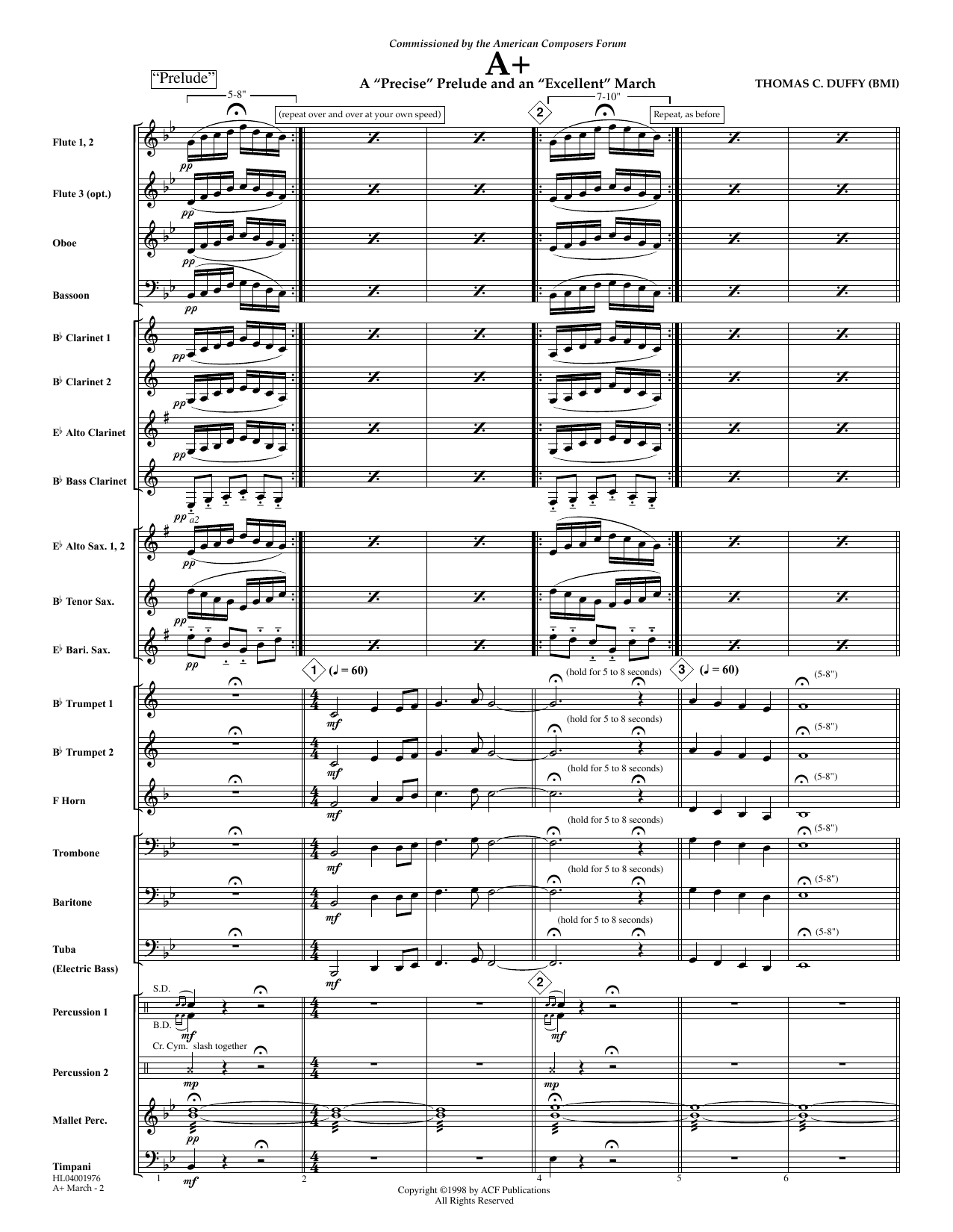

A+: A "Precise" Prelude and an "Excellent" March: Concert Band Conductor Score & Parts
By Thomas Duffy
Grade: 3
Item: 35-PK00444384
$5.00
Pickup currently not available
Buy Extra Parts (Digital PDF Download)
| Product | Price | Quantity |
|---|---|---|
| A+: A "Precise" Prelude and an "Excellent" March - Full Score | $5.00 |
Parts Added to Cart!
Description
Playing one wrong note can ruin the performance of a piece, right? Well, composer Thomas Duffy actually wants the performers to make mistakes in this clever composition! The precise imprecision comes to life as students are asked to intentionally play wrong notes in various parts of the march. After performing this work, you and your students will never look at "perfection" the same way again! Free interdisciplinary curriculum for the piece is available for download at www.BandQuest.org: https://composersforum.org/bq-compositions/a-a-precise-prelude-and-an-excellent-march/
BandQuest, an exciting series of new music and accompanying curricula for band, is a program published by the American Composers Forum. The series was started as a response to feedback from music educators that there is a pressing need for new, fresh band music. The heart of this program is new works written by a diverse group of leading American composers who have created challenging pieces that are a true departure from standard middle school repertoire. Every BandQuest project includes a residency component in which the composer works collaboratively with a middle school as they create their new piece. Many BandQuest pieces are accompanied by an interdisciplinary curriculum designed to assist students as they learn the music and to integrate each piece with non-music studies. Visit www.bandquest.org to learn more about this innovative series, and email bandquest@composersforum.org to request a free downloadable audio catalog.


Discover MakeMusic Cloud: thousands of interactive titles your students can play along with today.
Sample Audio
No sample audio found.
Sample Video
No sample videos found.
Additional Details
Publisher:
Hal Leonard
SKU:
35-PK00444384
More about this title
About the Composer: Thomas Duffy
Thomas Duffy is an American composer whose work bridges art music and music education. His pieces for young ensembles demonstrate a sophisticated understanding of how students learn while maintaining genuine compositional ambition.
Why we love this
Duffy flips the script on what students think they know about ensemble performance. By building intentional 'mistakes' into the score, he transforms a potential anxiety point into the actual substance of the music, which opens conversations about artistic intention, ensemble balance, and what 'perfect' really means in music making.
What to expect
The prelude establishes elegance and control. Then the march pulls the rug out from under that expectation, inviting humor and curiosity as planned dissonances and wrong notes bloom throughout the ensemble. It's unsettling in the best way.
Who it's for
Grade 3 concert bands ready for music that challenges their assumptions. This works especially well with students who are anxious about perfection or who need to understand that composers make deliberate choices about every note.
How to get the most out of it
- Spend rehearsal time clarifying which notes are intentionally wrong and who plays them. Without this clarity, your section leaders won't know what to listen for, and the effect collapses.
- Balance the 'wrong' notes so they're audible but not jarring. This requires careful attention to dynamics and voicing so the compositional concept reads clearly.
- Consider having students write brief reflections after learning the piece. The cognitive shift from 'I made a mistake' to 'I executed the composer's intention' is part of what makes this work pedagogically powerful.
How to use it
This pairs beautifully with a composer talk or demonstration, or as a conversation starter about 20th and 21st century compositional practices. Place it where you can spotlight the interdisciplinary curriculum, which deepens the learning beyond the rehearsal room.
Skills your students will build
- Distinguishing between performance error and compositional intention
- Reading and executing unconventional score markings
- Listening critically to balance intentional dissonance within an ensemble texture
- Understanding how composers use expectation and surprise as structural tools