
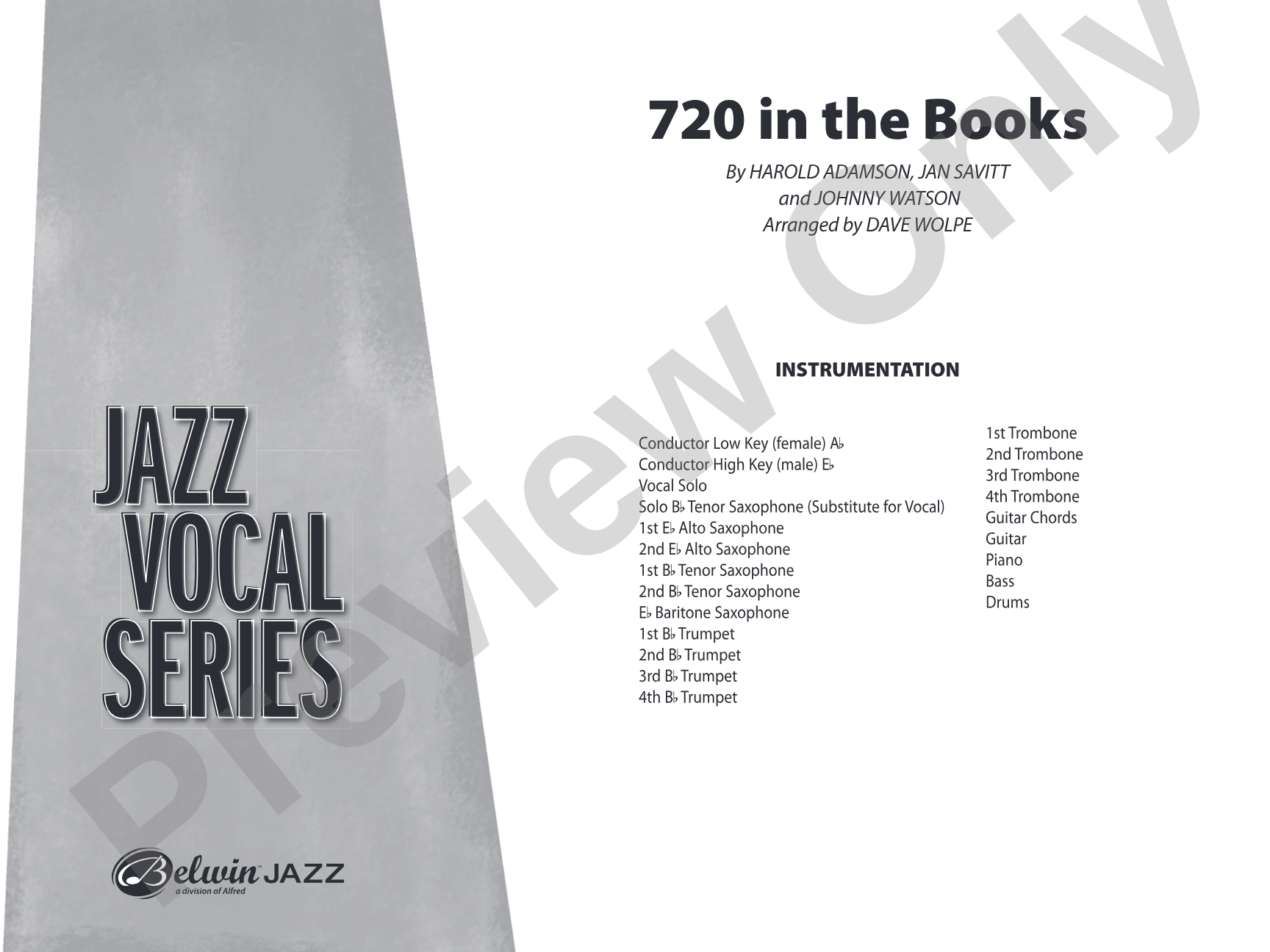
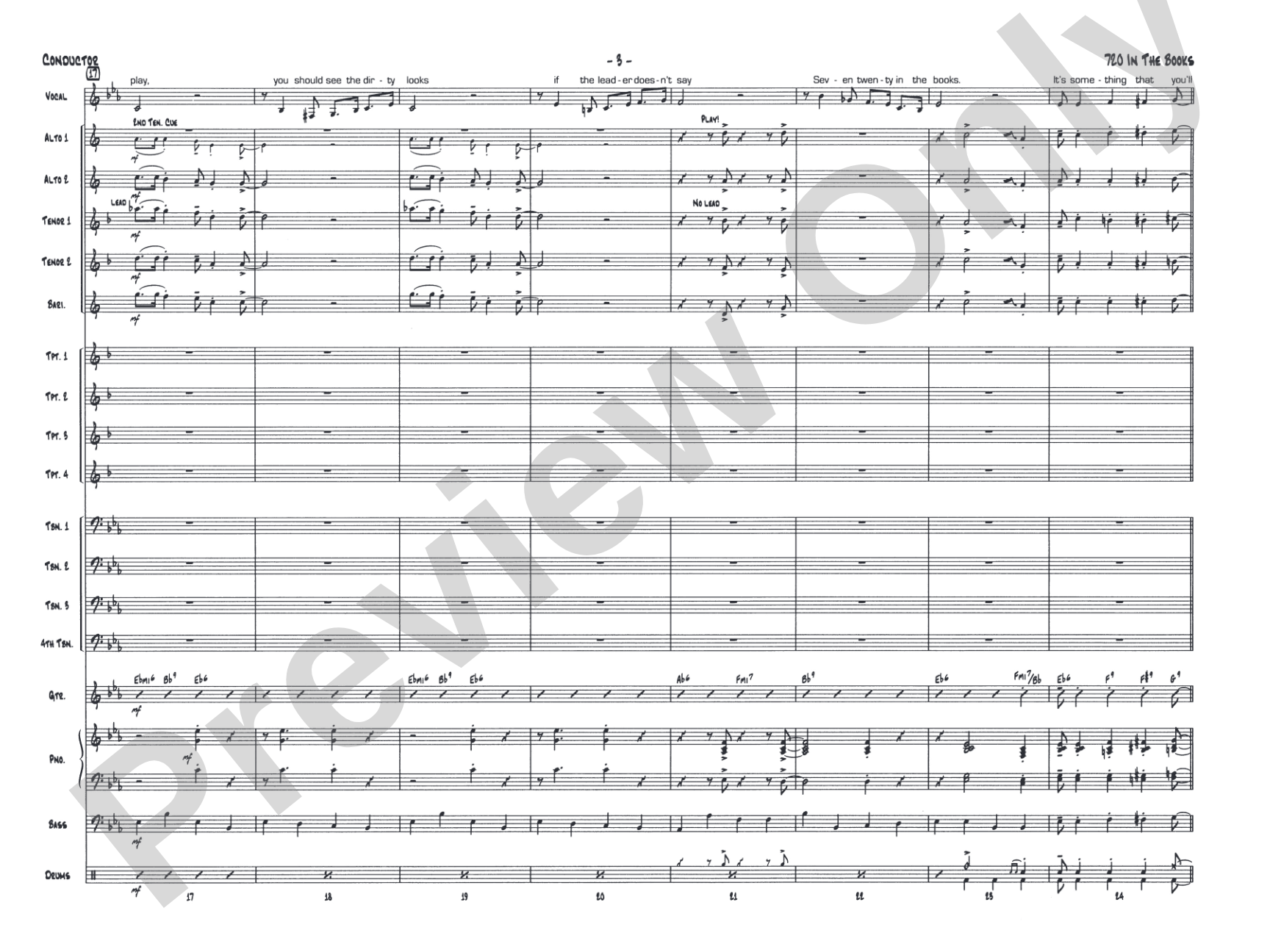
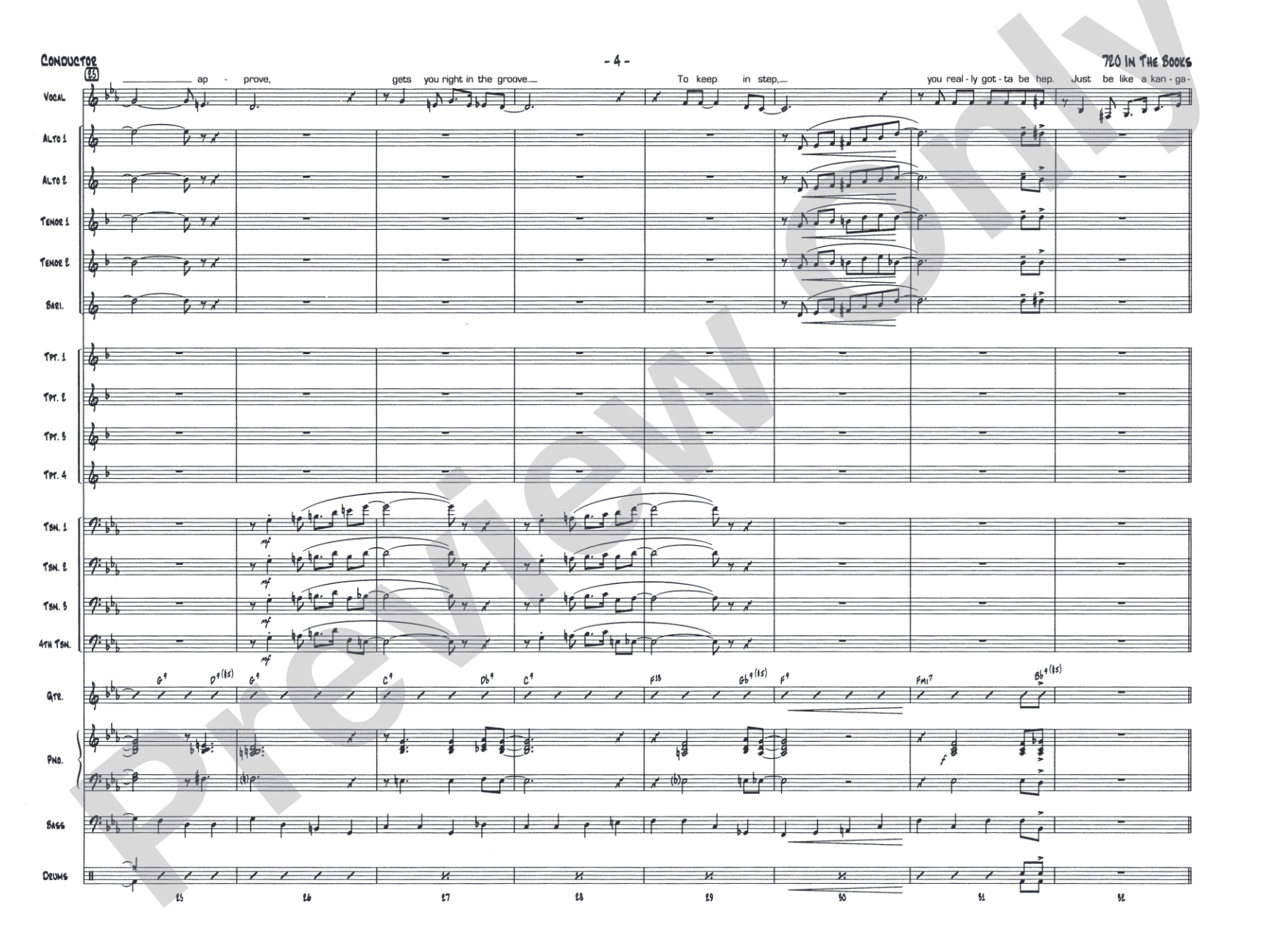
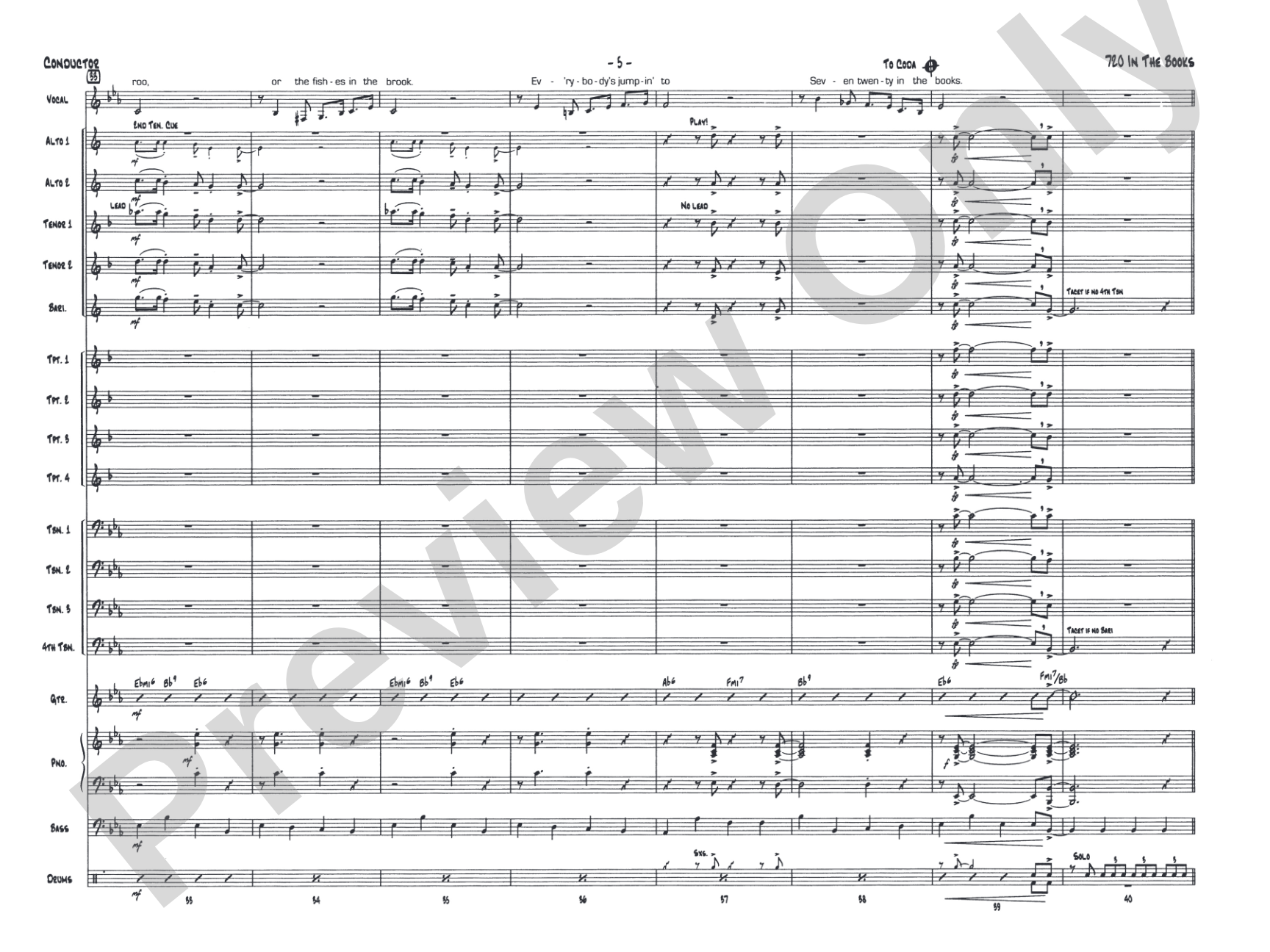
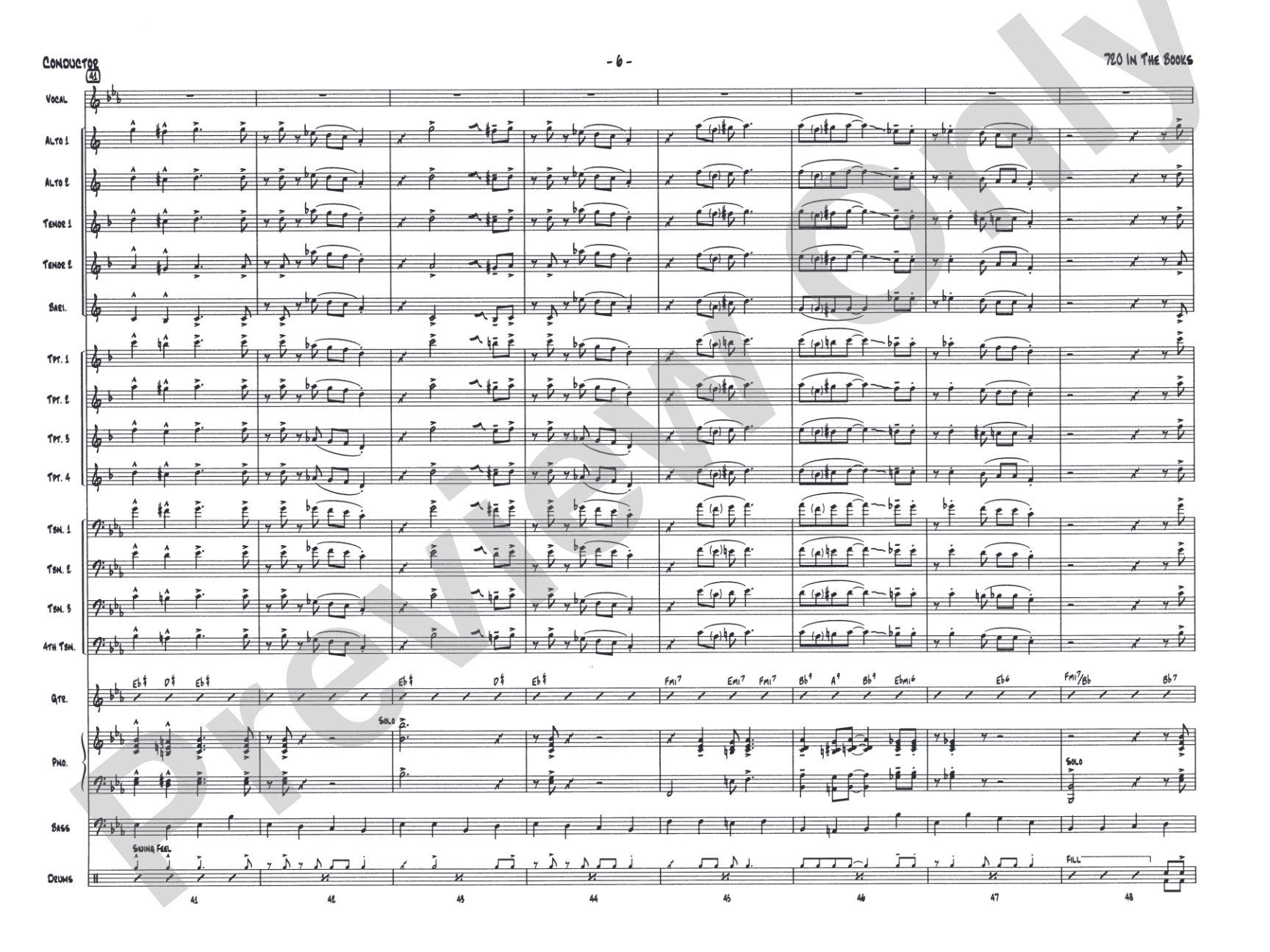
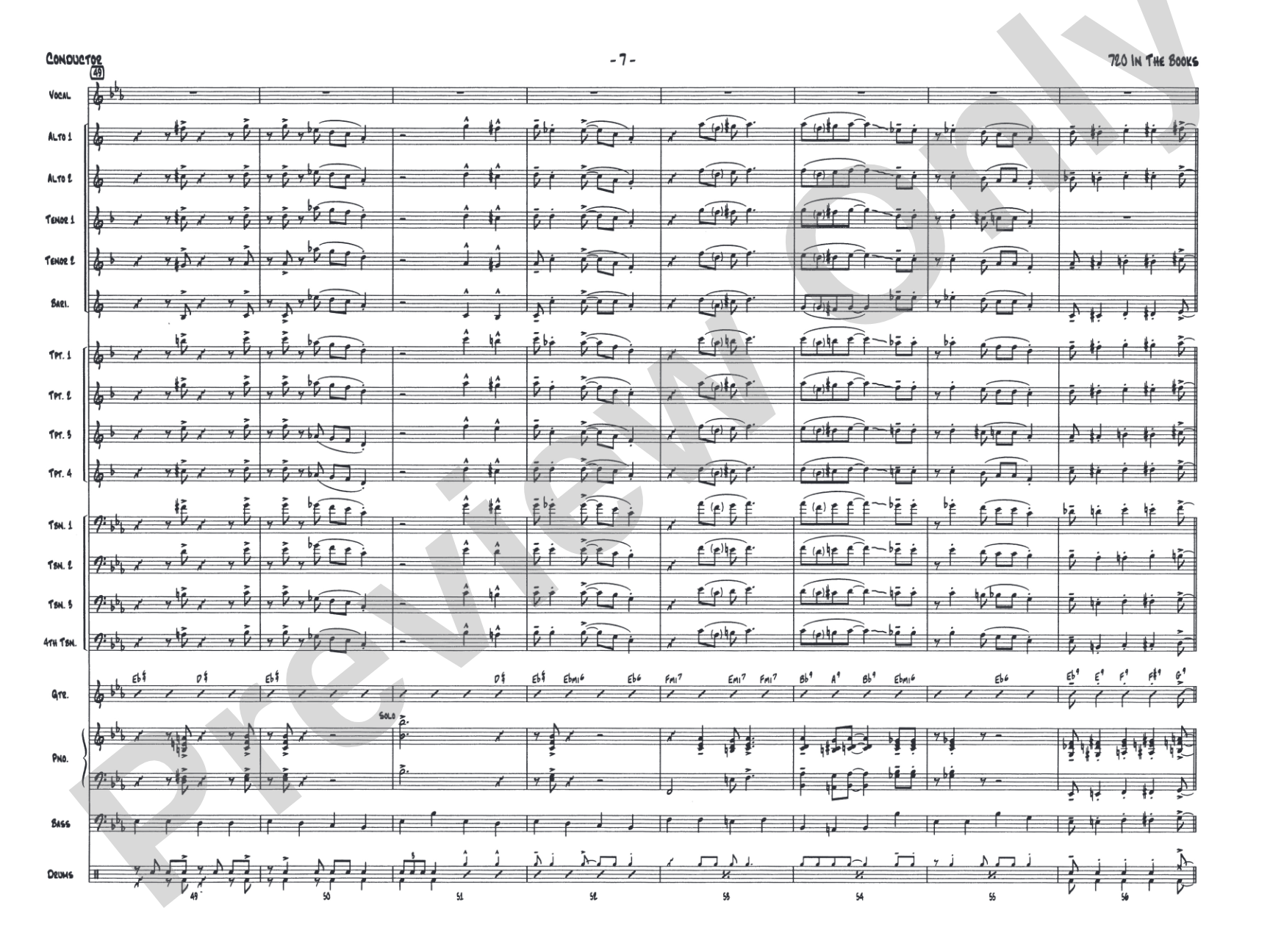
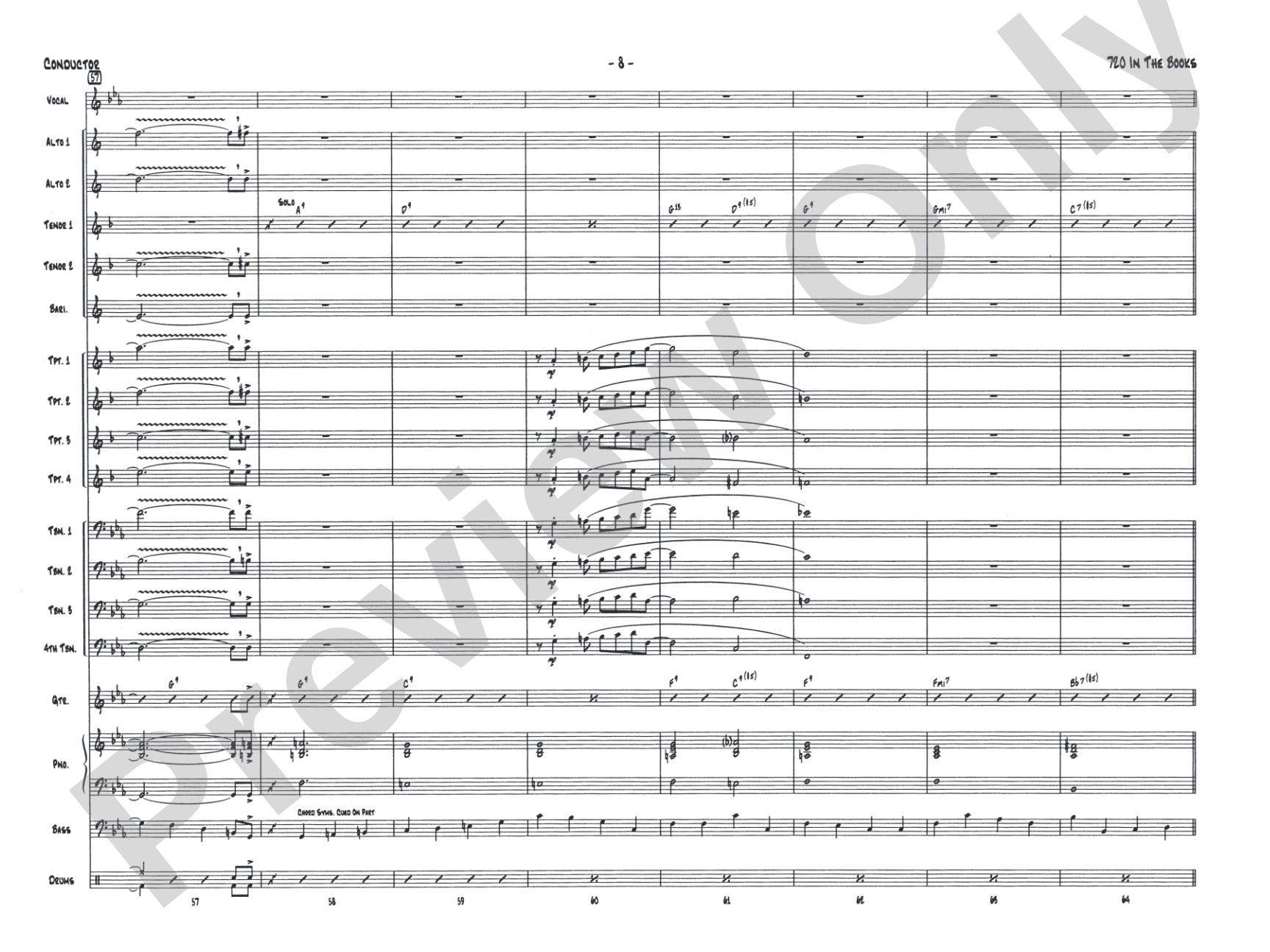
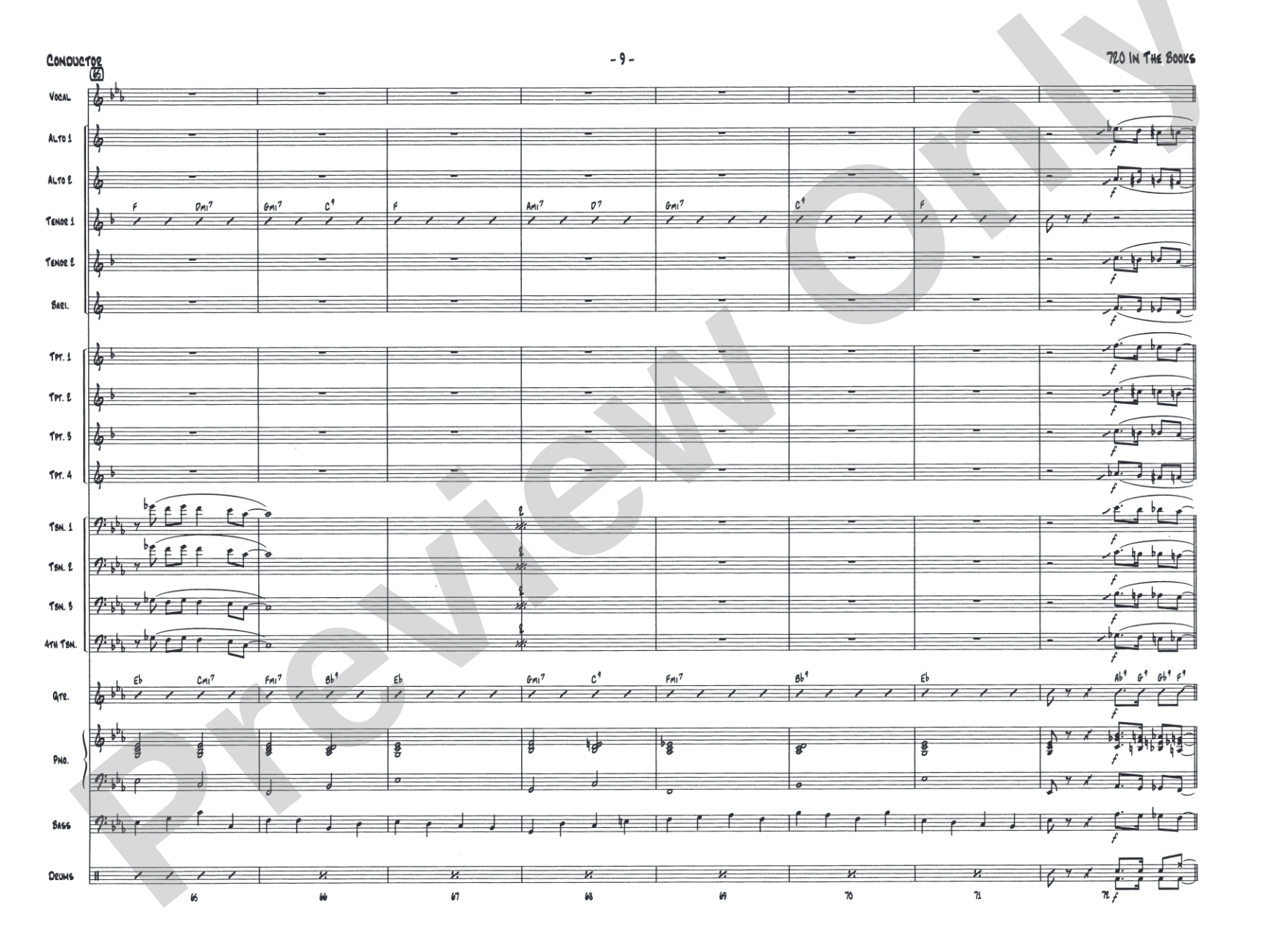
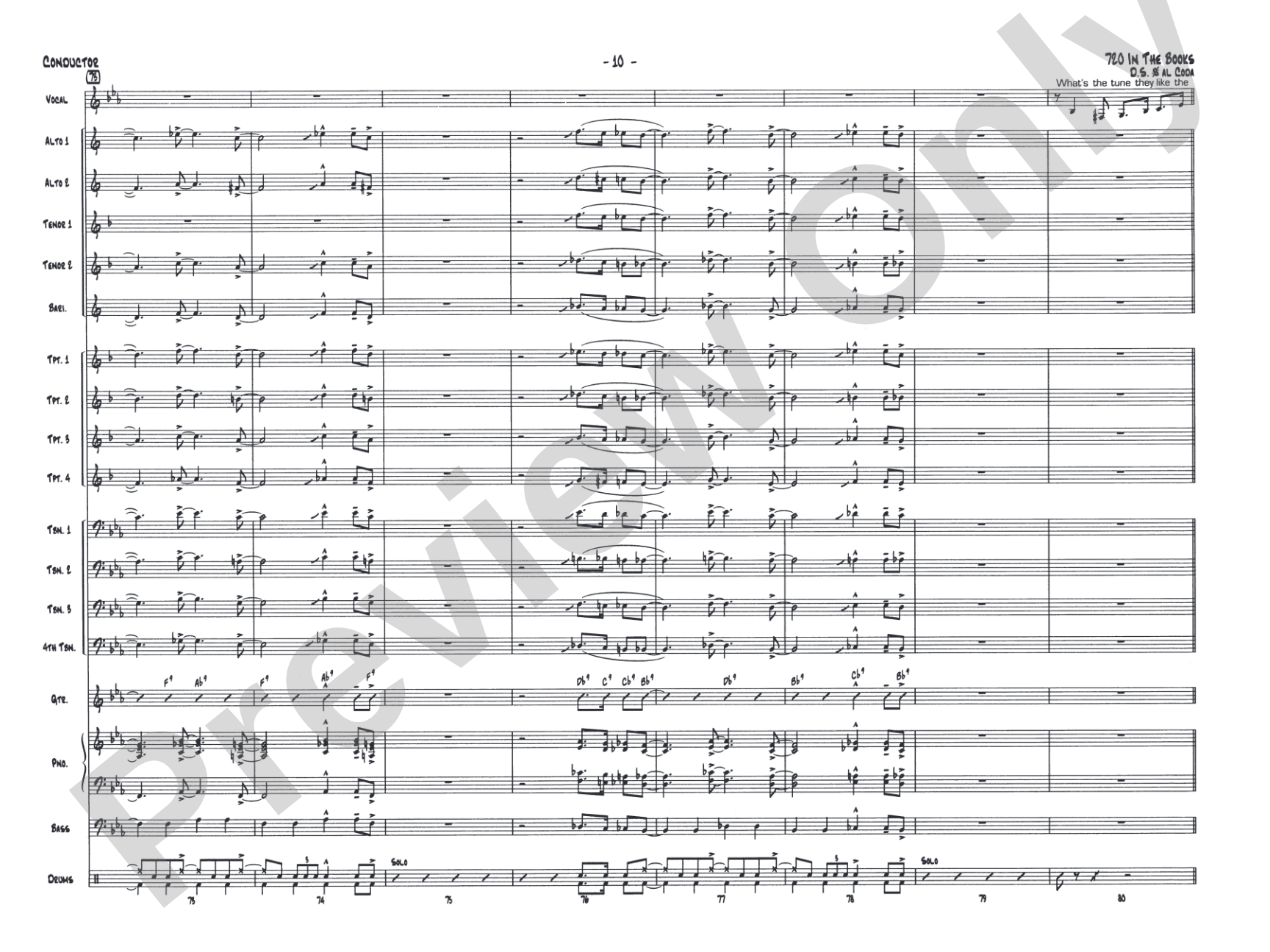
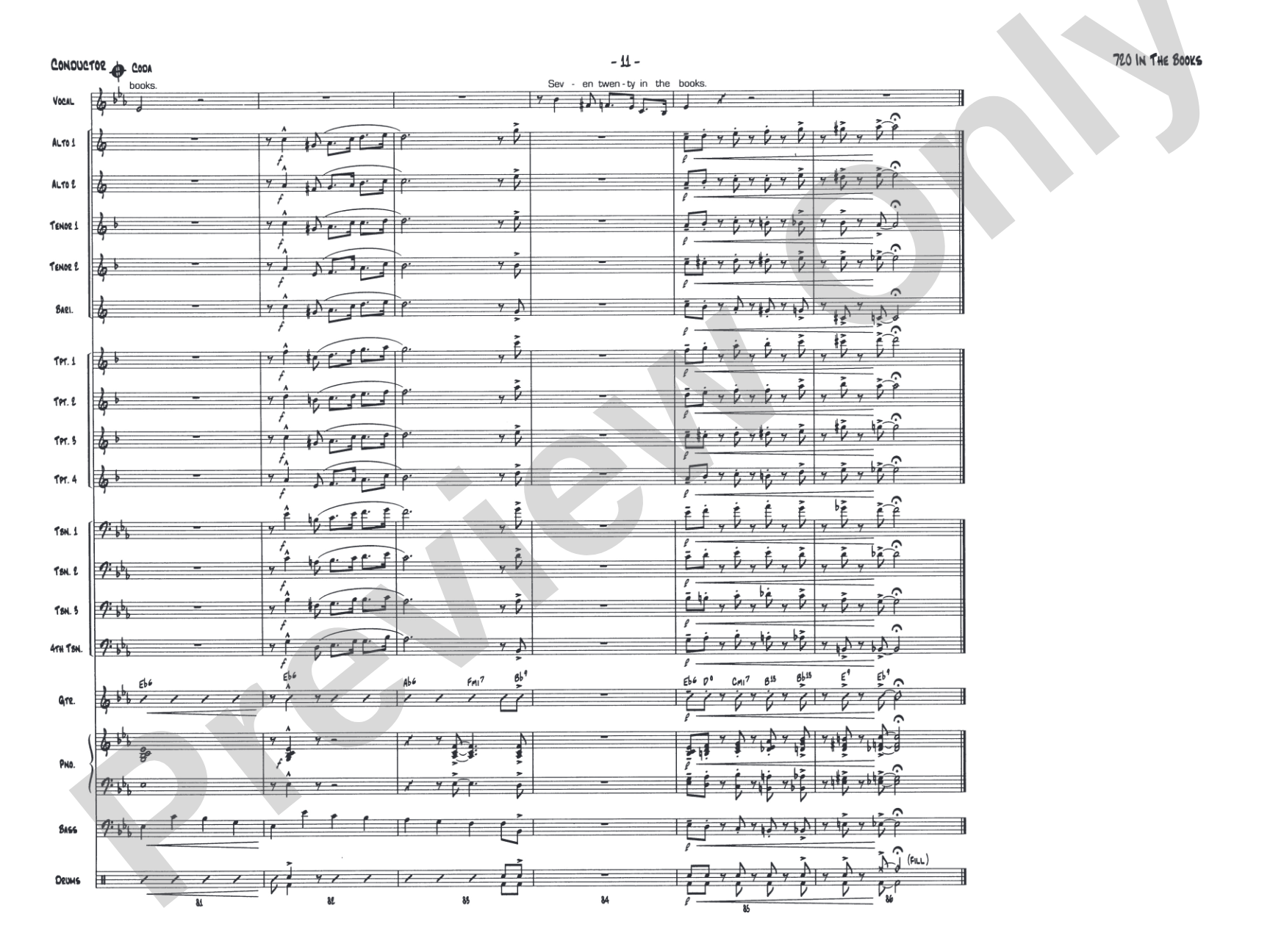
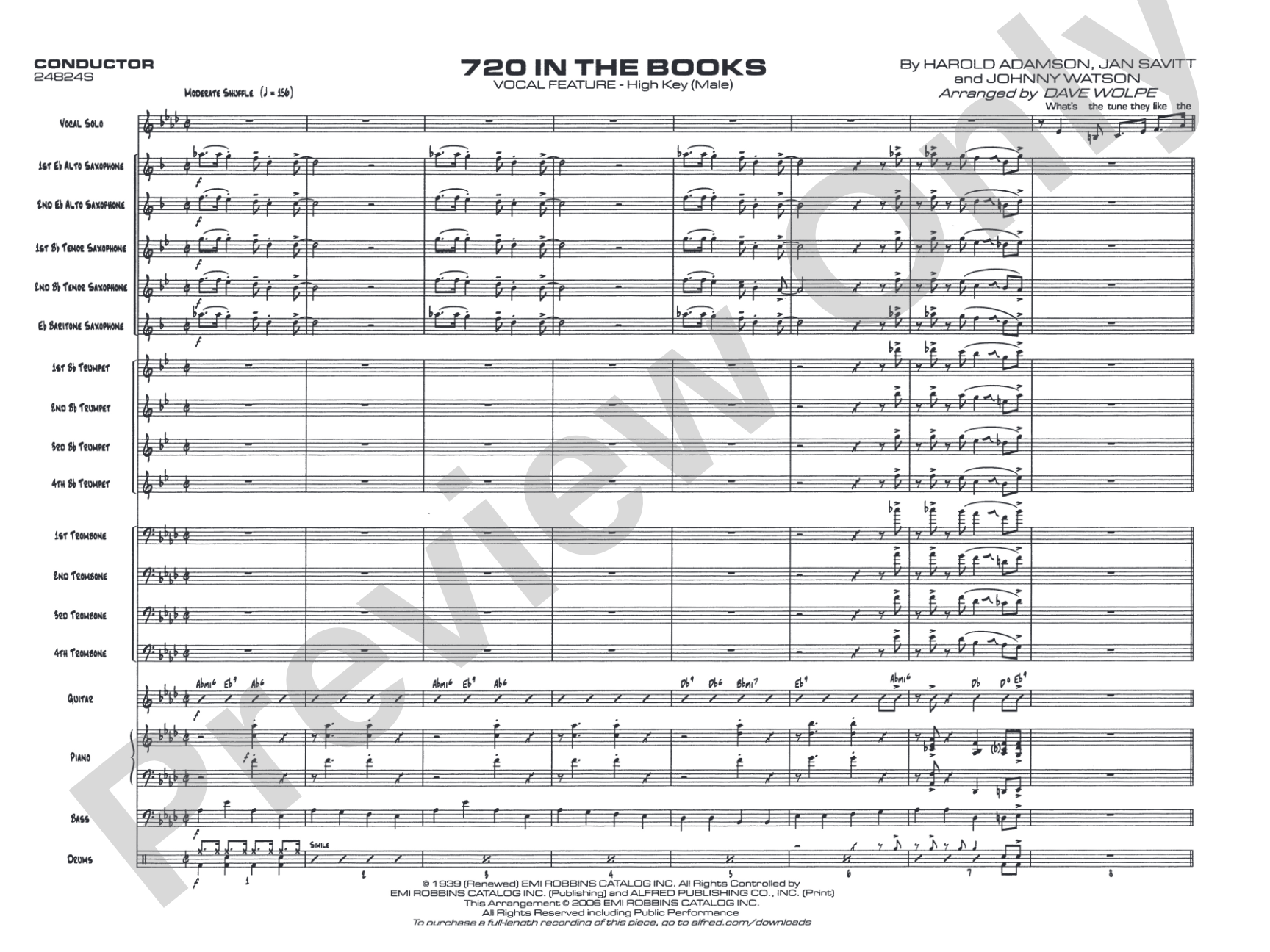
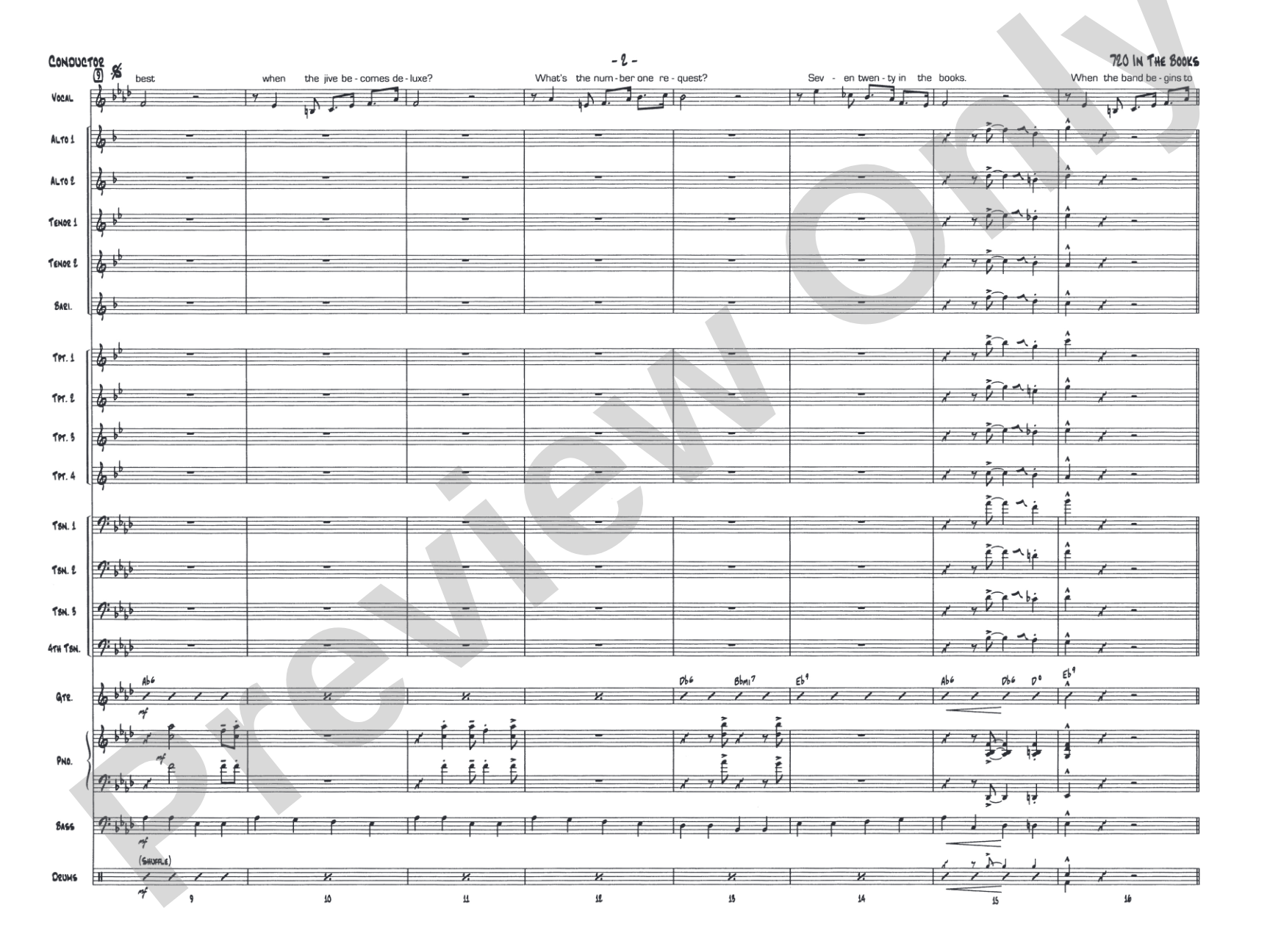
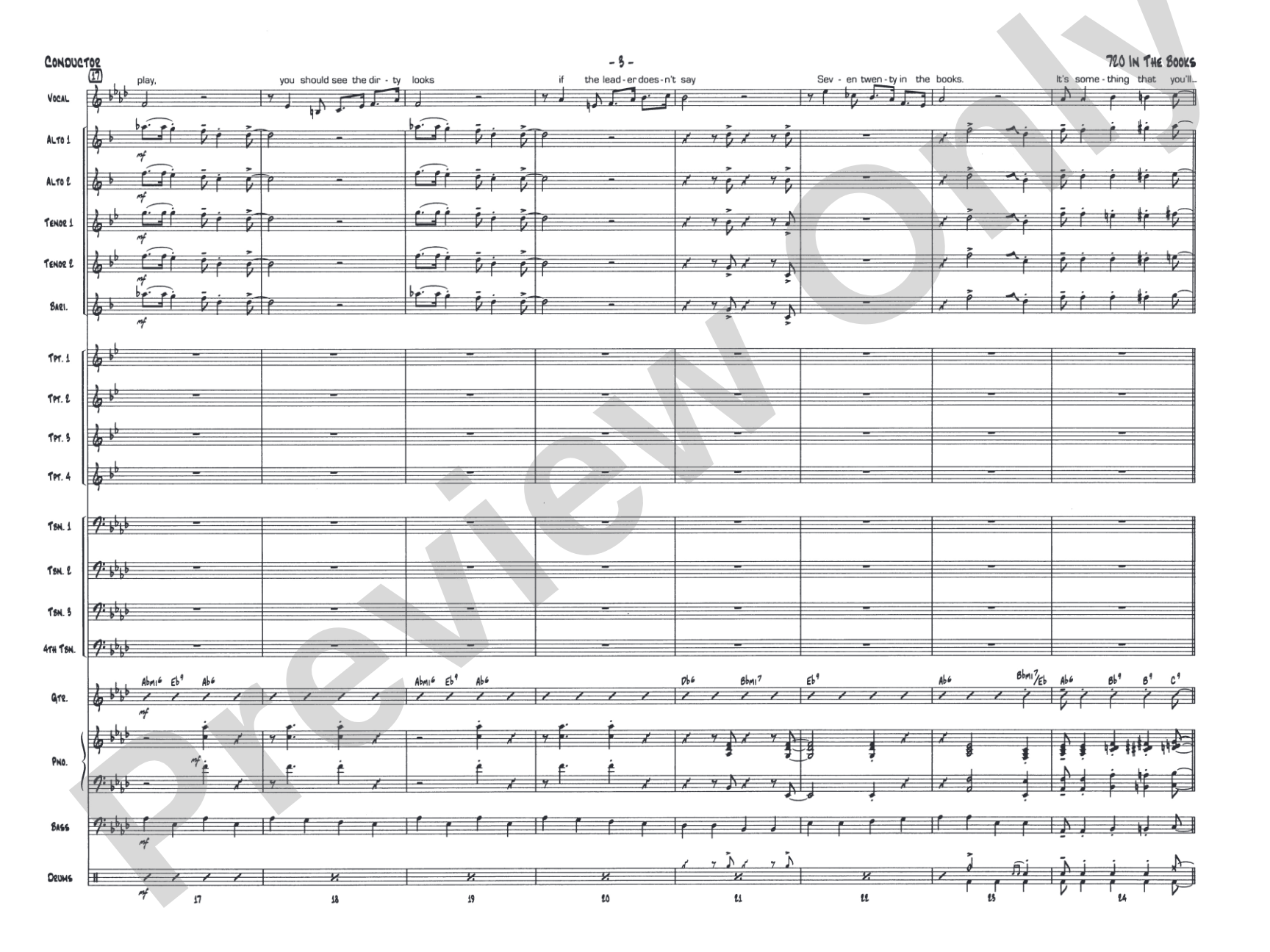
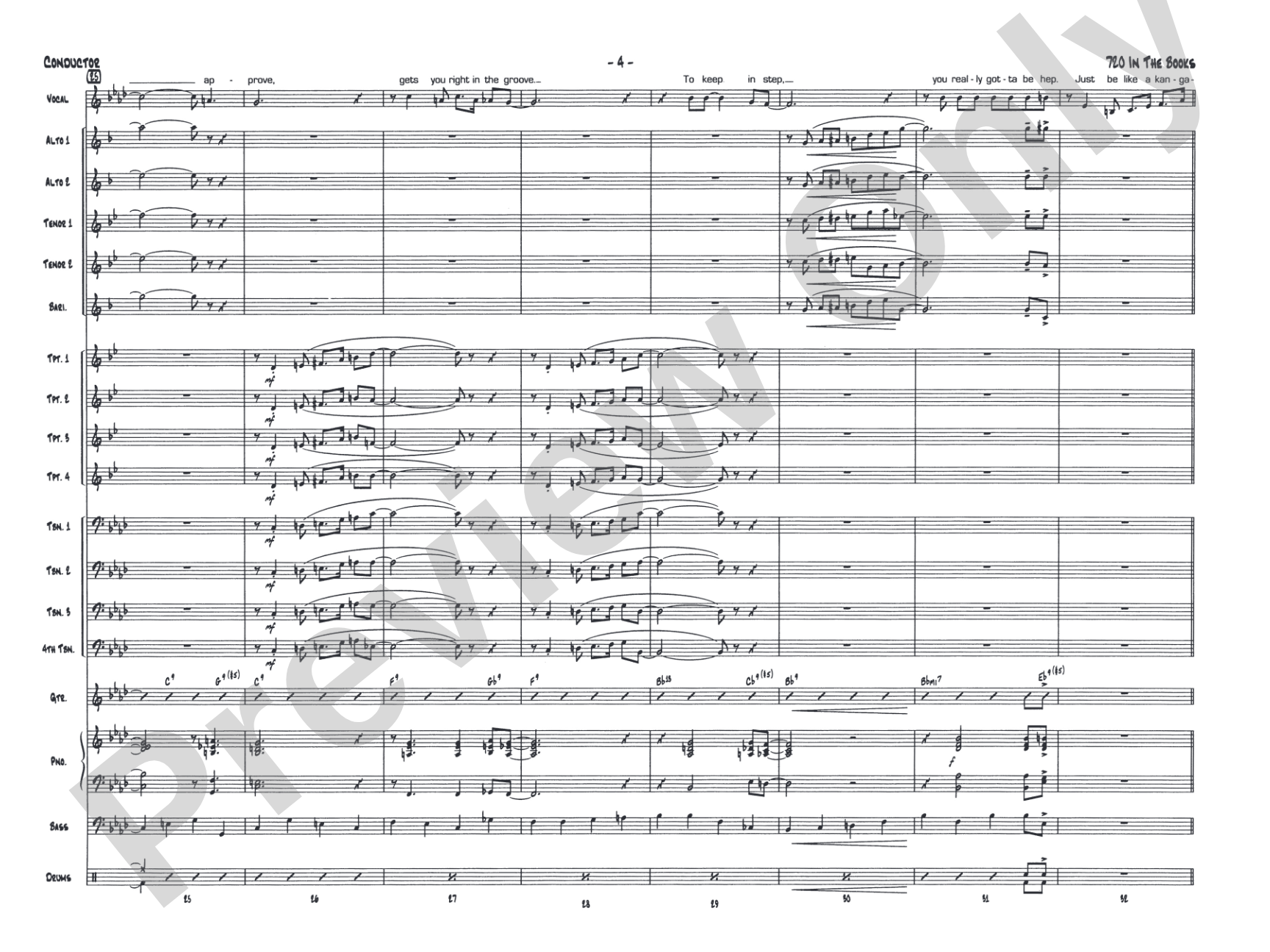
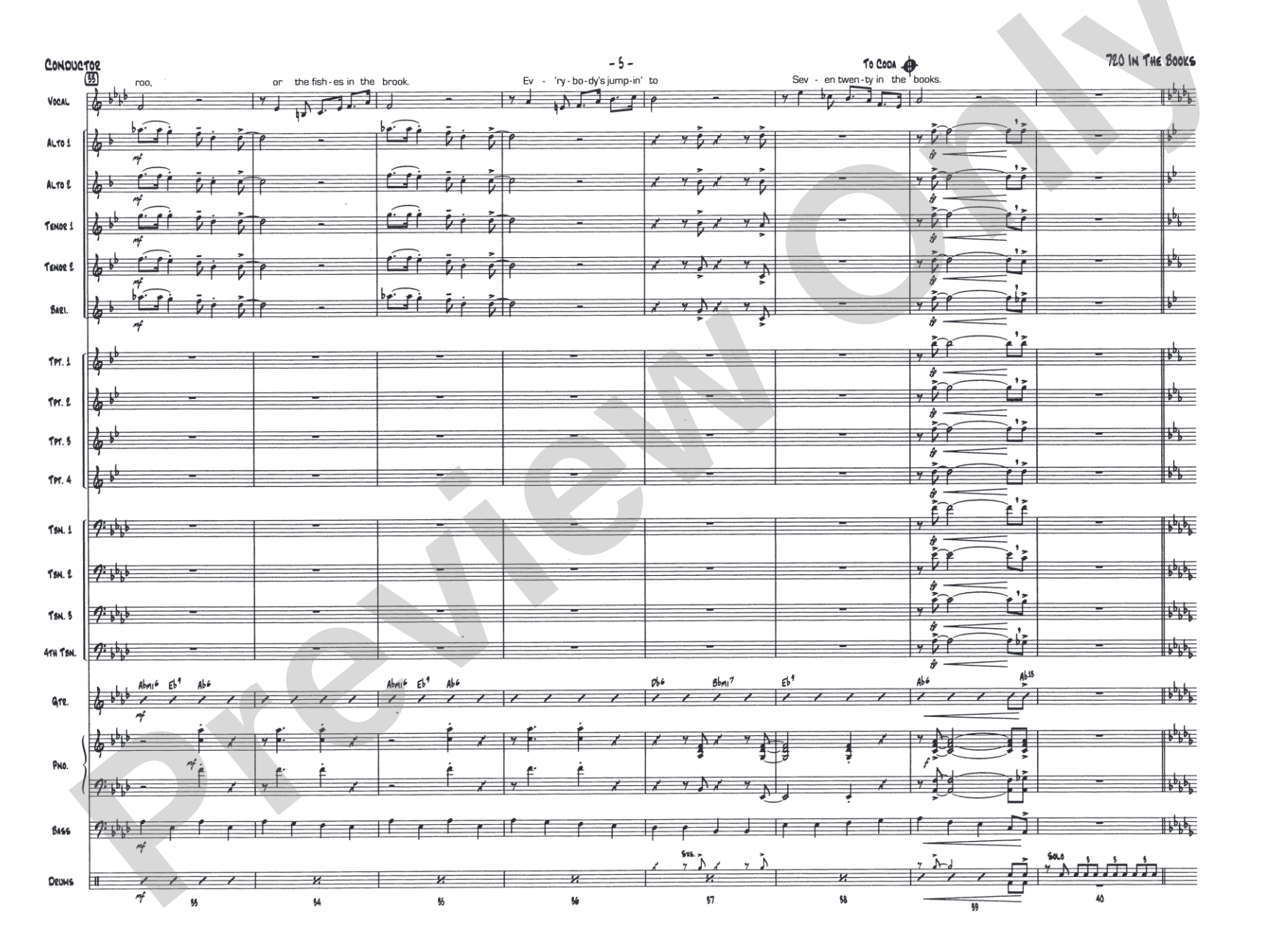
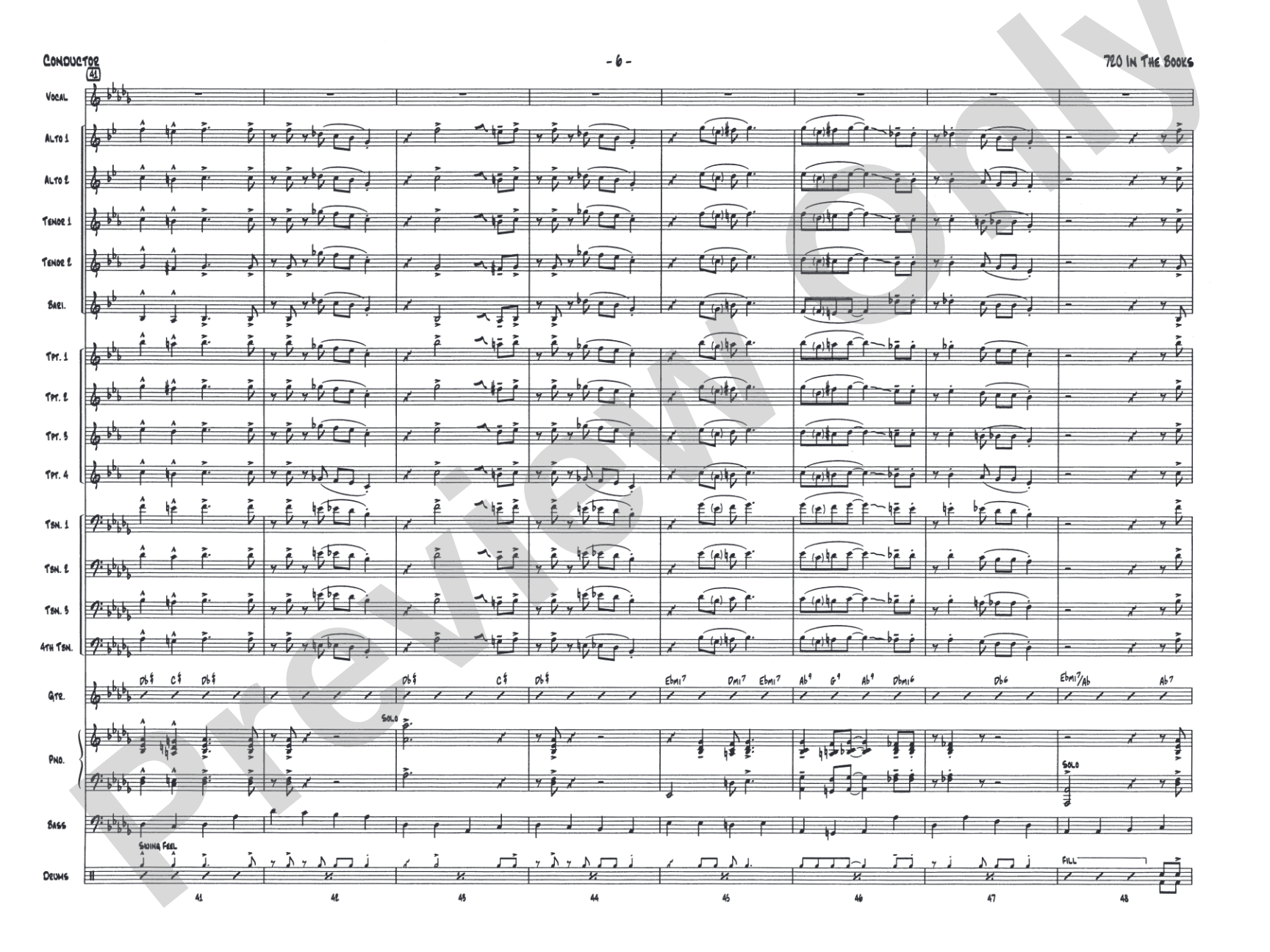
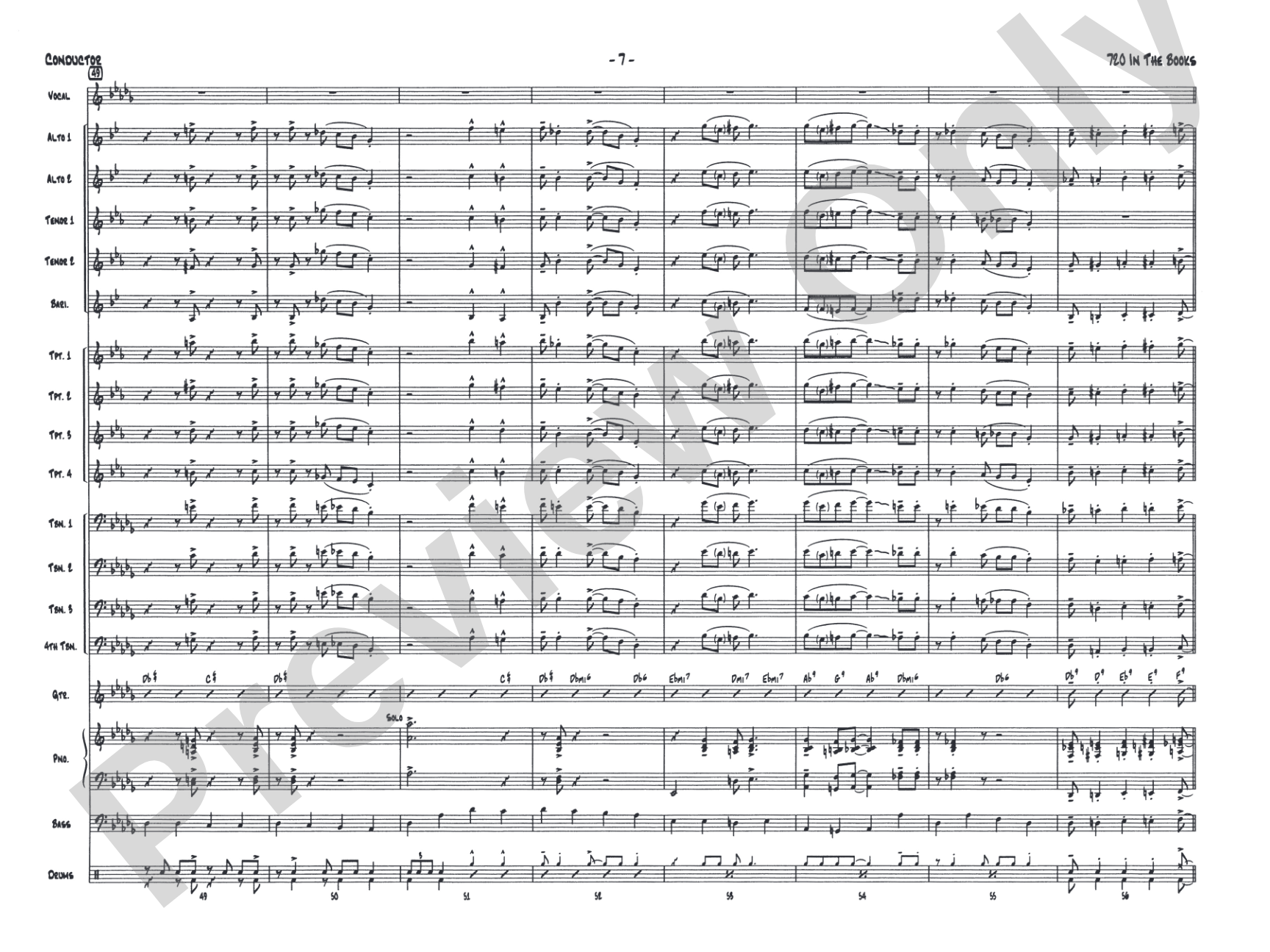
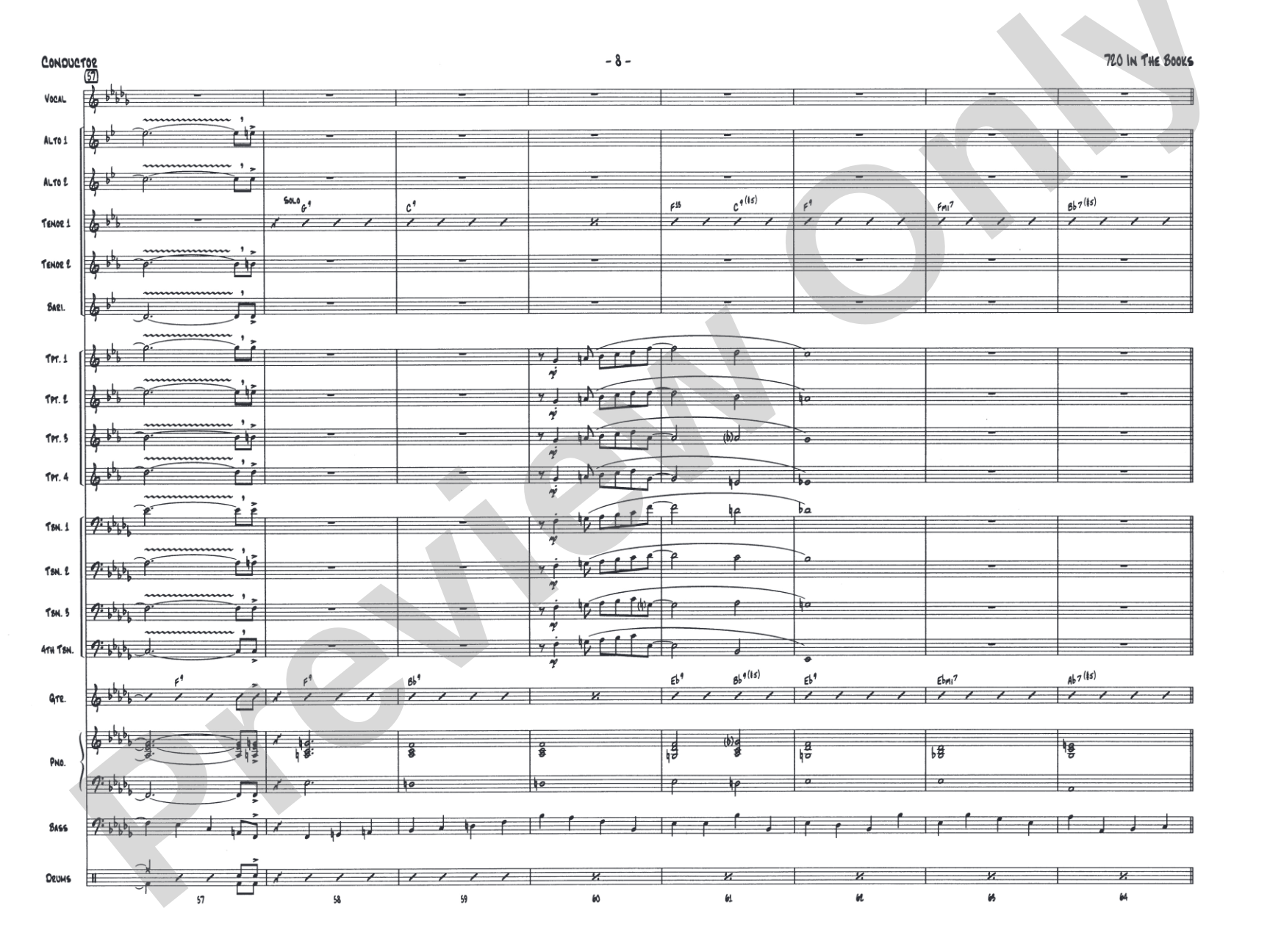
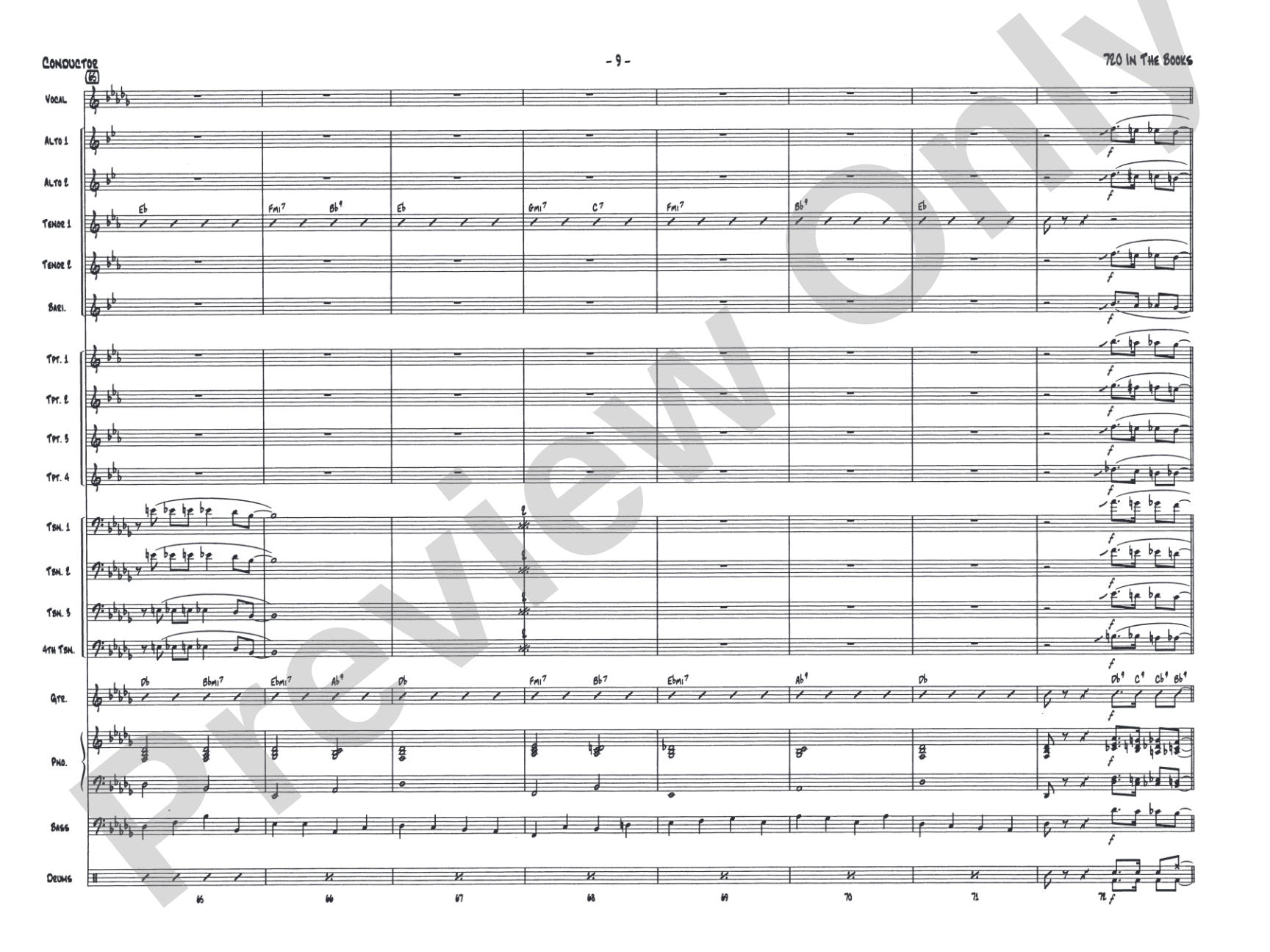
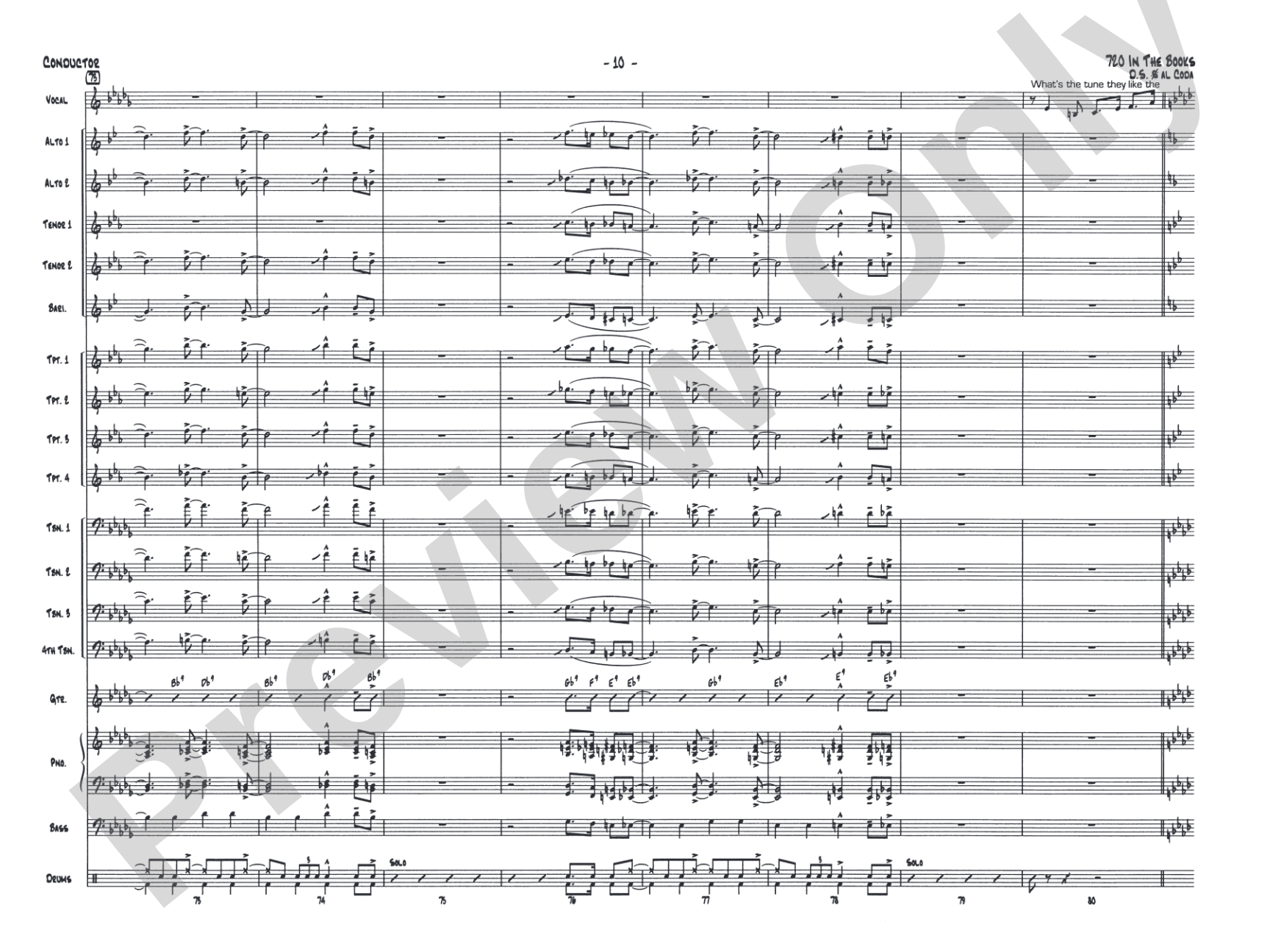
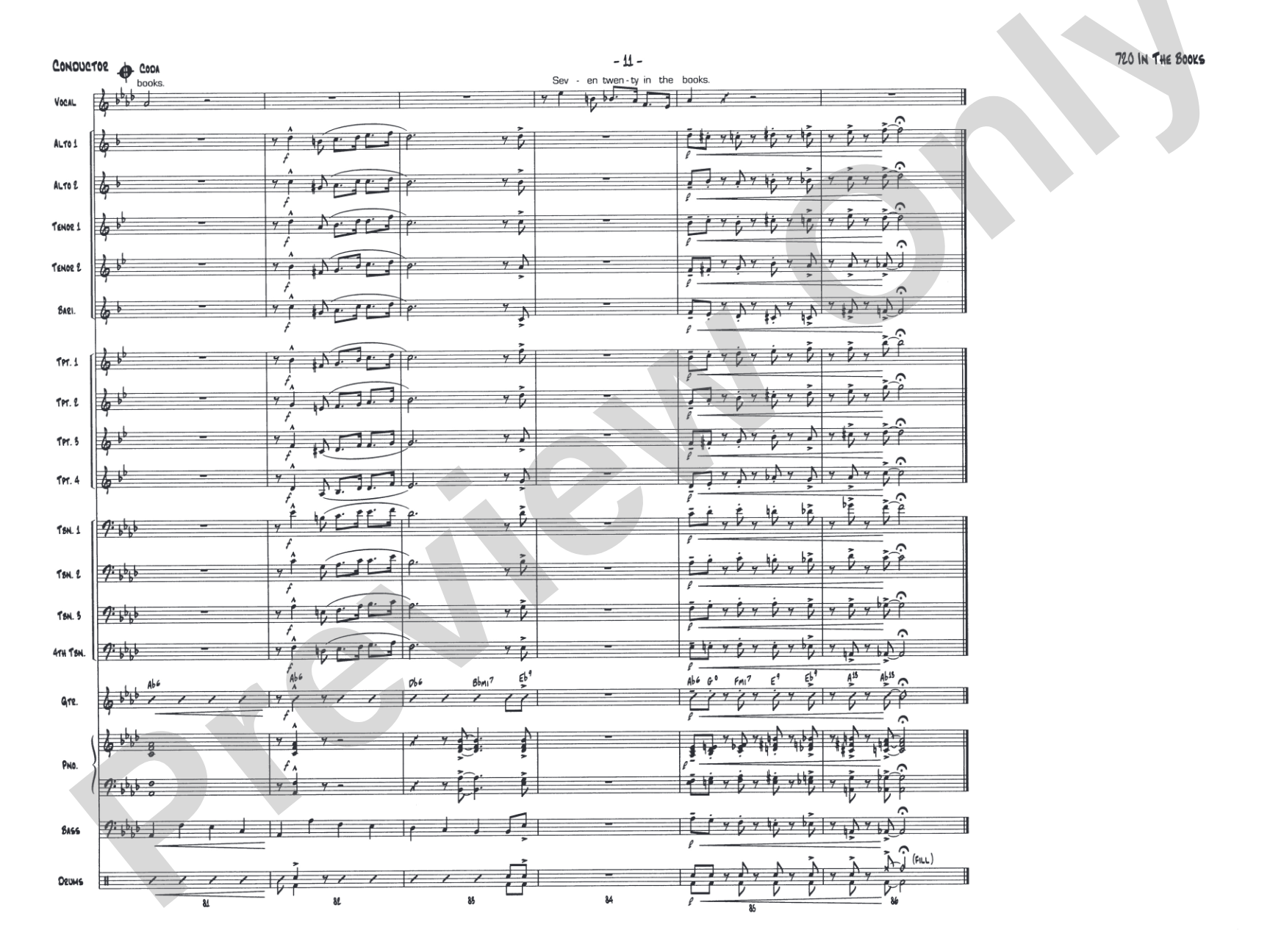

720 in the Books: Vocal Solo with Jazz Ensemble Conductor Score & Parts
By Jan Savitt / arr. Dave Wolpe
Grade: 3.5 (Medium)
Item: 00-PK-0006861

$58.00
Pickup currently not available
Buy Extra Parts (Digital PDF Download)
Parts Added to Cart!
Related Items
720 in the Books: Vocal Solo with Jazz Ensemble Conductor Score |
$11.00
|
View |
Description
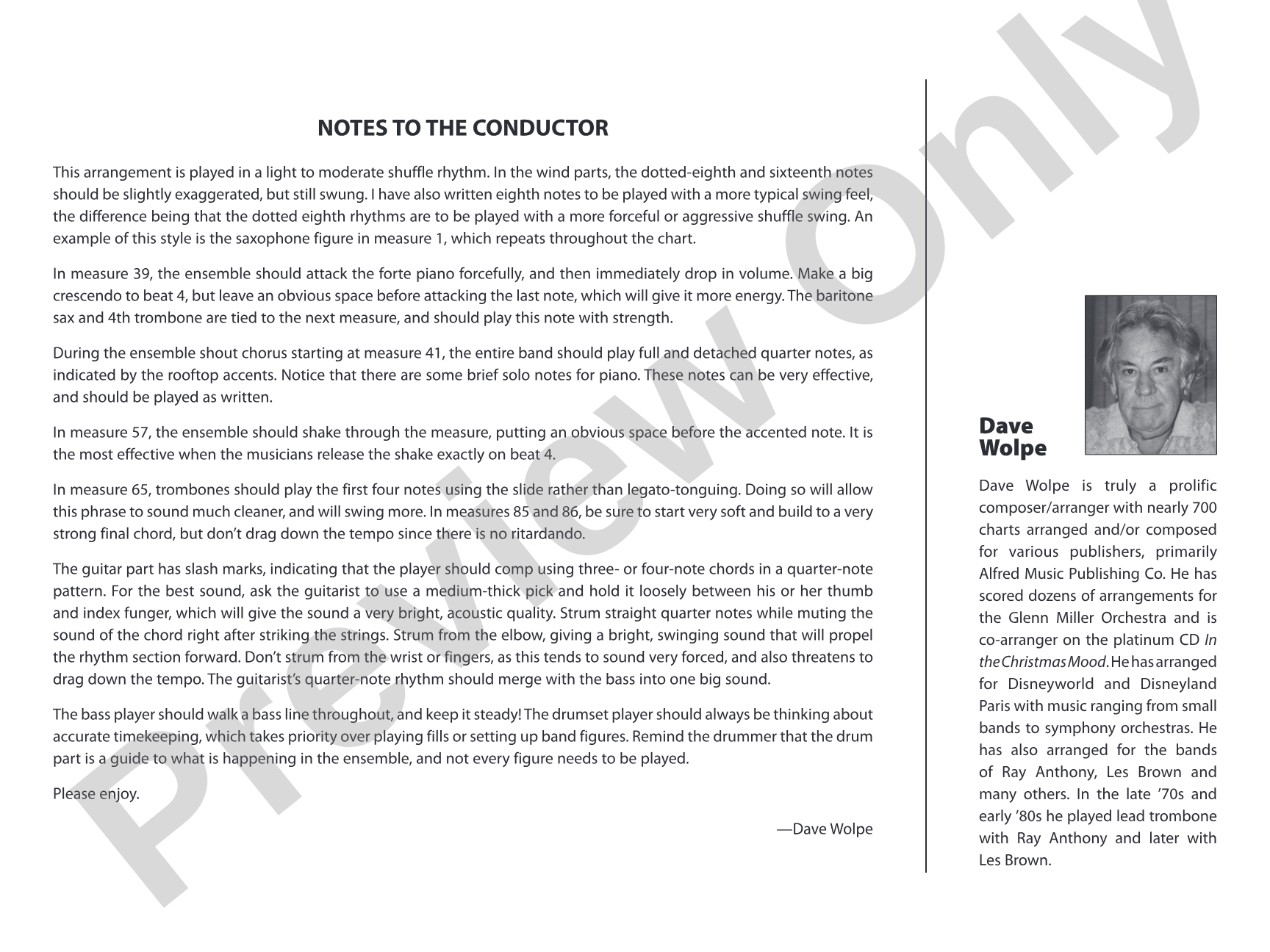
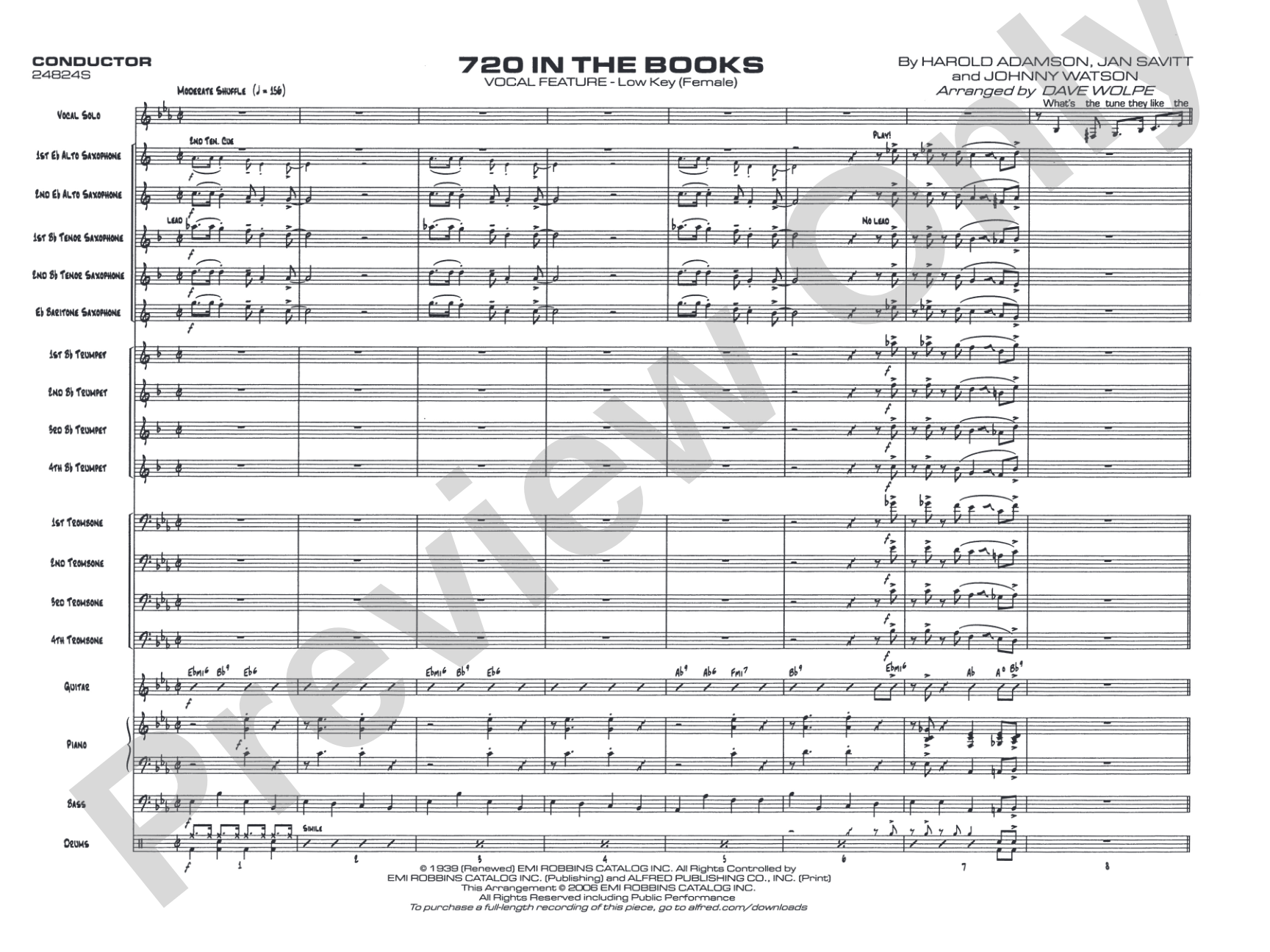
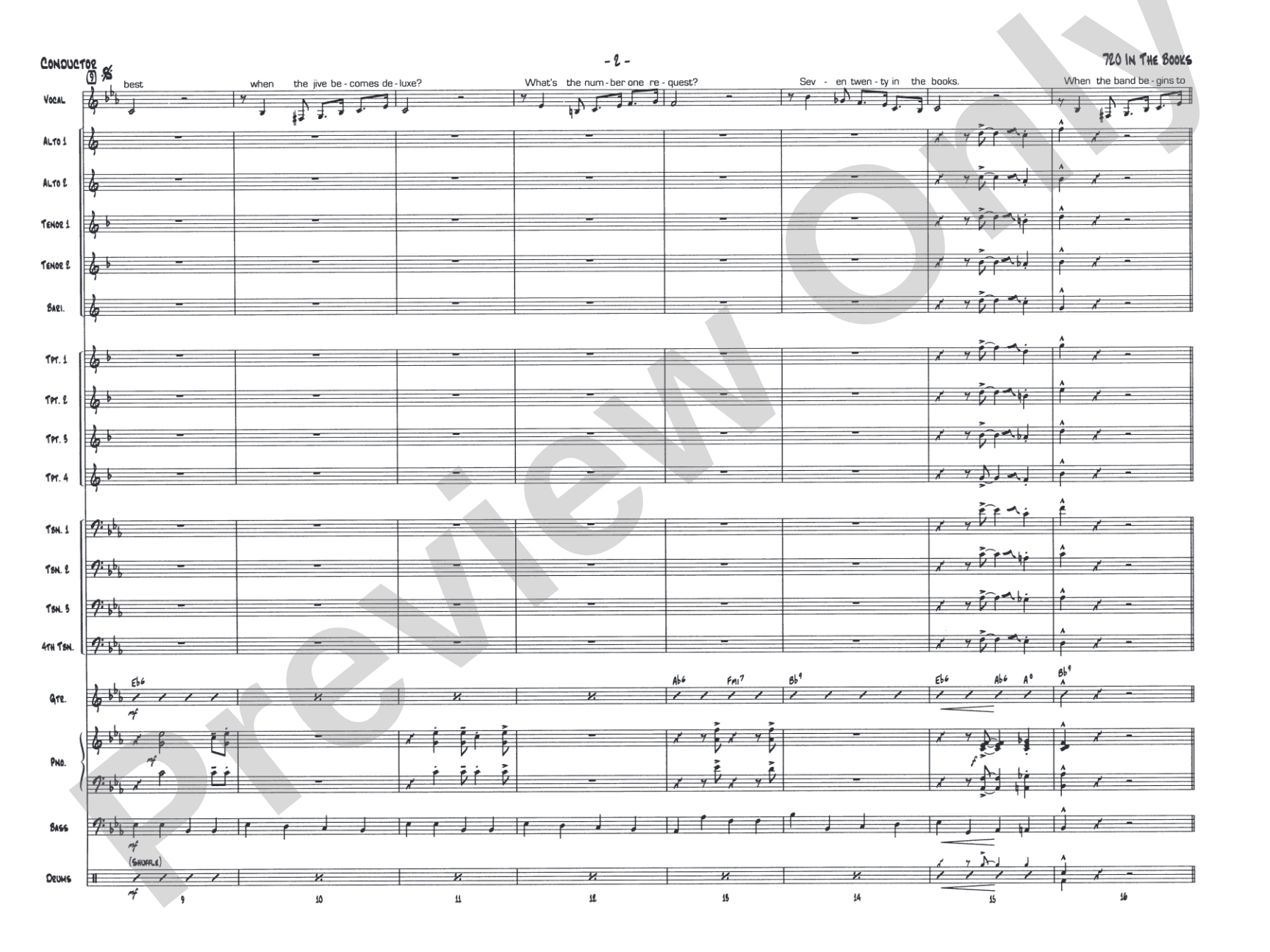
"720 in the Books" is a swinging chart that will excite any vocalist and jazz ensemble! This terrific Dave Wolpe chart is arranged in two keys for flexibility, and includes a fabulous shout chorus and a tenor sax solo. Vocal range: Vocal range: high key of A-flat (male) middle B to fourth space E-flat, low key of E-flat (female) F-sharp below middle C to third line B-flat.


Don't just read it, hear it, play along with it, and watch your students grow with it. In MakeMusic Cloud, 720 in the Books: Vocal Solo with Jazz Ensemble Conductor Score & Parts comes alive with professional accompaniment, adjustable tempo, and built-in practice tools that turn solo practice into real progress.
Open in the Player
Jump straight in and assign it today.
Start Your Free Trial
Open this title and explore the full library in minutes.
Sample Audio
1
Audio File
--:--
0:00
0:00
Sample Video
No sample videos found.
Additional Details
Series:
Jazz Vocal Series
Publisher:
Alfred Music
Page Count:
80
SKU:
00-PK-0006861
More about this title
About the Composer: Jan Savitt
Jan Savitt was a prolific composer and bandleader who shaped the sound of swing and jazz in the 1930s and 1940s. Leading his own orchestras and composing countless arrangements, Savitt became known for crafting infectious melodies and swinging charts that balanced sophistication with accessibility, making him a significant figure in the big band era.
Why we love this
Dave Wolpe's arrangement captures the infectious energy of a Savitt composition while giving your vocalist room to shine. The two-key flexibility means you can feature singers across your ensemble, and the shout chorus and tenor sax solo provide exactly the kind of collaborative moment that makes jazz ensembles come alive in performance.
What to expect
Bright, propulsive, and grounded in genuine swing. The tune invites playful phrasing from the vocalist while the ensemble keeps things grounded in the blues and boogie tradition, creating a conversation between soloist and band.
Who it's for
Jazz ensemble directors working with strong vocalists who want accessible, swinging repertoire that delivers on stage. This arrangement serves singers from beginner to intermediate levels and builds confidence through a supportive ensemble context.
How to get the most out of it
- Balance the vocal line with the ensemble texture; the vocalist should sit on top of the groove, not buried under it. Work with your rhythm section to lock the pocket before adding fuller ensemble colors.
- Use the two keys strategically in performance or rehearsal to find the most comfortable range for your soloist's tone and phrasing. Don't assume the first key is the default.
- Highlight the shout chorus as a moment of collective energy. Make sure the ensemble attacks these sections together with rhythmic precision and dynamic lift.
- Give the tenor sax solo proper space to breathe. Coach your ensemble to lay back slightly and let the soloist command the moment.
How to use it
Feature this in a jazz concert alongside other vocal features to showcase your ensemble's ability to support a vocalist. The grade 3.5 difficulty and driving rhythm make it an ideal opener or closer that energizes an audience.
Skills your students will build
- Singing over a swinging jazz groove with rhythmic precision and relaxation
- Balancing vocal soloist and ensemble texture in a jazz context
- Executing shout chorus sections with collective attack and dynamics
- Supporting a tenor saxophone solo with responsive accompaniment
- Transposing and performing in multiple keys