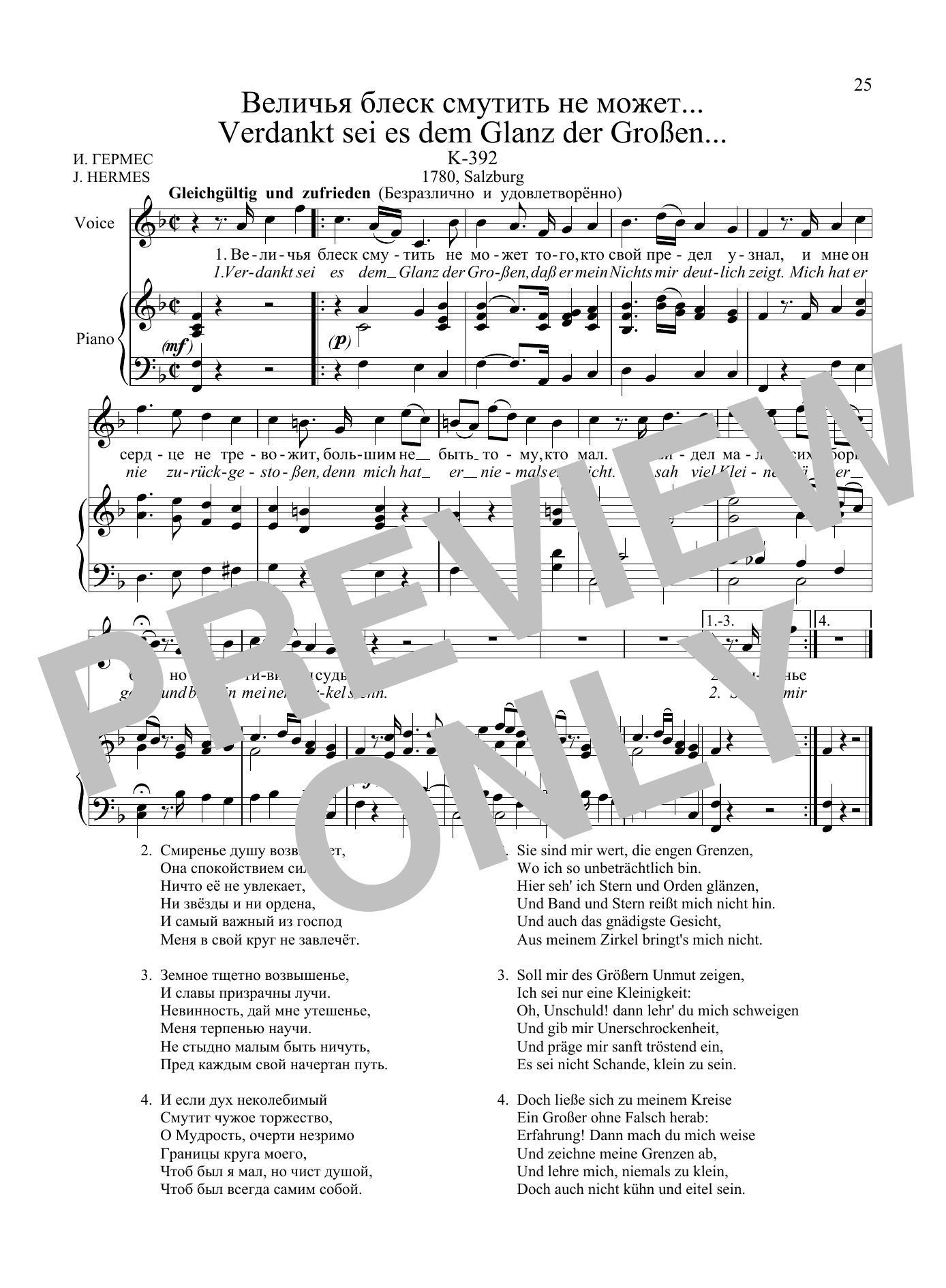
36 Songs Vol. 1: Verdankt sei es dem Glanz der Großen, K. 392 Sheet Music Preview

36 Songs Vol. 1: Verdankt sei es dem Glanz der Großen, K. 392: Piano Vocal

By Wolfgang Amadeus Mozart / Arranged by Ruslan Gulidov

Grade: 3

Item: 35-DS00513095

Digital Download
$3.95
Description

36 Songs Vol. 1: Verdankt sei es dem Glanz der Großen, K. 392: Piano Vocal isn't in MakeMusic Cloud just yet...but it could be. Let us know you'd like to see it, and you'll help shape what comes next. In the meantime, start a free trial and dive into thousands of interactive titles your students can play along with today.

Sample Audio
No sample audio found.
Sample Video
Additional Details
Publisher: Hal Leonard
Page Count: 1
SKU: 35-DS00513095

More about this title

About the Composer: Wolfgang Amadeus Mozart

Mozart composed across every major genre during his short life, leaving behind a catalog of over 600 works that shaped the Classical era. His facility with melody, harmonic innovation, and structural clarity made him a model for generations of composers and remain essential to music education today.

As a pedagogue, Mozart understood how to write idiomatically for singers and instrumentalists at various levels. His vocal works span from intimate songs to grand operatic moments, each crafted with the performer's voice in mind.

Why we love this

This single-page song offers a direct window into Mozart's gift for songwriting without the demands of larger forms. The text setting is elegant and the accompaniment sits comfortably under the hands, making it an ideal choice for vocalists building confidence with Classical repertoire.

What to expect

Graceful and gently spirited, this song carries the poise typical of Mozart's mature song style. The text speaks to gratitude and greatness, and the music matches this sentiment with clarity and refined expression.

Who it's for

Intermediate vocalists exploring Classical song literature will find a manageable entry point here. Teachers seeking single works to introduce students to Mozart's vocal writing without overwhelming them have found a reliable choice.

How to get the most out of it

  • Shape the melody with subtle dynamic gradations rather than dramatic swells; Mozart's elegance lies in restraint.
  • Balance the vocal line so it emerges clearly from the piano part without forcing; the accompaniment should support, not disappear.
  • Allow the text to guide phrasing naturally; resist the urge to make regular phrase breaks where the meaning doesn't call for them.
  • Work the piano part to independence before combining with voice; this clears rhythmic clarity in the accompaniment.

How to use it

Pair this with other Classical art songs of similar scope to build a recital set, or use it as a standalone selection in a mixed vocal program featuring multiple composers and styles. Its single page also makes it useful for sight-reading practice or as a teaching tool in voice lessons.

Skills your students will build

  • Text declamation in Classical style
  • Even tone production across the middle range
  • Coordination of legit and supported singing
  • Independence between voice and piano accompaniment
  • Interpretation of understated dynamic expression

You May Also Like