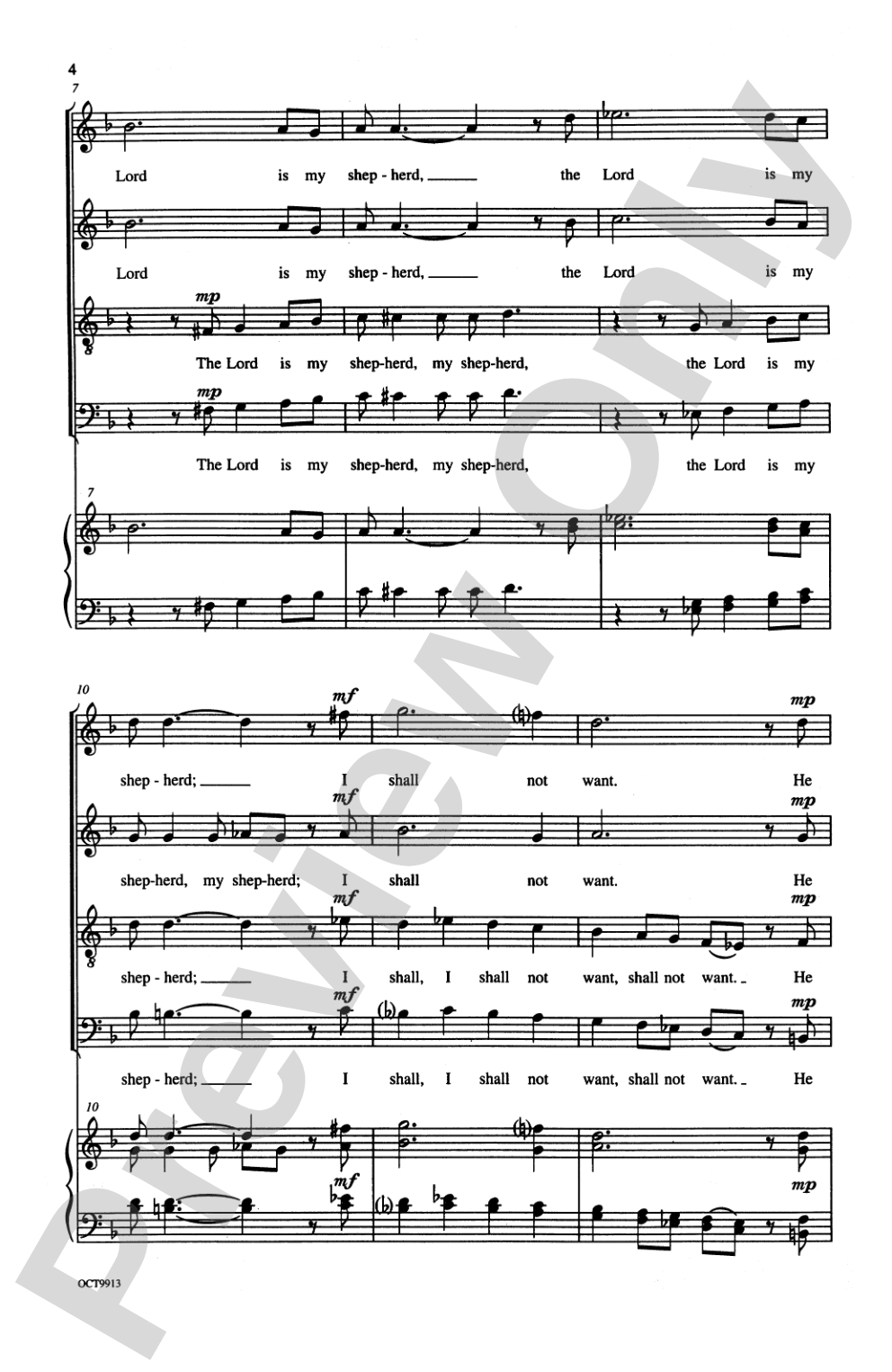
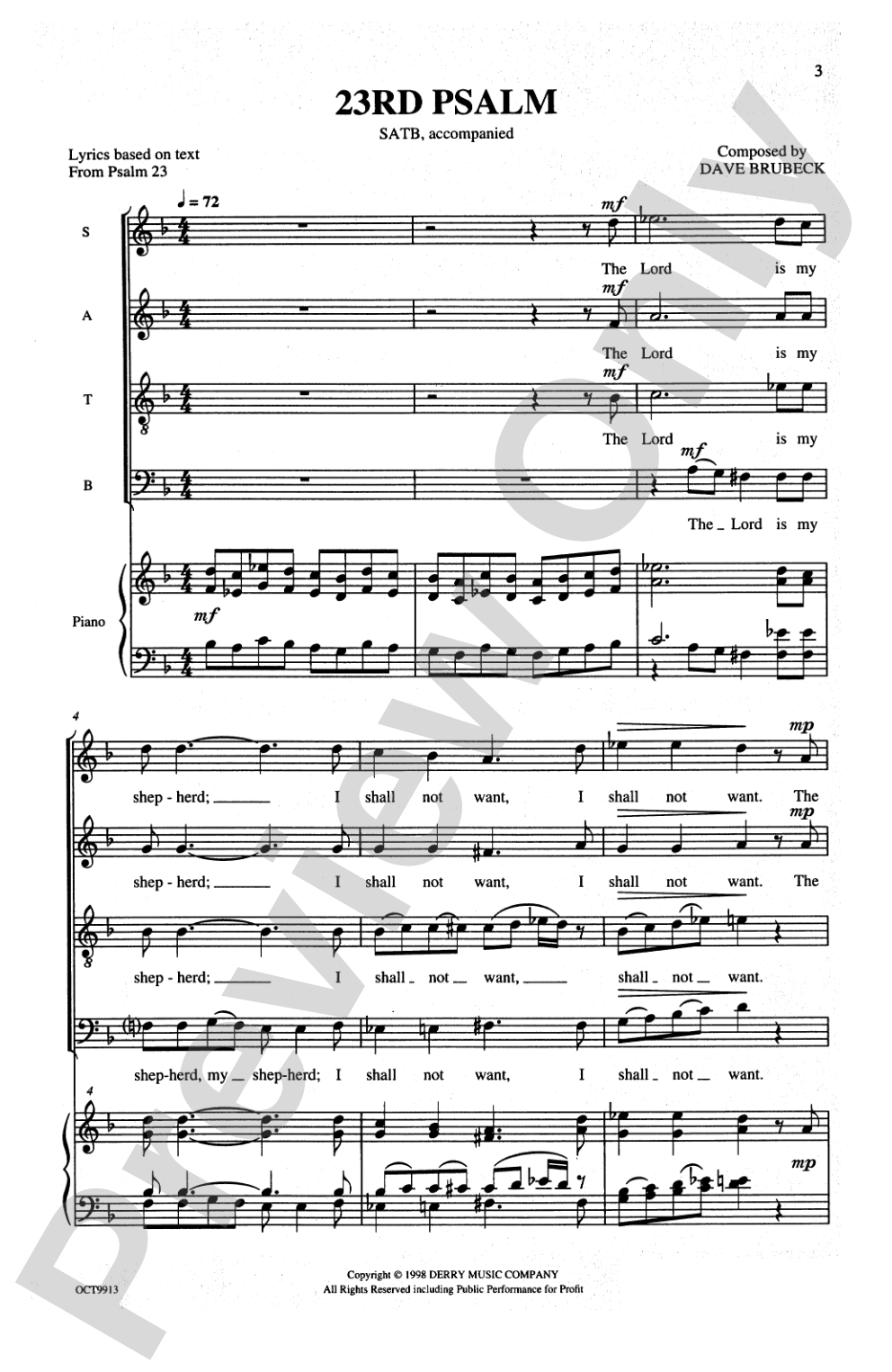
23rd Psalm Sheet Music Preview

23rd Psalm: SATB Choral Octavo

Arr. Dave Brubeck

Item: 00-PO-0005159

Digital Download
$2.25

Minimum order quantity: 20 copies

Description

23rd Psalm: SATB Choral Octavo isn't in MakeMusic Cloud just yet...but it could be. Let us know you'd like to see it, and you'll help shape what comes next. In the meantime, start a free trial and dive into thousands of interactive titles your students can play along with today.

Sample Audio
No sample audio found.
Sample Video
Additional Details
Series: Lawson-Gould: The Dave Brubeck Series
Publisher: Alfred Music
Page Count: 8
SKU: 00-PO-0005159

More about this title

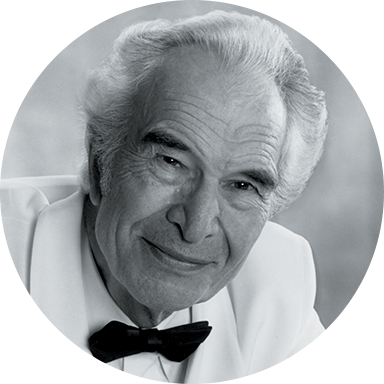
About the Arranger: Dave Brubeck

Dave Brubeck

Dave Brubeck stands as one of the twentieth century's most influential jazz pianists, a virtuoso improviser whose harmonic sophistication and rhythmic innovation reshaped the entire jazz landscape. Beyond his legendary work in jazz—including the groundbreaking album "Time Out" and the perennial standard "Take Five"—Brubeck proved himself a serious classical composer across multiple genres: choral works, symphonic pieces, chamber music, ballet suites, and large-scale oratorios. His studies with Darius Milhaud at Mills College in the mid-1940s encouraged him to fuse jazz language with classical structure, resulting in a distinctive compositional voice that honored both traditions.

Throughout his career, Brubeck earned widespread recognition for his artistry and his role in advancing racial integration in American music during the mid-twentieth century. His sacred works—including the mass "To Hope!" and oratorios such as "The Voice of the Holy Spirit" and "Beloved Son"—have been recorded by leading ensembles and performed internationally from Germany to Russia to the National Cathedral in Washington, DC. He received the Grammy Lifetime Achievement Award for his jazz contributions, the Presidential Medal of the Arts, and was elected to the American Classical Music Hall of Fame in 2003.

Why we love this

Brubeck's treatment of the 23rd Psalm brings together his jazz sensibility and classical training in a way that respects the psalm's spiritual weight while offering harmonic color and rhythmic vitality that singers genuinely enjoy. Eight pages of material provides enough substance for a meaningful concert moment without demanding excessive rehearsal time. Choirs drawn to repertoire that bridges accessible modern writing with deeper artistic ambition will find this arrangement exactly on target.

What to expect

The piece inhabits a contemplative space where jazz harmony meets devotional restraint. Brubeck's sophisticated chord progressions create warmth and slight harmonic tension, drawing listeners inward while the text of the psalm provides spiritual anchor and clarity.

Who it's for

This arrangement suits choirs at the intermediate to advanced level who have secure SATB blend and can handle Brubeck's chromatic harmonies with confidence. Directors seeking sacred repertoire that feels contemporary without abandoning tradition will find it immediately appealing to both singers and audiences.

How to get the most out of it

  • Balance the sustained harmonic language with clear diction on the text; Brubeck's harmonies are the canvas, but the psalm's words must remain the focal point.
  • Shape phrases by listening across the ensemble rather than conducting in strict time; jazz musicians hear line and flow before counting beats, and this arrangement rewards that sensibility.
  • Allow soloists or small vocal groups to emerge naturally in passages where texture thins; the piece will breathe more authentically if you resist over-conducting ensemble moments.

How to use it

Program this as a centerpiece in a concert exploring sacred themes across centuries, or as a bridge between classical and contemporary choral works. It works equally well in a liturgical setting or a concert hall recital and offers enough musical substance to stand confidently alongside standard choral repertoire.

Skills your students will build

  • Reading and sustaining chromatic harmony changes without melodic support
  • Ensemble balance across four voices when chords shift rapidly
  • Maintaining text clarity through lush harmonic textures
  • Stylistic interpretation of twentieth-century sacred writing

You May Also Like