
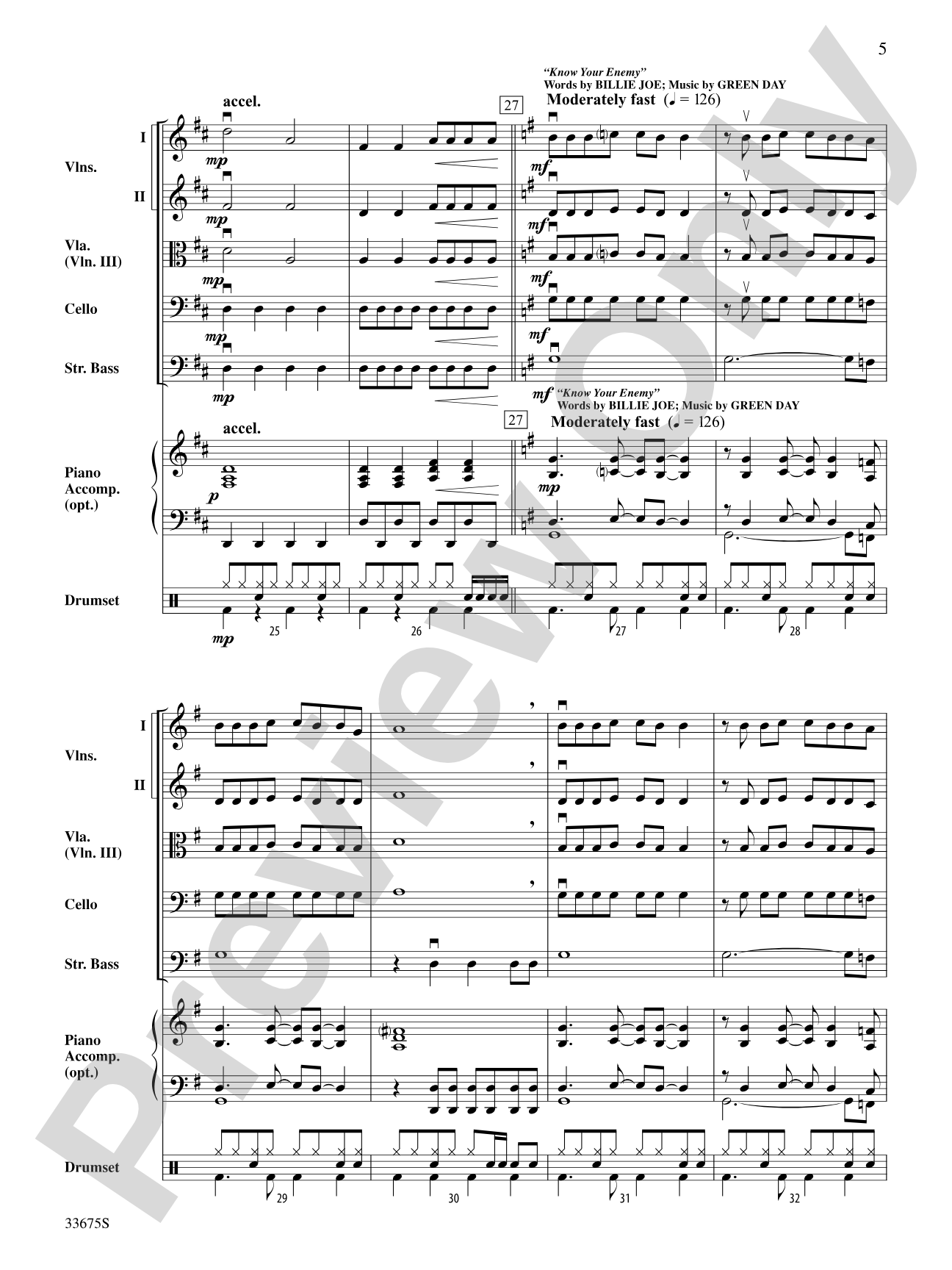
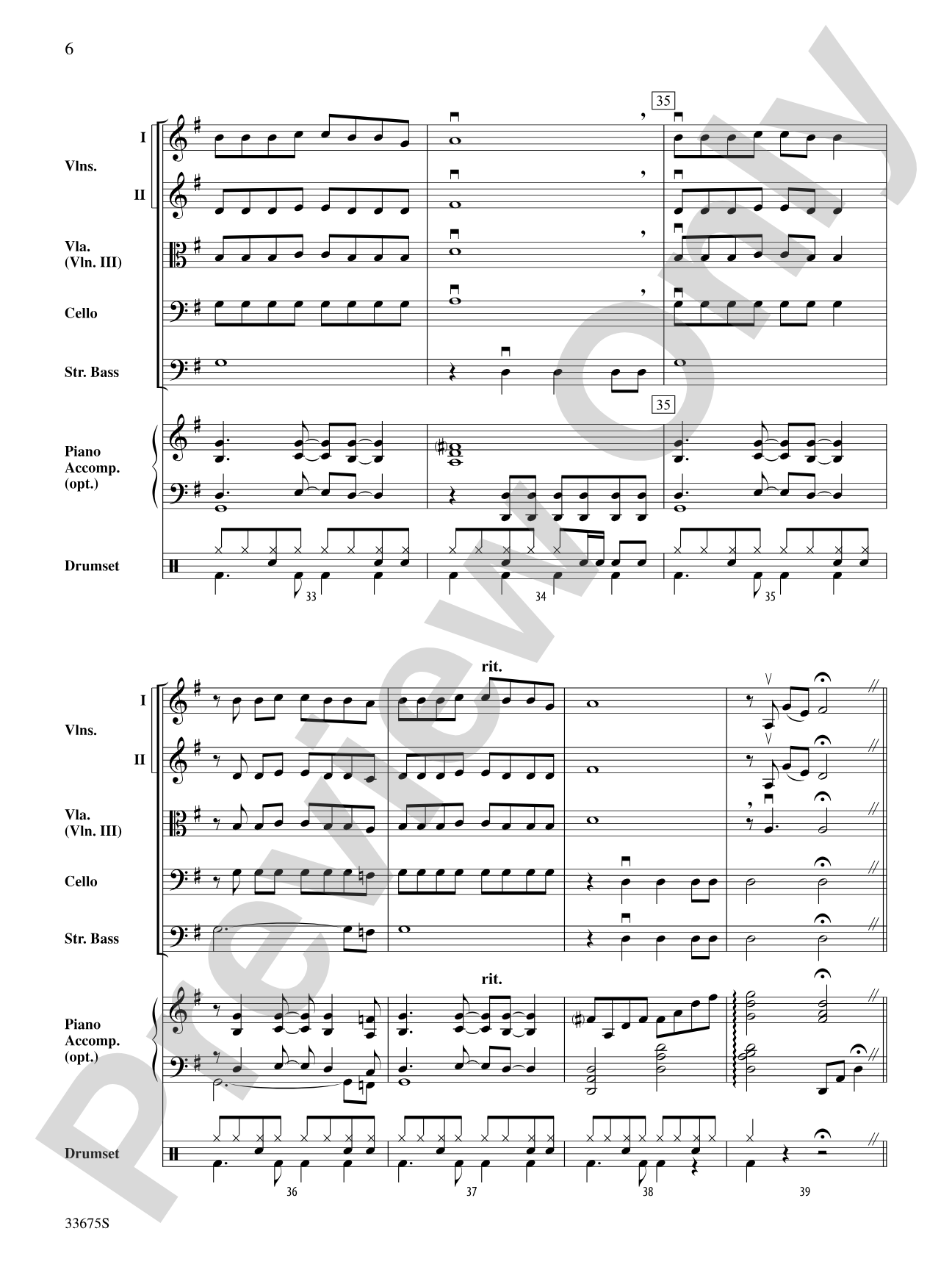
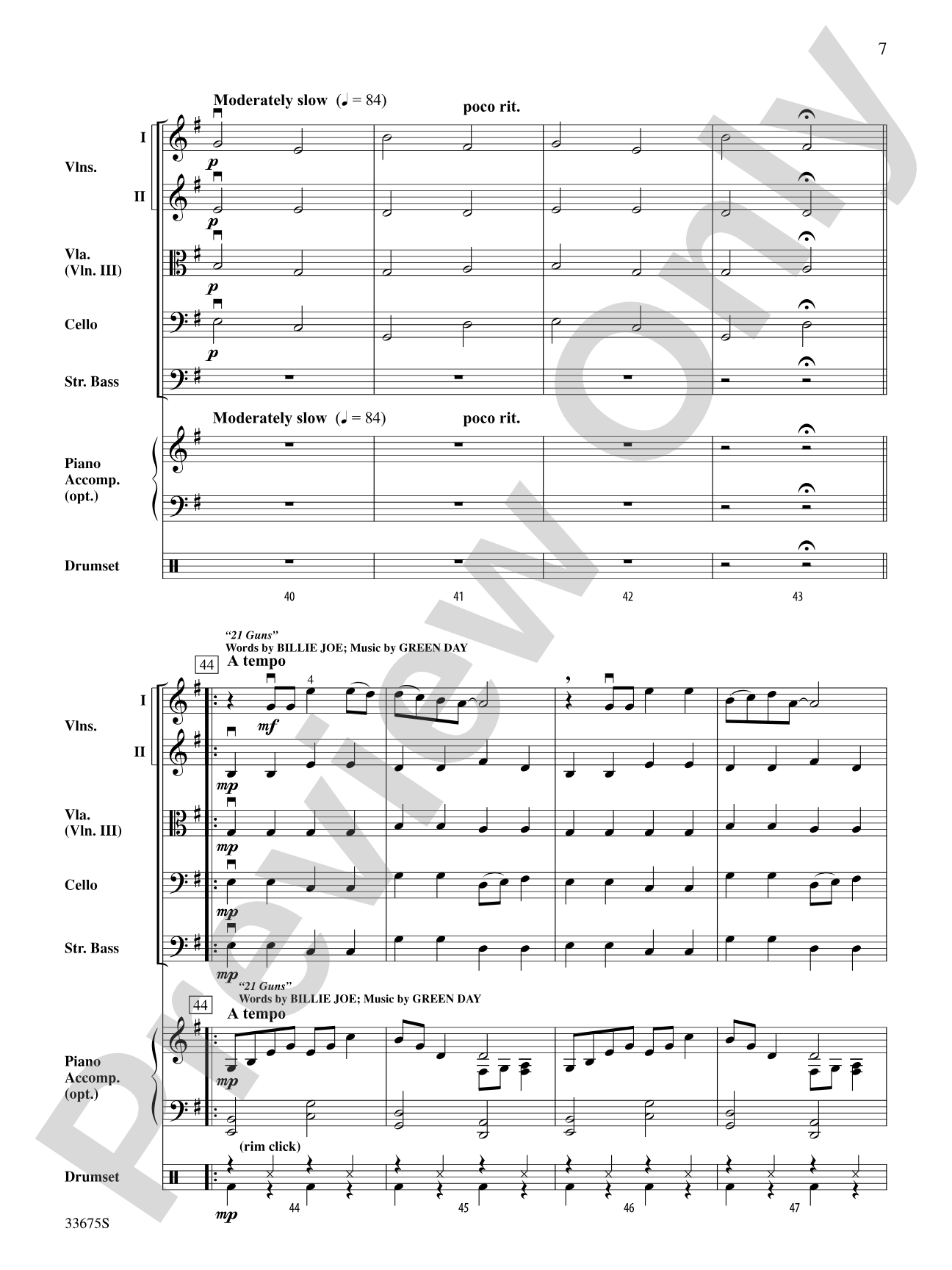
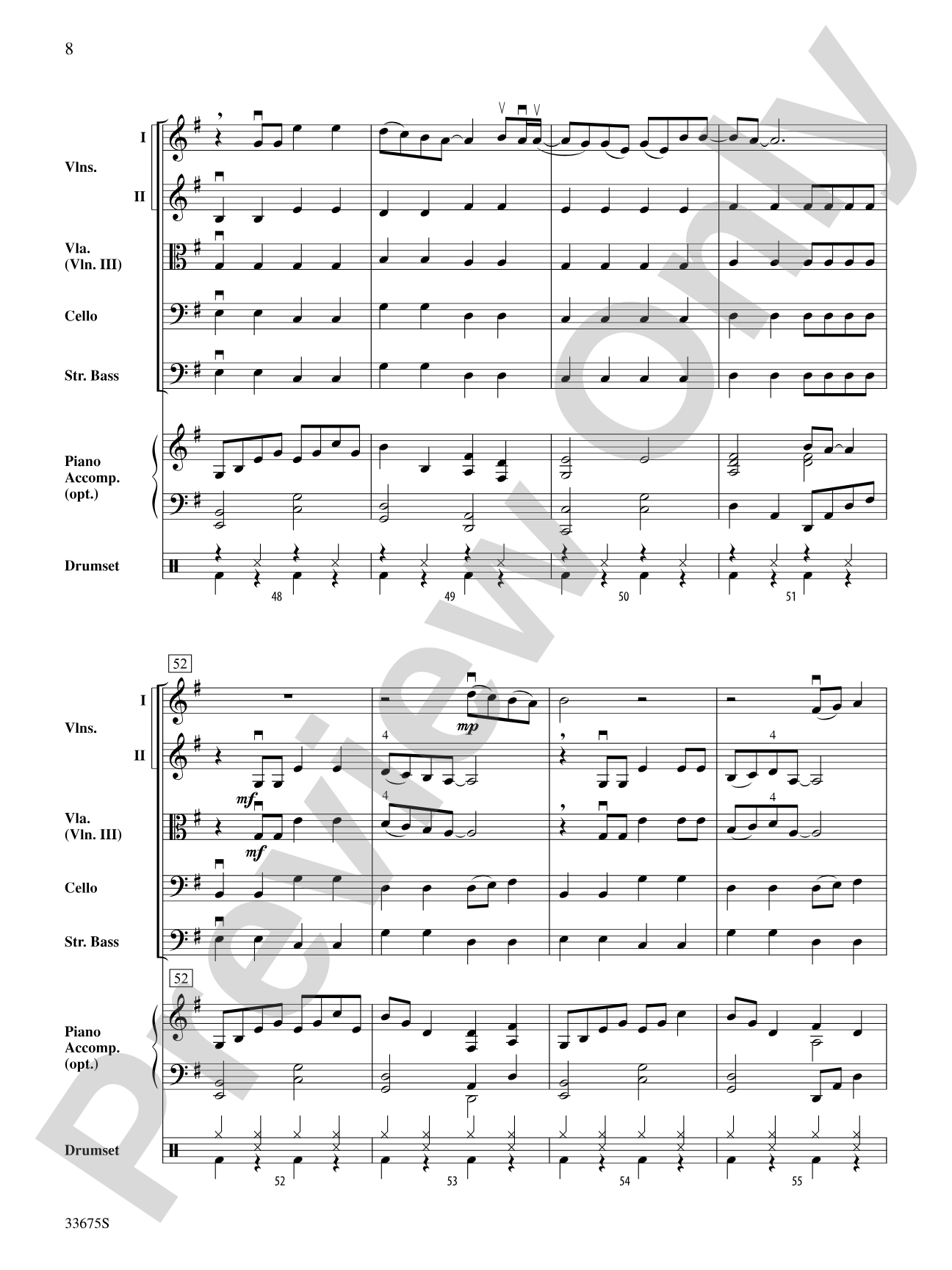
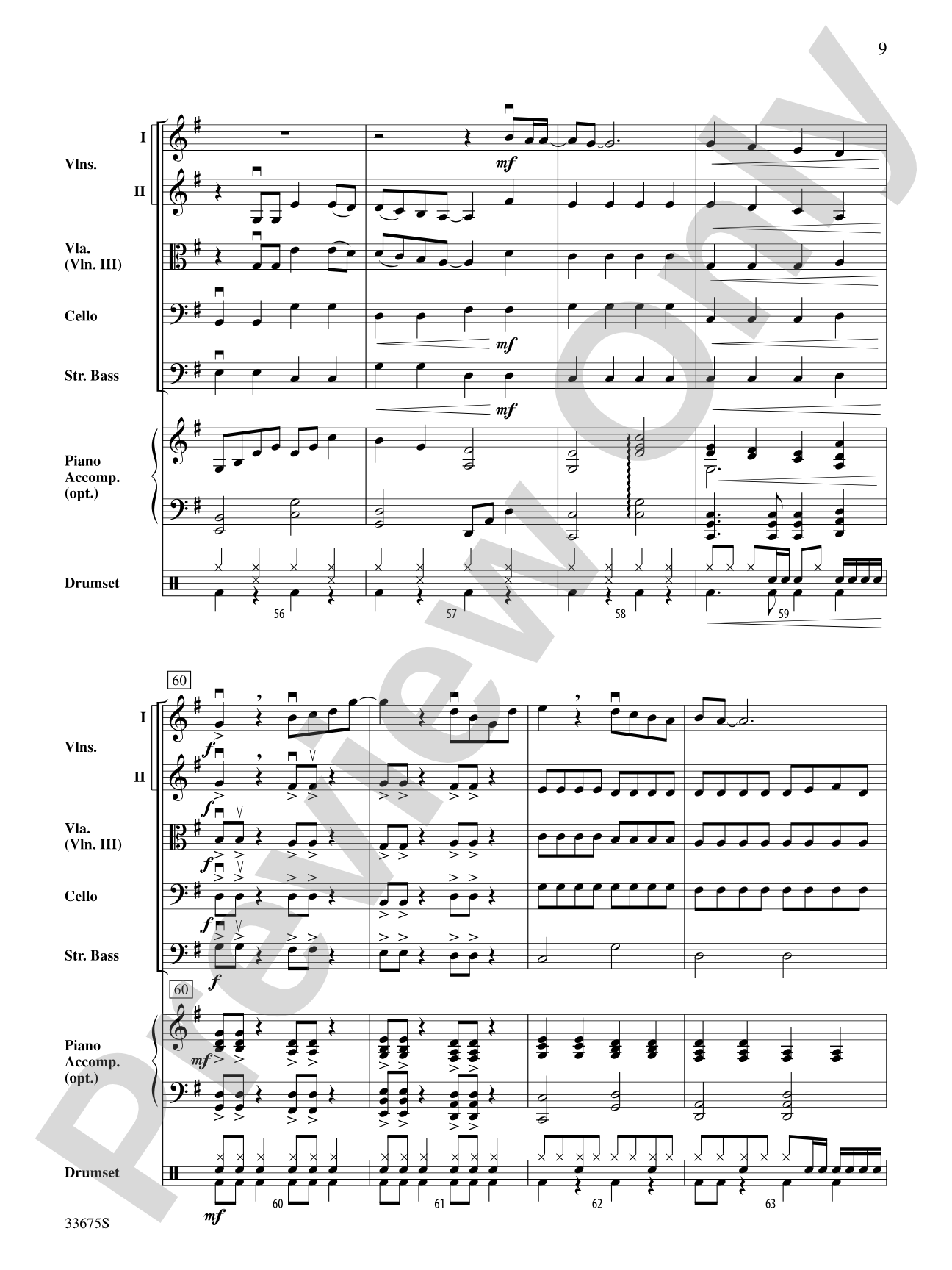
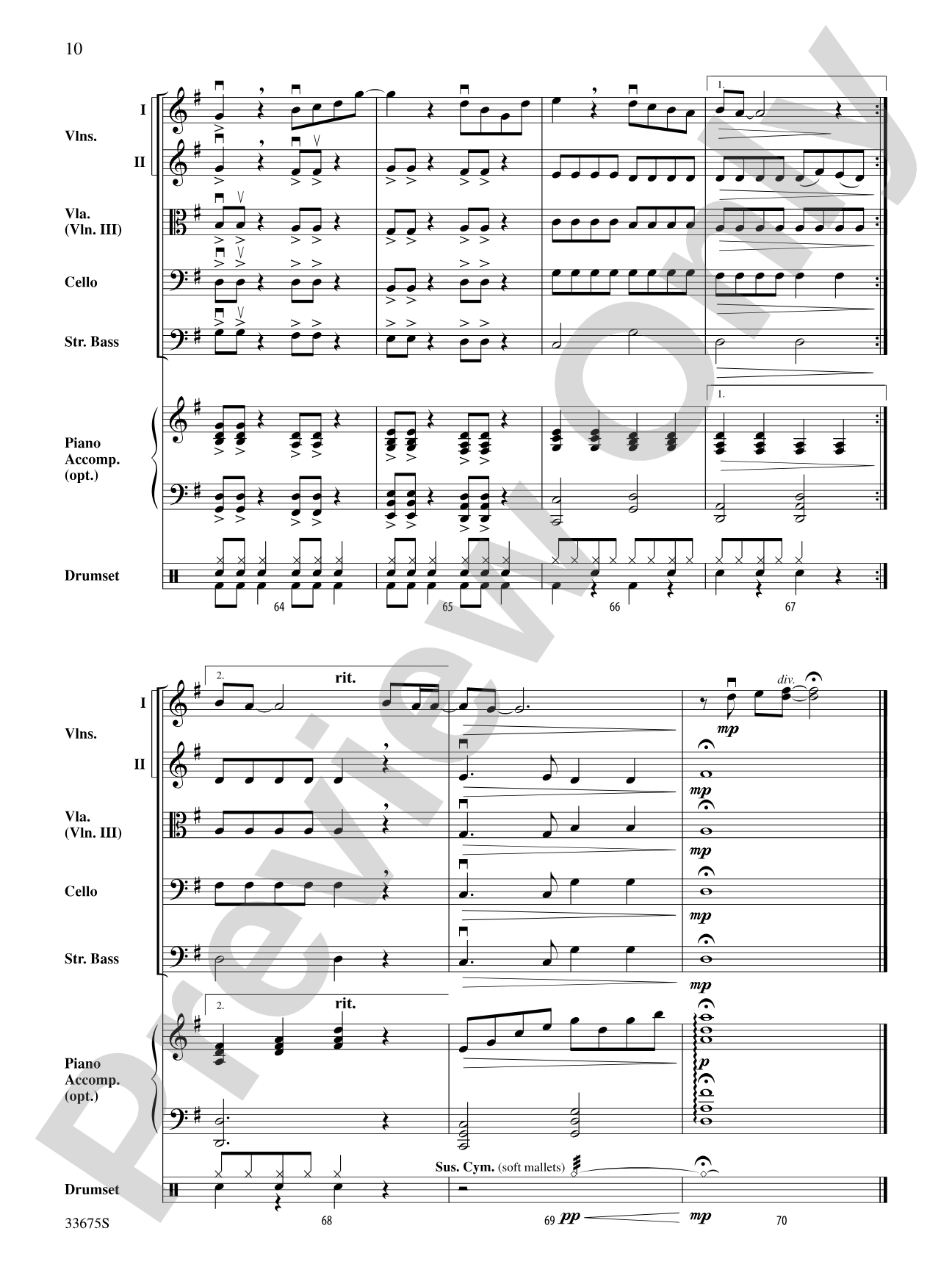



21st Century Breakdown, Selections from: Score
Featuring: 21st Century Breakdown / Know Your Enemy / 21 Guns
Music by Green Day / arr. Jason Scott
Grade: 2.5
Item: 00-PR-0004069
$9.00
Pickup currently not available
Description
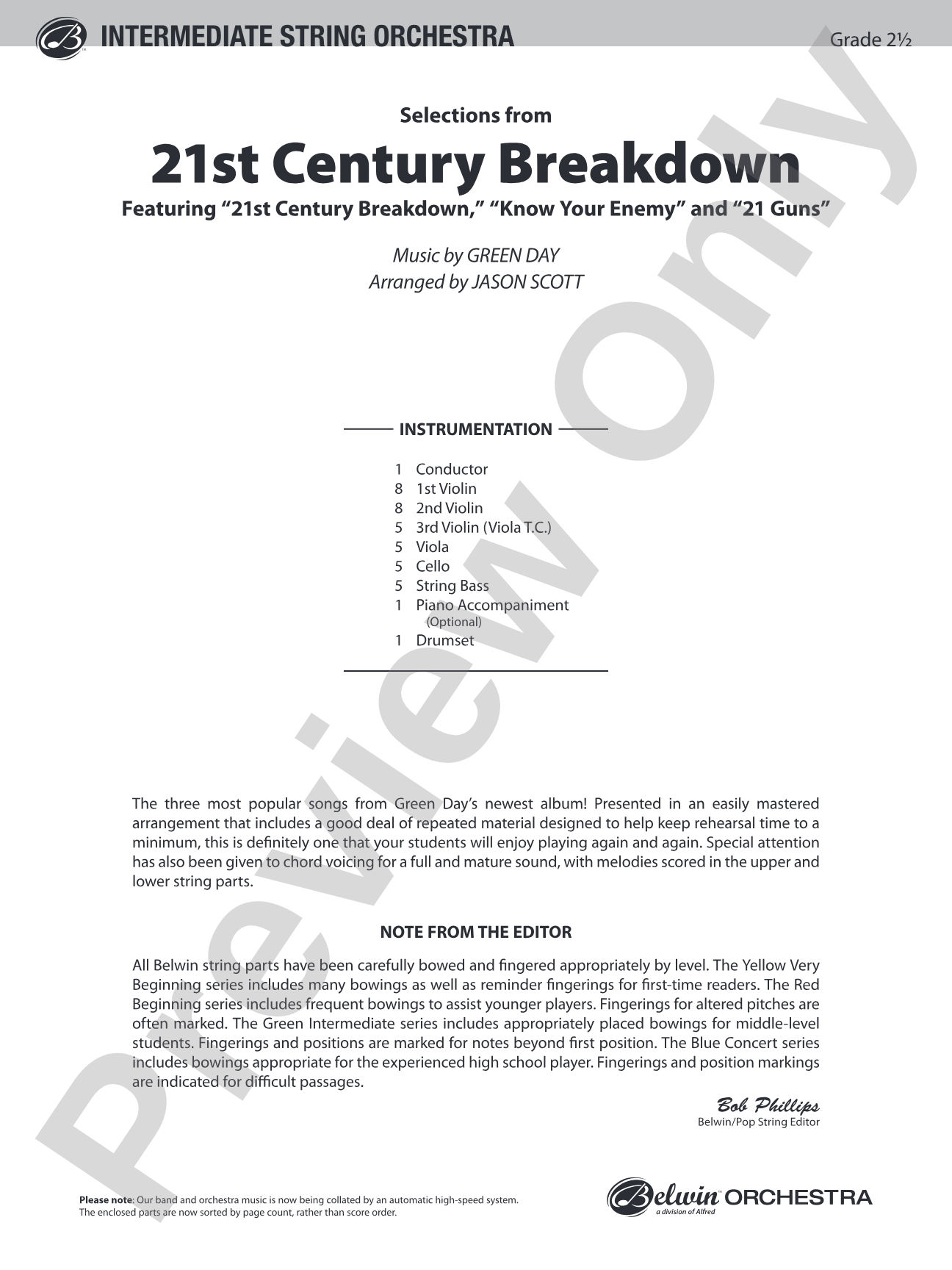
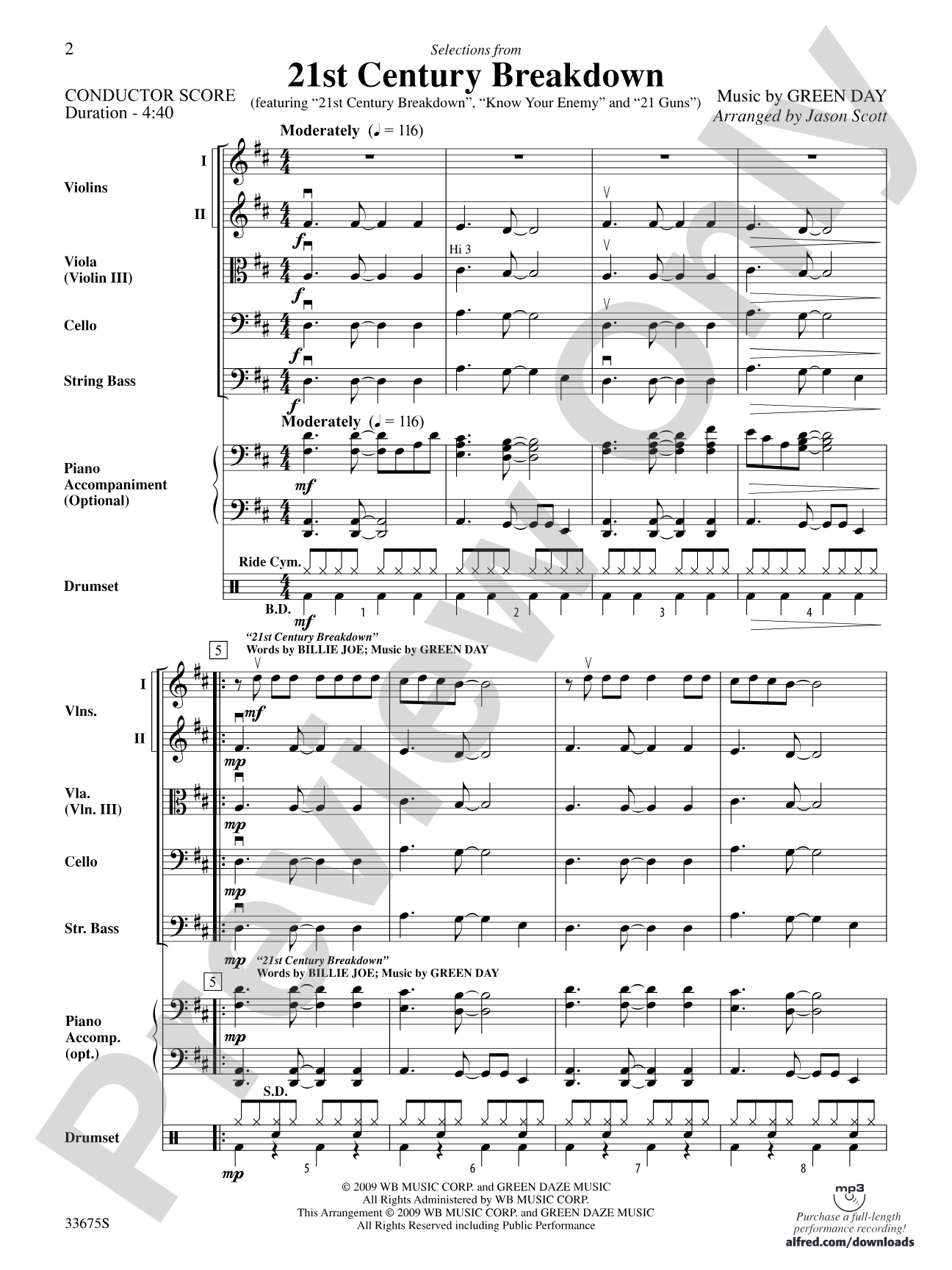
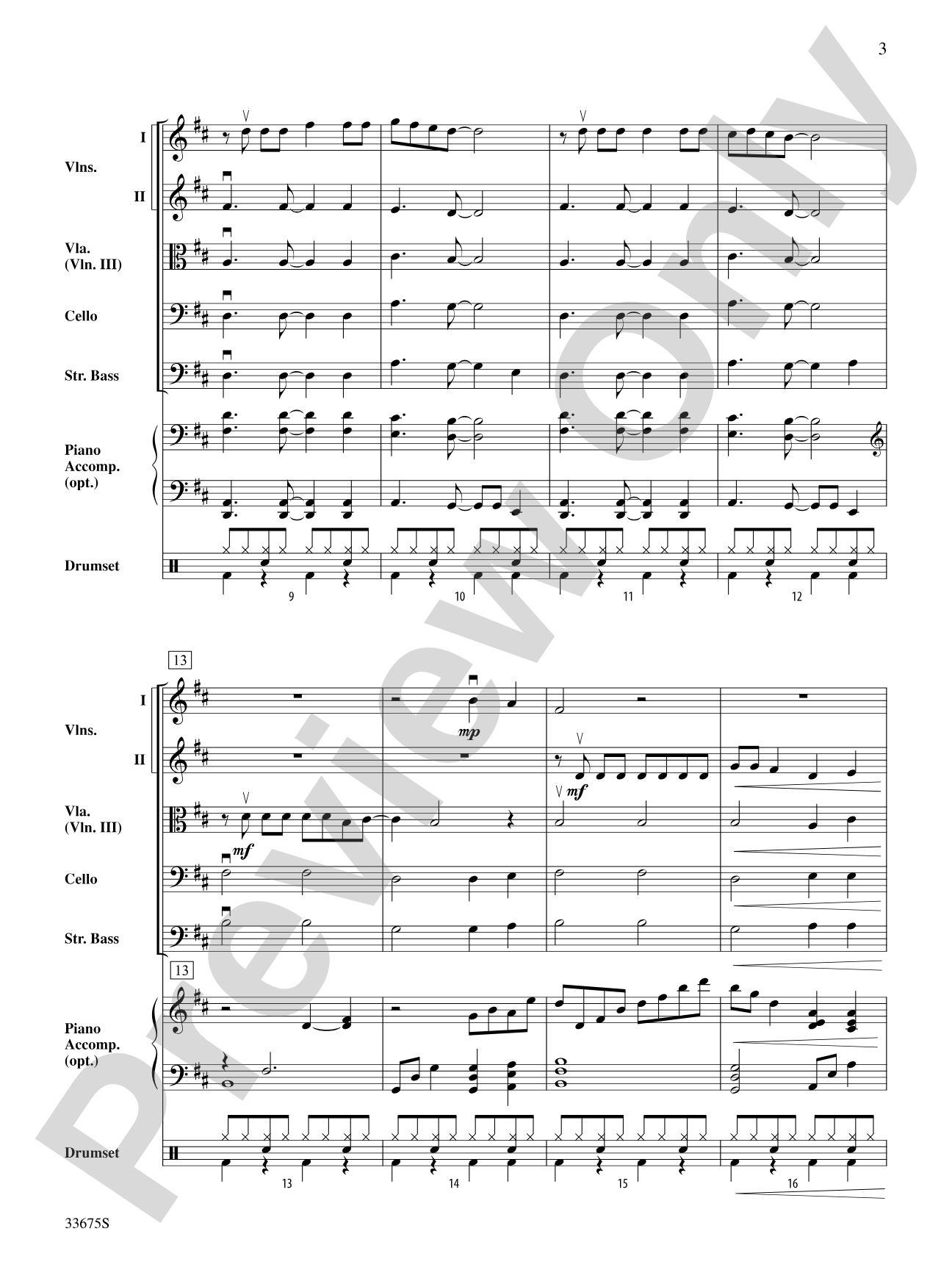
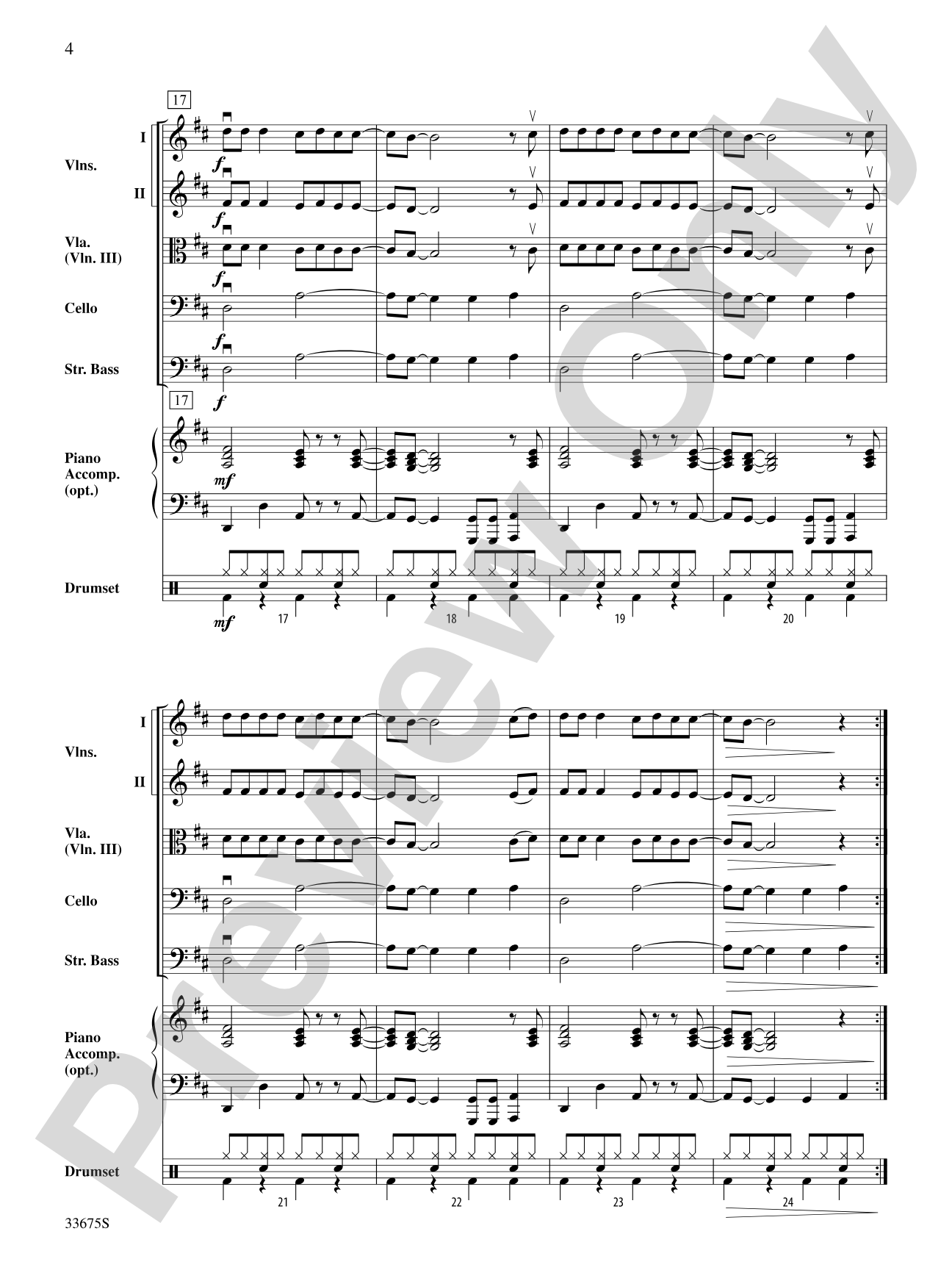
The three most popular songs from Green Day's newest album! Presented in an easily mastered arrangement that includes a good deal of repeated material designed to help keep rehearsal time to a minimum, this is definitely one that your students will enjoy playing again and again. Special attention has also been given to chord voicing for a full and mature sound, with melodies scored in the upper and lower string parts.


Don't just read it, hear it, play along with it, and watch your students grow with it. In MakeMusic Cloud, 21st Century Breakdown, Selections from: Score comes alive with professional accompaniment, adjustable tempo, and built-in practice tools that turn solo practice into real progress.
Open in the Player
Jump straight in and assign it today.
Start Your Free Trial
Open this title and explore the full library in minutes.
Sample Audio
1
Audio File
--:--
0:00
0:00
Sample Video
No sample videos found.
Additional Details
Series:
Pop Intermediate String Orchestra
Publisher:
Alfred Music
Page Count:
142
SKU:
00-PR-0004069
More about this title
About the Composer: Green Day
Green Day emerged from the East Bay punk scene in the 1990s and became one of the defining rock bands of their generation. Their albums have sold tens of millions of copies worldwide, and their music remains a cultural touchstone for multiple generations of listeners. In the classroom, Green Day's work offers orchestral arrangers an opportunity to bridge the gap between students' listening lives and their instrumental studies, grounding serious musicianship in repertoire that feels immediately relevant and energizing.
Why we love this
Students recognize these songs instantly, which creates immediate investment in the rehearsal process. Jason Scott's arrangement respects the original melodies and harmonic language while distributing the material thoughtfully across string parts, allowing players at different levels to contribute meaningfully without overwhelming them. The repeated structures mean you spend rehearsal time refining sound and ensemble cohesion rather than teaching notes.
What to expect
Modern, driving, and full of momentum. The chord voicing creates a richer harmonic palette than typical entry-level string writing, and the melodies sit naturally across both upper and lower voices, giving the sound depth and maturity. There is genuine rock attitude here, but channeled through orchestral instruments with care for ensemble blend and musical shape.
Who it's for
String orchestras working at the grade 2.5 level who want repertoire that energizes their students and connects to their outside listening. Directors seeking pieces that maintain audience engagement while remaining manageable in rehearsal time will find this selection particularly valuable. This works equally well for concert contexts where contemporary popular music feels appropriate and for ensembles building confidence and enthusiasm around orchestral playing.
How to get the most out of it
- Lock in the rhythm section first. Even at this grade level, a tight foundation of cellos and basses holding the pulse makes everything else easier for younger players to latch onto.
- Voice the chords across the full ensemble rather than stacking them vertically in one section. The description emphasizes chord voicing for maturity, so balance and blend across all four parts matter as much as rhythmic accuracy.
- Honor the rock energy without losing refinement. These songs live in a contemporary idiom, but clean articulation and consistent vibrato (where appropriate for your ensemble) keep the sound concert-appropriate.
- Use the repeated material as a chance to build interpretive choices. Once players know the notes, explore how dynamics and tone color change each time the phrase returns.
How to use it
These selections work beautifully as a standalone concert piece or as part of a program that mixes traditional and contemporary repertoire. Consider programming them mid-concert to shift energy and remind your audience (and your players) that classical training opens doors to all kinds of music. They are also excellent choices for community concerts or educational outreach events where repertoire recognition builds attendance and community connection.
Skills your students will build
- Reading and executing rhythmic patterns in rock idioms
- Balancing melody and harmonic support across four-part writing
- Maintaining consistent pulse in contemporary groove-based structures
- Blending chord voicings across distributed string parts
- Interpreting repeated material with stylistic variation