
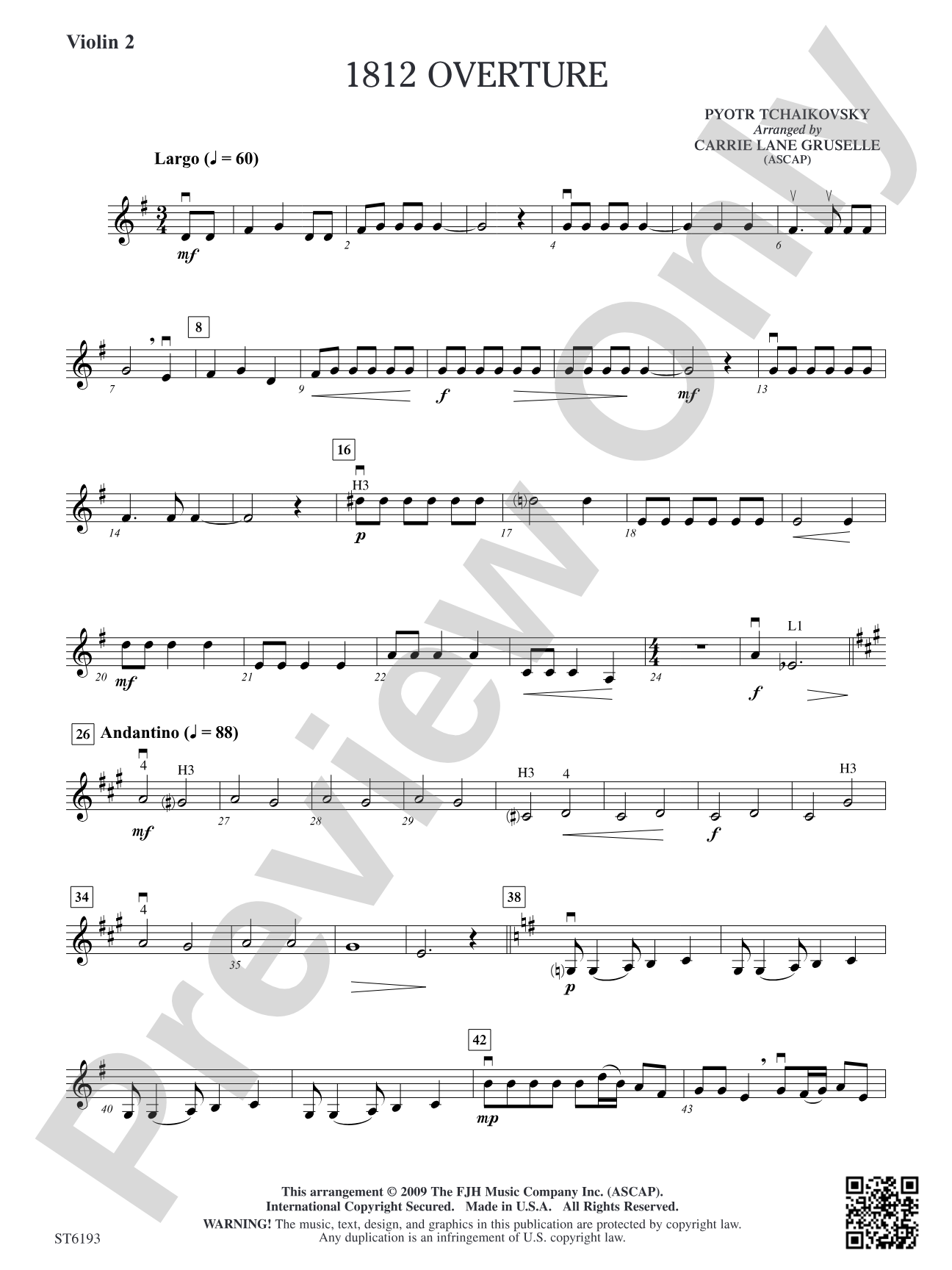

1812 Overture: Violin 2
By Pyotr Tchaikovsky / arr. Carrie Lane Gruselle
Grade: 2
Item: 98-PC-DST6193_VN2
$7.00
Pickup currently not available
Description
Finally, a fantastic arrangement of Tchaikovsky's masterwork that includes themes from the entire work, not just the ending! Gruselle follows the form of the original while keeping the work quite accessible for younger players. Themes include the opening hymn, pastoral interlude, Russian folk dance, and the famous jubilant victory melody set over an exultant Russian anthem. Epic!


1812 Overture: Violin 2 isn't in MakeMusic Cloud just yet...but it could be. Let us know you'd like to see it, and you'll help shape what comes next. In the meantime, start a free trial and dive into thousands of interactive titles your students can play along with today.
Request This Title
Tell us you want it.
Start Your Free Trial
Explore everything that's ready to play right now.
Sample Audio
1
Audio File
--:--
0:00
0:00
Sample Video
No sample videos found.
Additional Details
Series:
FJH Developing Strings
Publisher:
The FJH Music Company, Inc.
SKU:
98-PC-DST6193_VN2
More about this title
About the Composer: Pyotr Tchaikovsky
Pyotr Tchaikovsky (1840-1893) stands as one of the most performed composers in the concert repertoire, and his gift for writing melodies that lodge themselves in the ear makes him ideal for young musicians. His understanding of orchestration and dramatic structure shaped how he approached every genre, from symphonies to ballets, and his willingness to blend Russian folk materials with Western European forms created music that feels both accessible and sophisticated. For string players especially, his orchestral works offer rich opportunities to engage with lyrical writing, bold gestures, and the kind of emotional directness that makes rehearsal rewarding.
Why we love this
Gruselle's arrangement captures what makes the 1812 Overture so compelling without reducing it to a single bombastic moment. Young orchestras get to play the gorgeous opening hymn, navigate the contrasting pastoral section, feel the energy of the folk dance, and then earn their way to that jubilant final section over the Russian anthem. The fact that this arrangement includes the architecture of the original work, not just the famous ending, means students experience genuine narrative arc and come away understanding how a masterwork actually unfolds.
What to expect
Majestic, energetic, and triumphant. The piece moves you through contrasting landscapes: a solemn Russian hymn, a gentle pastoral moment that suggests peaceful countryside, the infectious drive of folk celebration, and finally an overwhelming sense of victory and national pride. By the final measures, the ensemble and audience alike are caught up in something genuinely grand.
Who it's for
String orchestras at the intermediate level who are ready to tackle a work of substance without being overwhelmed by its complexity. This arrangement serves directors looking to program a recognizable masterwork that younger players can execute successfully and feel proud of performing. Ensembles preparing for festival or concert performances will find this both musically rewarding and audience-friendly.
How to get the most out of it
- Shape the opening hymn with long, singing lines; younger players often rush hymn-like material, so establish a conductor's pulse that breathes naturally and encourage sustained tone quality in the upper strings.
- Highlight the pastoral interlude by balancing melody and accompaniment carefully; this quieter section will feel more evocative if the rhythmic accompaniment stays understated and transparent.
- Drive the folk dance section with clear rhythmic precision and slight lift in the string articulations; this contrast will make the return to grandeur at the end feel earned and powerful.
- Build the final section by layering dynamics and allowing the ensemble to feel the weight of playing over the Russian anthem; resist the urge to race, even as excitement builds.
How to use it
This works as a season-opener or closer, depending on your programming instincts; the grandeur and recognizability make it a perfect frame for a concert. You might pair it with shorter, contrasting works to build a varied program, or position it as the climactic finale after a sequence of more intimate pieces. Late fall or spring concerts work equally well for a work this celebratory.
Skills your students will build
- Sustaining long, lyrical phrases with consistent tone quality
- Balancing melody and accompaniment textures
- Responding to dramatic dynamic shifts and emotional pacing
- Articulating rhythmic figures in folk idioms with clarity and lift
- Building ensemble sound over an extended work with multiple contrasting sections