
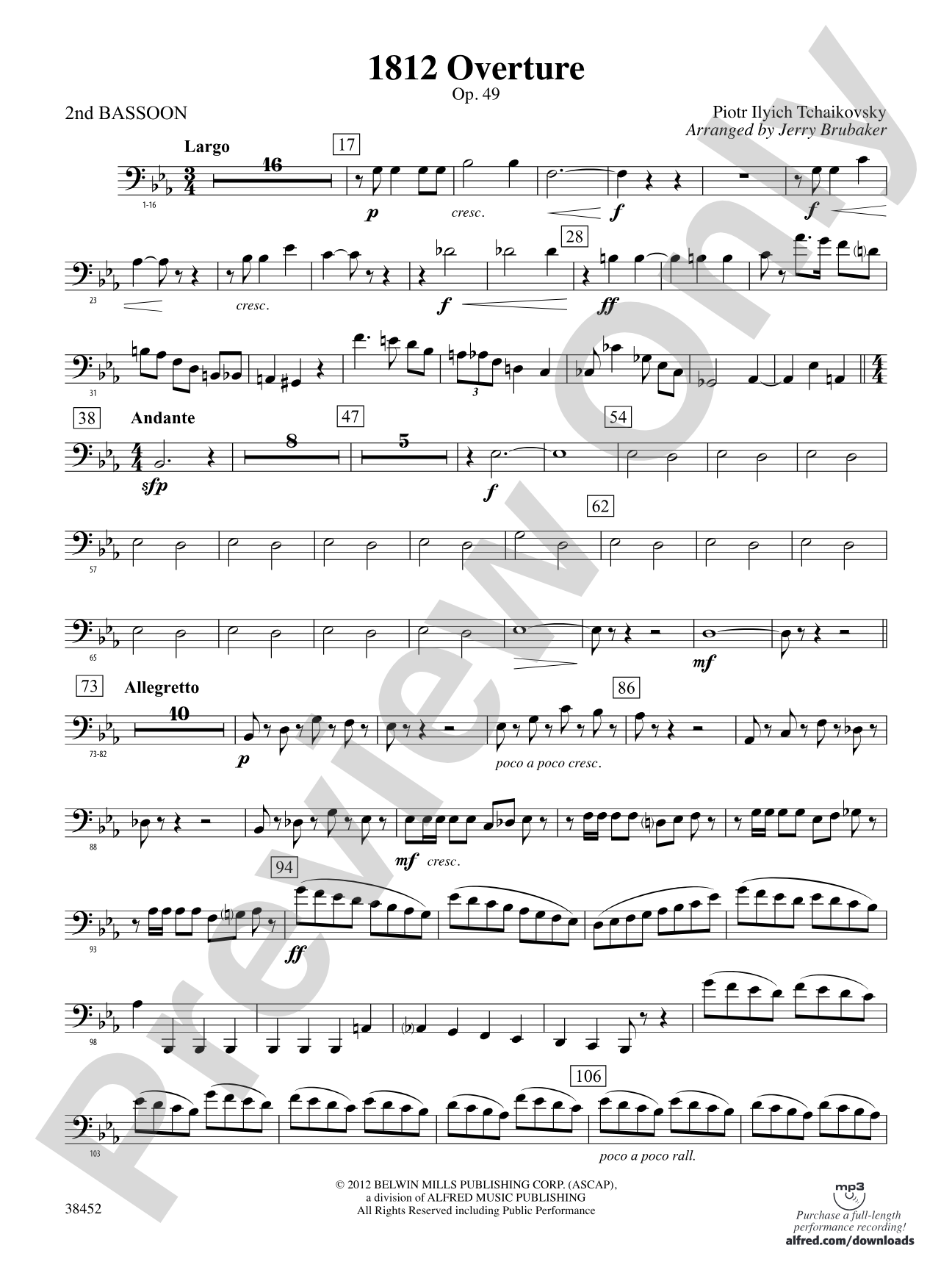

1812 Overture: 2nd Bassoon
Op. 49
By Piotr Ilyich Tchaikovsky [Peter Ilyich Tchaikovsky] / arr. Jerry Brubaker
Grade: 4
Item: 00-PC-0015508_B2
$3.00
Pickup currently not available
Description
Problem solved. The problem has always been that Mr. Tchaikovsky wrote way too much music for many ensembles to prepare. Instead of 15 minutes, this version takes only six and a half minutes to perform! And all of the excitement and pageantry is still there! Best known for its climactic volley of cannon fire, ringing chimes and brass fanfare, this piece is perfect for a bicentennial celebration in 2012. You have to hear it to believe it!


Don't just read it, hear it, play along with it, and watch your students grow with it. In MakeMusic Cloud, 1812 Overture: 2nd Bassoon comes alive with professional accompaniment, adjustable tempo, and built-in practice tools that turn solo practice into real progress.
Open in the Player
Jump straight in and assign it today.
Start Your Free Trial
Open this title and explore the full library in minutes.
Sample Audio
1
Audio File
--:--
0:00
0:00
Sample Video
No sample videos found.
Additional Details
Series:
Belwin Concert Full Orchestra
Publisher:
Alfred Music
Page Count:
214
SKU:
00-PC-0015508_B2
More about this title
About the Composer: Piotr Ilyich Tchaikovsky
Piotr Ilyich Tchaikovsky (1840–1893) was a Russian Romantic composer whose works span symphonies, concertos, ballets, and orchestral showpieces. His gift for sweeping melodic lines and dramatic orchestration made him one of the most performed composers of the 19th century and beyond. The 1812 Overture remains one of his most iconic and recognizable works, celebrated for its patriotic fervor and spectacular orchestral color.
Tchaikovsky's music speaks directly to audiences because of its emotional directness and technical brilliance. His orchestrations demand precision from every section while rewarding players with rich, memorable parts. For students and teachers alike, his works offer a gateway into understanding Romantic-era composition and the power of orchestral writing.
Why we love this
Jerry Brubaker's arrangement cuts through the real logistical challenge many directors face: the original 1812 Overture requires substantial rehearsal time and advanced players to pull off convincingly. This Grade 4 version preserves all the pageantry and impact—the cannon fire, chimes, brass fanfares, and triumphant climax—while fitting into a rehearsal schedule that doesn't demand months of preparation. You get the authentic Tchaikovsky sound and the crowd-pleasing finale your audience expects.
What to expect
The piece opens with Russian Orthodox bells and a folk melody that feels intimate and spiritual, then builds into a military march full of color and pomp. When the climax arrives—with chiming bells, soaring brass, and the unmistakable crack of cannon fire—the effect is thrilling and unmissable. From reverence to celebration, the journey is complete and deeply satisfying.
Who it's for
Orchestras at the intermediate level (Grade 4) that want to perform a major masterwork without committing to the full 15-minute original. This arrangement works for ensembles with solid musicianship across all sections but whose rehearsal time or instrumentation limits them from tackling the complete version.
How to get the most out of it
- Bring the brass section together early and often. The final fanfare drives the piece home, and clarity in the trumpet and trombone lines will make the cannon blasts land with maximum impact.
- Work the tempo curve deliberately. The march sections need steady pulse and precision; the transition into the climax should feel inevitable, not rushed.
- Coordinate the percussion carefully. The timpani rolls, bell sounds, and cannon effects create the piece's narrative arc. Mark cues clearly in parts so every section knows when the texture shifts.
- Shape the Russian folk melody that opens the piece with genuine lyricism. It sets the emotional foundation before the military pageantry takes over.
How to use it
Program this as a finale that commands attention and leaves audiences on their feet. It works beautifully for spring pops concerts, patriotic celebrations, or festival performances where you need a crowd-pleaser with artistic substance. The six-and-a-half-minute length means it can anchor a diverse concert program without overwhelming the rest of your repertoire.
Skills your students will build
- Balancing melody and accompaniment across full orchestra
- Ensemble control during dramatic dynamic shifts and textural changes
- Precision in rhythmic coordination, especially across multiple percussion lines
- Interpreting Romantic-era compositional style and orchestral color
- Managing tempo flexibility within a march framework