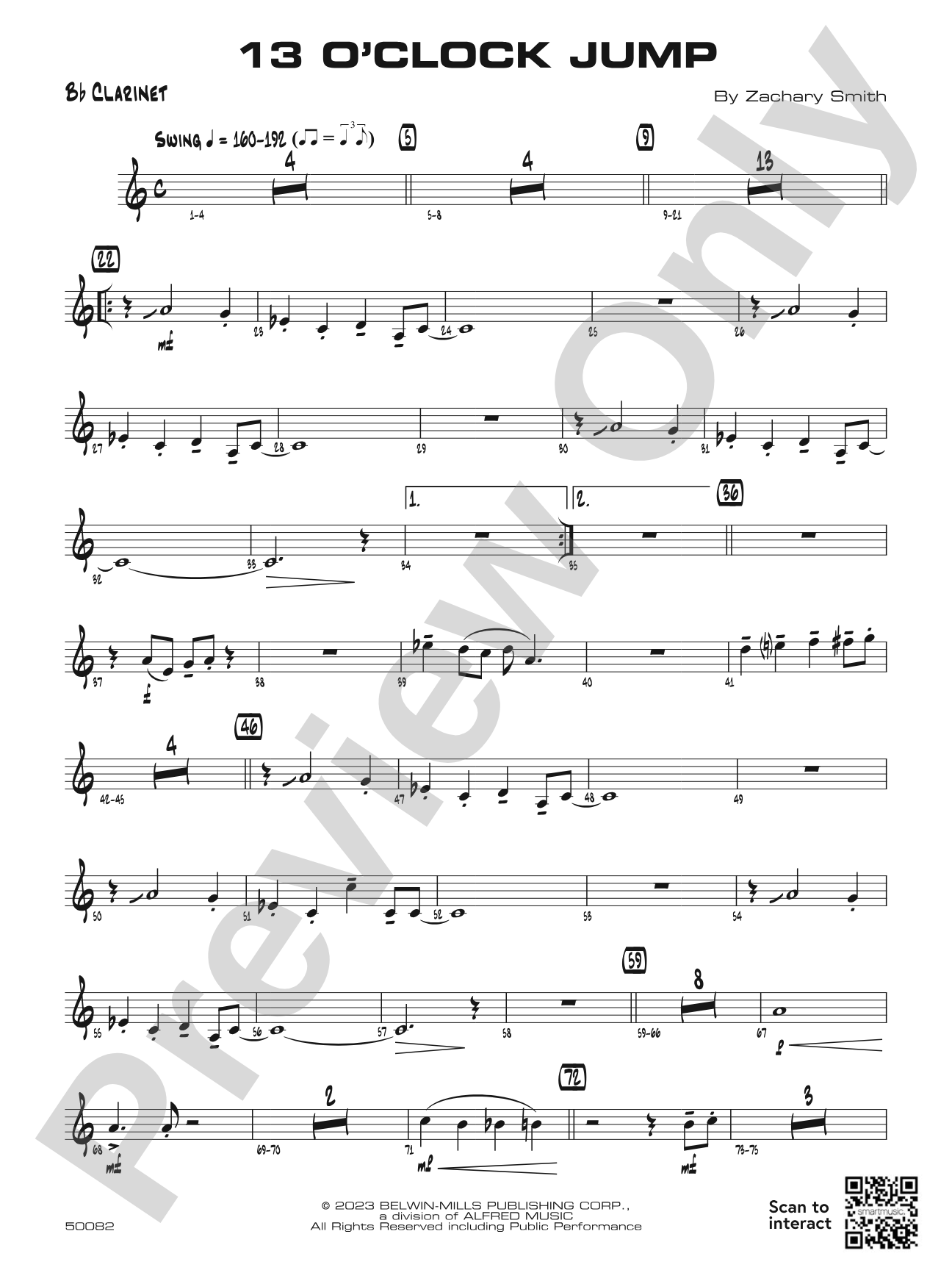
13 O'Clock Jump: 1st B-flat Clarinet Sheet Music Preview

13 O'Clock Jump: 1st B-flat Clarinet

By Zachary Smith

Grade: 1.5

Item: 00-PC-0019044_C1

Digital Download
$3.00
Description
A swingin' blues but with a fun twist, 13-bar blues! Play it around 172 BPM with suggested solos written for tenor 1, trumpet 1, trombone 1, and some brief drumset fills. Trumpet 1 range is to written E top space. Check out the cool brass plunger mute sections! (3:35)

Don't just read it, hear it, play along with it, and watch your students grow with it. In MakeMusic Cloud, 13 O'Clock Jump: 1st B-flat Clarinet comes alive with professional accompaniment, adjustable tempo, and built-in practice tools that turn solo practice into real progress.

Sample Audio
0:00
0:00
Sample Video
Additional Details
Series: First Year Charts for Jazz Ensemble
Publisher: Alfred Music
SKU: 00-PC-0019044_C1

More about this title

Why we love this

The 13-bar blues structure immediately sets this apart from standard 12-bar repertoire, giving your ensemble a memorable harmonic twist that keeps listeners engaged. Smith's specific solo voicings for tenor 1, trumpet 1, and trombone 1 mean your soloists have written frameworks to build from, eliminating the "where do I even start" hesitation that sometimes stalls first-year jazz students. The plunger mute sections add textural variety without requiring specialized technique, and 172 BPM sits right in that sweet spot where the band can swing hard without sacrificing clarity.

What to expect

A playful, swaggering blues with just enough harmonic surprise to make your section leaders sit up and pay attention. The brass plunger work gives it a classic New Orleans flavor, while the non-standard bar count creates an infectious rhythmic humor that audiences feel immediately.

Who it's for

First-year jazz ensemble players ready to move beyond traditional 12-bar blues and absorb what makes swing rhythm tick. Directors teaching students who have some reading chops but still need harmonic scaffolding for improvisation.

How to get the most out of it

  • Lock the bass and drums into the blues shuffle first, then layer in the horn figures. The pocket needs to feel effortless before soloists step out.
  • Balance the trumpet 1 high passages (up to written E in the top space) by having the player sit slightly behind the dynamic curve during section hits. Those notes will project naturally.
  • Let drummers explore the written fill suggestions as departure points, not limitations. Once they nail the written version, encourage them to voice variations that stay inside the harmonic structure.
  • Rehearse the plunger mute entries separately so players understand the exact tonal color you're after, then integrate them back into context.

How to use it

Slot this early in a concert or festival set to establish ensemble identity and warm up the audience's ear for swing. Its accessibility and tight structure (3:35) make it an ideal opener or a strong choice for back-to-back performances where you need tight turnarounds.

Skills your students will build

  • Swing eighth-note subdivision at tempo (172 BPM)
  • 12-bar blues form variation (13-bar structure)
  • Solo composition and melodic phrasing within a given chord progression
  • Plunger mute technique and muted articulation
  • Rhythmic pocket trading between rhythm section and soloists
  • Brass section balance in ensemble hits with high register demands

You May Also Like