
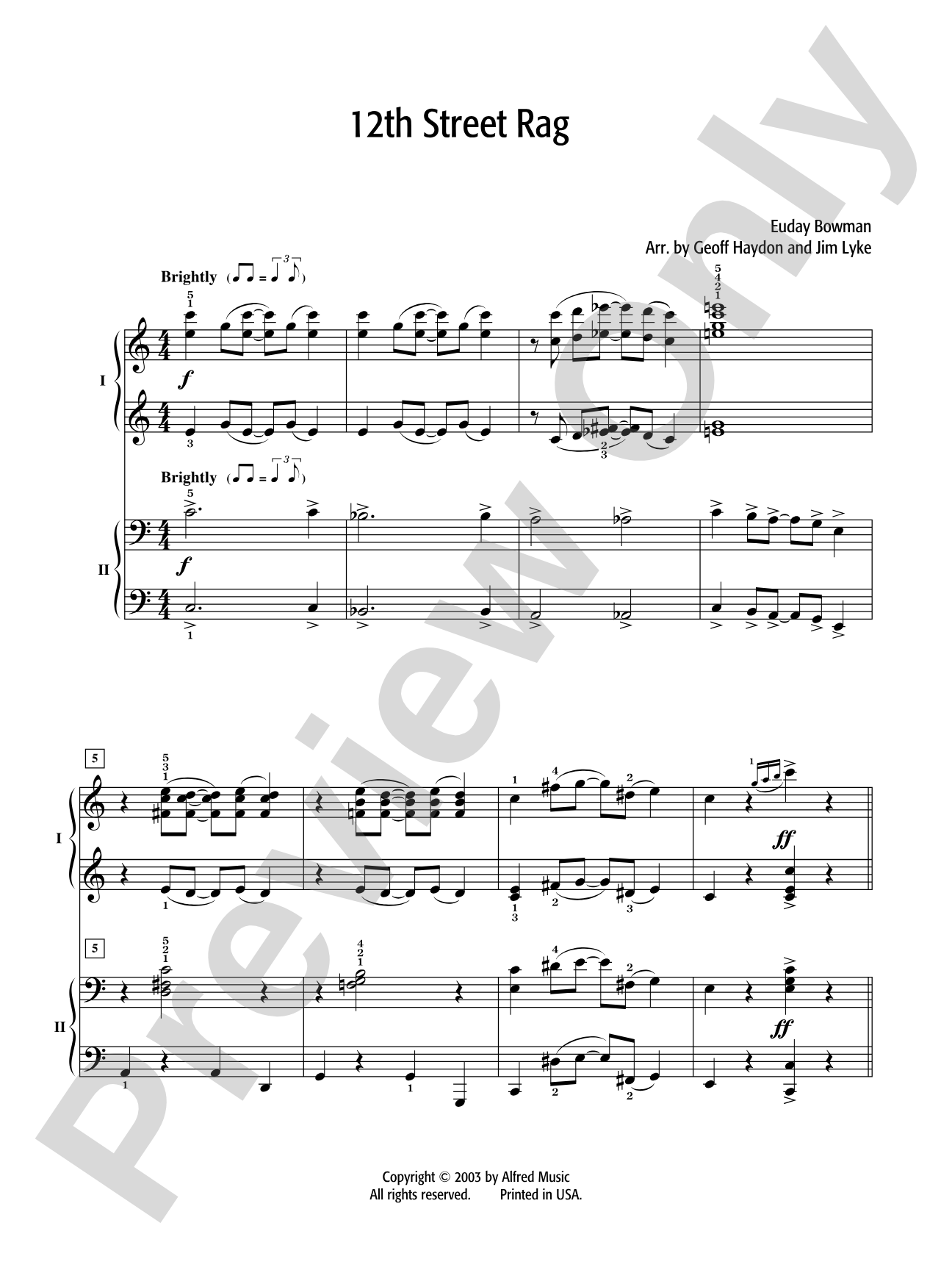
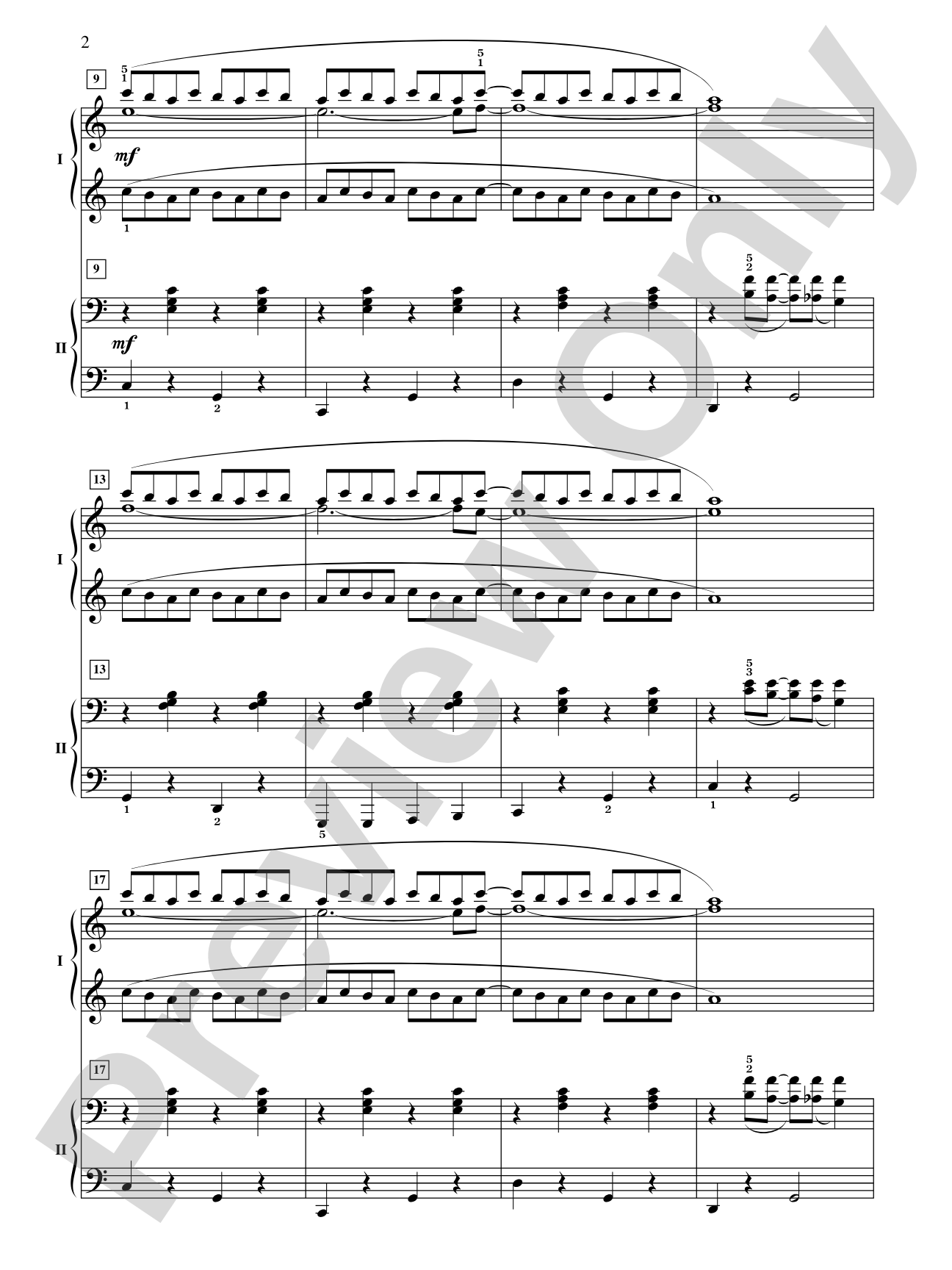

12th Street Rag - Piano Duo (2 Pianos, 4 Hands): Piano Duets & Four Hands
By Euday Bowman / arr. Geoff Haydon and Jim Lyke
Level: Late Intermediate
Item: 00-PB-0000837
$4.95
Pickup currently not available
Related Items
12th Street Rag: Piano Duo (2 Pianos, 4 Hands) Sheet (2 copies included) |
$4.95
|
View |
Description
Geoff Haydon and Jim Lyke bring this well-known ragtime solo by Euday Bowman to life again in their two-piano arrangement. The melody is expertly divided between the two pianos and requires careful attention to the syncopation. The jump bass accompaniment typical to this style of music is perfect for dividing between the hands. The bright, swing tempo captures the character and spirit of ragtime making this an arrangement that will delight both listeners and performers alike. A Federation Festivals 2024-2028 selection.


12th Street Rag - Piano Duo (2 Pianos, 4 Hands): Piano Duets & Four Hands isn't in MakeMusic Cloud just yet...but it could be. Let us know you'd like to see it, and you'll help shape what comes next. In the meantime, start a free trial and dive into thousands of interactive titles your students can play along with today.
Request This Title
Tell us you want it.
Start Your Free Trial
Explore everything that's ready to play right now.
Sample Audio
No sample audio found.
Sample Video
No sample videos found.
Additional Details
Series:
The Alfred Ensemble Series
Publisher:
Alfred Music
Page Count:
8
SKU:
00-PB-0000837
More about this title
About the Composer: Euday Bowman
Euday Bowman (1887–1949) was an American ragtime composer and pianist who emerged during the height of the ragtime era in the early 20th century. Though less celebrated today than Joplin or Lamb, Bowman created several enduring ragtime pieces that demonstrate sophisticated harmonic writing and rhythmic vitality characteristic of the genre at its peak.
12th Street Rag, composed in 1914, became one of his most frequently performed works and has appeared in countless arrangements across jazz, pop, and educational settings. The piece exemplifies what made ragtime compelling to both concert audiences and dance halls: syncopated melodies set against steady, driving bass lines that invite performers and listeners alike into the music's infectious rhythmic world.
Why we love this
This arrangement splits the ragtime idiom beautifully between two pianos, creating genuine dialogue where neither player dominates. Haydon and Lyke have made smart choices about which hand plays melody and which carries the characteristic jump bass, transforming what could feel awkward at two pianos into a natural, conversational texture that students genuinely enjoy performing together.
What to expect
Energetic and conversational, with the two pianos trading melodic material while maintaining the propulsive swing that defines early 20th-century ragtime. The arrangement captures that familiar lightness and charm of 12th Street Rag while demanding real musical communication between the two players.
Who it's for
Duet pianists at the late intermediate level who are ready to tackle authentic ragtime rhythm and style. Pairs will benefit from having solid rhythm reading skills and comfort with syncopation, as well as the ensemble maturity to balance two independent parts.
How to get the most out of it
- Establish the swing tempo with confidence before the first note; ragtime loses its character when it drags. The two players should breathe together and lock into the same feel from the downbeat.
- Mark the syncopated passages in your part so you can see where you're landing off the beat. This reduces the tendency to rush into syncopations and keeps the overall rhythm stable.
- Balance the melody and bass line carefully. When the jump bass drives the accompaniment, it should not overshadow the lyrical passages; listen across the room to hear what the audience hears.
- Let the characteristic ragtime swagger live in your articulation and touch. Crisp attacks on syncopated notes and a slightly lifted quality on offbeats will bring out the style without exaggerating it.
How to use it
This works wonderfully as a standalone recital piece for an intermediate duet showcase or as part of a ragtime exploration that might include solo rags or other arranged classics. It's also a strong choice for festival competitions where the two-piano category celebrates arrangement craft and ensemble musicianship.
Skills your students will build
- Reading and performing authentic ragtime syncopation across two independent parts
- Listening and balancing melody against jump bass accompaniment
- Coordinating tempo and articulation decisions with another pianist
- Understanding the stylistic conventions of early 20th-century ragtime idiom
- Managing the technical demands of syncopated figures at performance tempo