12 Etude-Caprices in the Styles of the Great Composers Cover Image

12 Etude-Caprices in the Styles of the Great Composers: Violin Book

$19.99 USD
Sale price  $19.99 USD Regular price 
Skip to product information
12 Etude-Caprices in the Styles of the Great Composers Cover Image

12 Etude-Caprices in the Styles of the Great Composers: Violin Book

By Amy Barlowe

Item: 00-33320

$19.99
Shipped

One moment…

Description
Written by Juilliard trained violinist/composer, Amy Barlowe, 12 Etude-Caprices in the Styles of the Great Composers is a welcome addition to the intermediate solo violin repertoire. Progressive and chronologically ordered, these innovative etudes are invaluable both as study pieces and short, unaccompanied concert works for competitions or recital programs. Detailed Practice Guides follow each etude featuring methods for the development of technical and musical tools that will promote individual expression within the appropriate historical context. Such aspects as sounding points, varied vibrato, and techniques for improving intonation are derived from each etude to increase facility, musicianship, and stylistic awareness. Used as a supplement, this fully illustrated and thoroughly engaging collection of original etudes provides a fresh and unique approach to the age-old tradition of technical study. Preparation for the major works of the great composers has never been more fun!

12 Etude-Caprices in the Styles of the Great Composers: Violin Book isn't in MakeMusic Cloud just yet...but it could be. Let us know you'd like to see it, and you'll help shape what comes next. In the meantime, start a free trial and dive into thousands of interactive titles your students can play along with today.

Sample Pages

Sample Audio
No sample audio found.
Sample Video
Additional Details
Publisher: Alfred Music
Page Count: 84
ISBN10: 0-7390-6259-X
ISBN13: 978-0-7390-6259-3
UPC: 038081372372
SKU: 00-33320

More about this title

About the Composer: Amy Barlowe
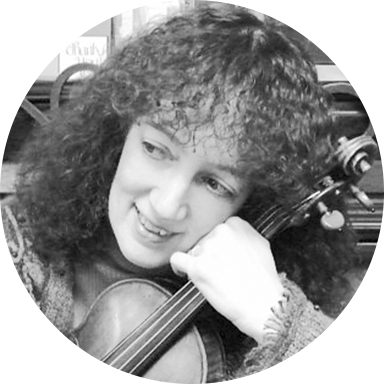
Amy Barlowe

Amy Barlowe holds degrees from the Juilliard School, where she studied violin with Ivan Galamian and Margaret Pardee and received coaching from Josef Gingold, Felix Galimir, Samuel Rhodes, and Earl Carlyss. Her performance career has spanned the United States, Canada, and Mexico, with solo recitals and chamber music presented in major New York concert halls. She co-founded Duo [AB]2 with her husband Alan Bodman in 1988, recording for the Medici and Azica labels to critical acclaim.

Beyond performance, Barlowe has composed and arranged extensively for strings, including works for two violins and piano, an opera ballet, and a Requiem Mass. Her arrangement of Schindler's List for two violins and piano earned the endorsement of John Williams and was published by Hal Leonard. She has taught at the Juilliard Pre-College, New York's School for Strings, Willamette University, and held faculty positions at the Meadowmount School of Music and the Ohio Conservatory.

Why we love this

These etudes bridge the gap between technical drill and genuine musicianship by anchoring each study in the language of a specific composer. Rather than generic exercises, students encounter the fingerprint of Bach, Paganini, Romantic era composers, and modernists, building stylistic literacy alongside facility. The included practice guides transform what could be rote technical work into informed exploration of vibrato, intonation, and tone production within historically appropriate contexts.

What to expect

Moving through these etudes is like stepping into a series of stylistic sketches, each one capturing the essential character and technical demands of a great composer's voice. One moment you inhabit the mathematical precision of Baroque counterpoint; the next, the soaring lyricism or fiery virtuosity of the Romantic era. The variety keeps both mind and fingers engaged, transforming what might otherwise feel like grinding technical practice into genuine musical exploration.

Who it's for

Intermediate violinists preparing for competitions, recitals, or simply seeking technical growth grounded in musical substance. This collection appeals to students who have mastered fundamental positions and vibrato and are ready to develop stylistic awareness and expressive control. It is equally valuable for studio teachers seeking repertoire that develops technique without sacrificing artistry.

How to get the most out of it

  • Engage the practice guide for each etude before and after playing. The context and technical focus will shape how you approach tone color and articulation in ways that generic technique work cannot.
  • Record yourself playing through a complete etude once without stopping, then use the guide to identify one specific technical element (sounding point, vibrato style, intonation pattern) to refine on subsequent attempts.
  • Approach each piece as a concert work, not just a study. These etudes have genuine musical shape and deserve the same interpretive attention you would give to a published recital piece.
  • Work chronologically through the collection to experience how compositional language and idiomatic violin writing evolved across centuries. This arc itself teaches music history.

How to use it

Program individual etudes on student recitals or jury performances, where their concert-worthy musicality and moderate length (each stands as a complete work) make them ideal for showcasing growth without requiring a full sonata. Use the chronological ordering as a semester-long curriculum in stylistic development, with students performing a new etude monthly. Assign specific etudes as competition pieces, since their technical demands and musical substance compete favorably with more traditional choices.

Skills your students will build

  • Vibrato control and stylistic variation across historical periods
  • Intonation refinement through ear-training and contextual practice
  • Tone production and sounding point adjustment for different compositional styles
  • Sight-reading and interpretation of music in the styles of Bach, Classical, Romantic, and contemporary composers
  • Musical expression and phrasing within historically informed contexts
  • Solo recital repertoire and competition piece development

You May Also Like