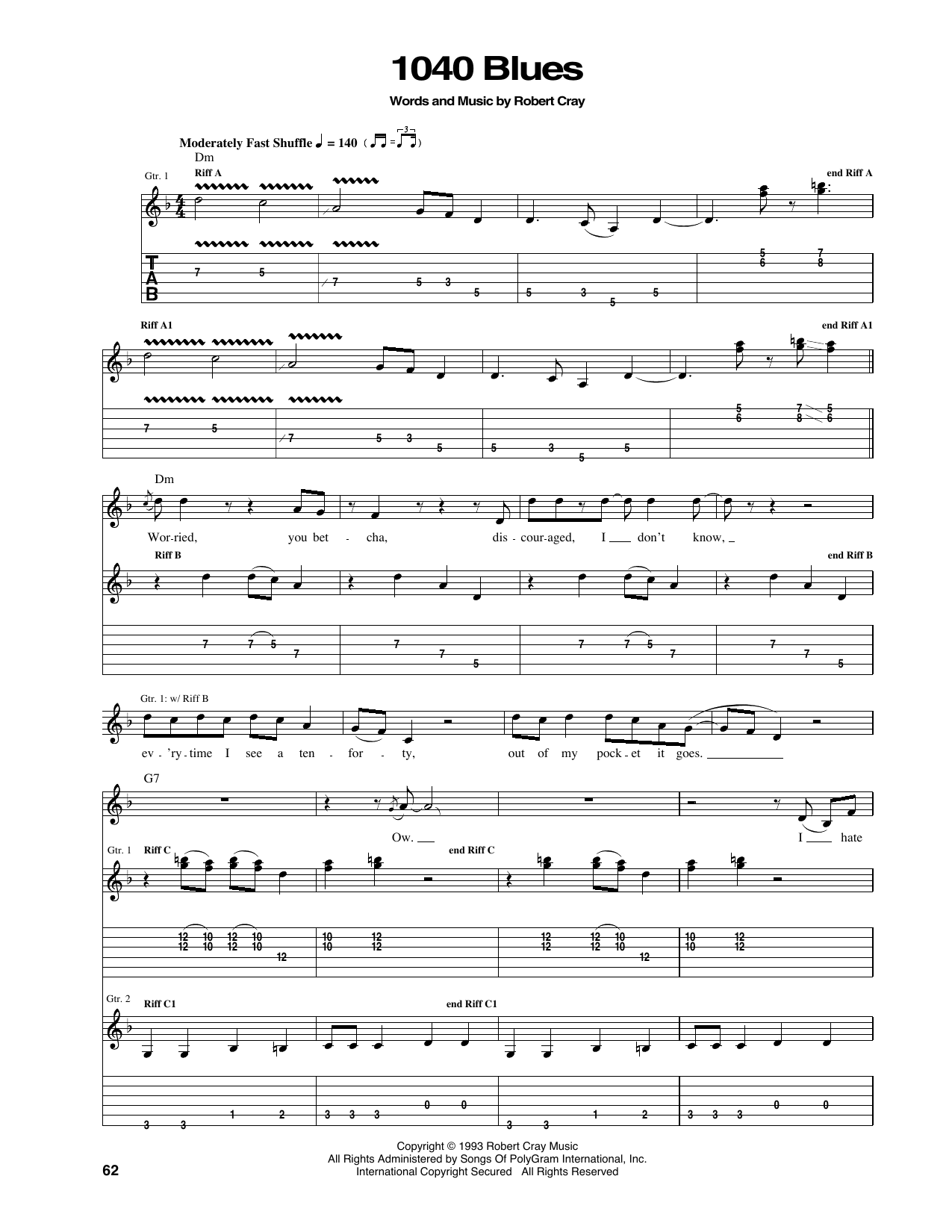
Robert Cray rose to prominence in the 1980s as one of the most influential contemporary blues guitarists, known for his fluid technique and emotionally direct playing. His work bridges traditional blues vocabulary with modern production and songwriting sensibility, making him a crucial figure in keeping blues alive for successive generations of musicians.
Why we love this
Cray's phrasing teaches students how to bend notes with intentionality and deploy silence as effectively as sound. The tab captures his signature tone and approach, giving guitarists a roadmap for translating blues language into their own voice.
What to expect
Confident and stripped down. The playing is conversational rather than flashy, with each note chosen for its emotional content. You'll find yourself drawn into the subtle rhythmic interplay between the melody line and the groove underneath.
Who it's for
Blues guitarists seeking to deepen their understanding of contemporary blues phrasing and students who want to learn from one of the genre's most articulate modern voices. This works equally well as a solo study or as material for ensemble guitarists developing their blues vocabulary.
How to get the most out of it
Pay attention to where Cray bends slightly flat before resolving; this micro-timing creates the emotional weight that makes the line sing rather than simply displaying technique.
The rhythm pocket here sits slightly behind the beat. Experiment with different degrees of laying back until you find where the groove locks.
Listen to the original recording multiple times focusing only on dynamics. Cray controls volume across passages as deliberately as he controls pitch.
How to use it
Assign this to guitarists as an ensemble or small group feature in a blues-focused concert, or use it as part of a contemporary American music unit that explores how blues continues to evolve. It pairs well with discussions about the difference between technical facility and musical expression.
Skills your students will build
Blues phrasing conventions and call-and-response patterns
Note bending technique with control over pitch and speed
Playing behind and ahead of the beat to shape groove
Reading and interpreting guitar tab with attention to rhythm and dynamics
Listening for and replicating subtle dynamic shaping in solos
You May Also Like
Scan to Complete Your Purchase
Use your phone's camera to scan the code below
You'll log in on your phone and the order will be added to your account